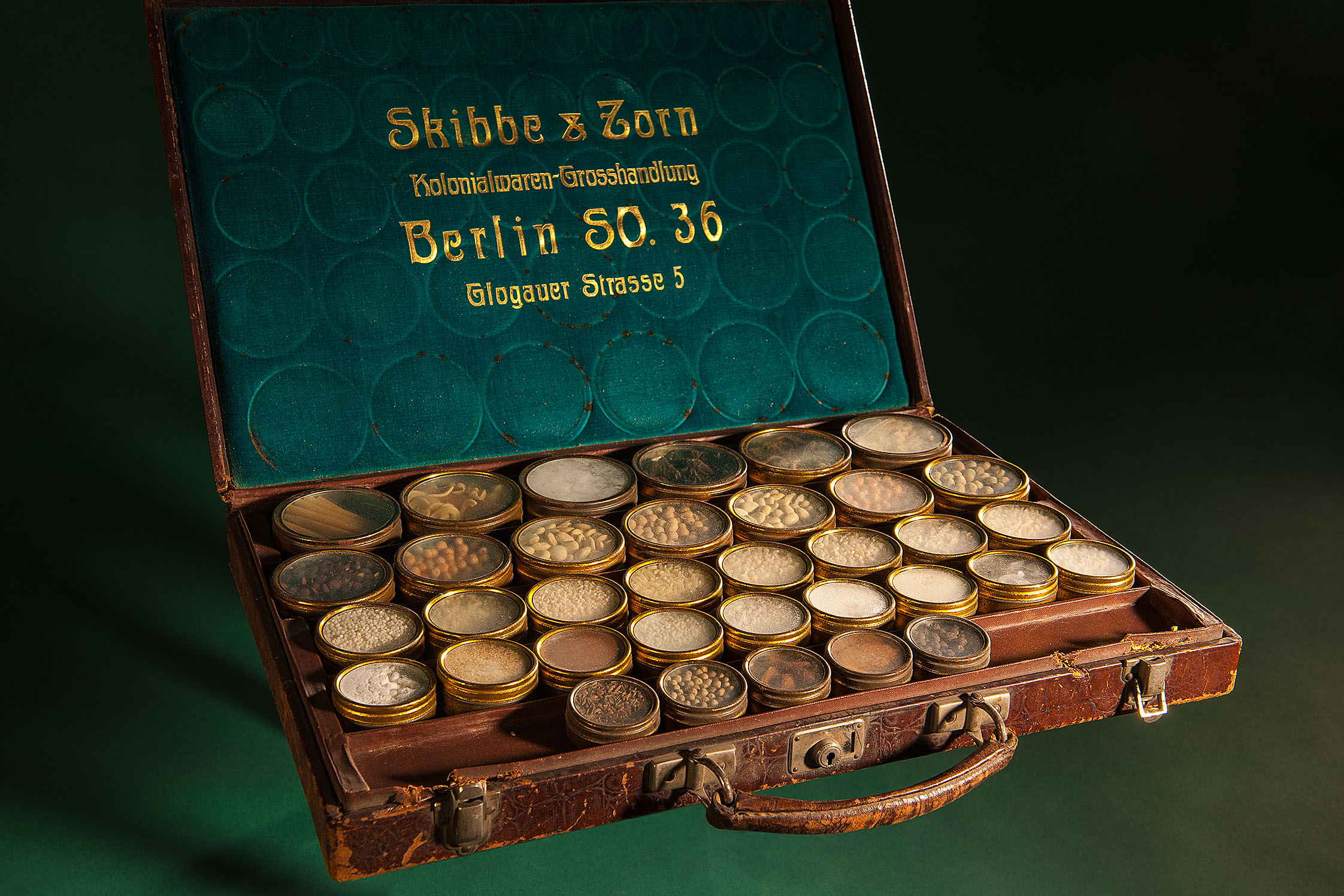
The collection includes objects that originated in the colonies and may have been forcibly removed, as well as the technology used there.
What Does "Objects from a Colonial Context" Mean?
Objects from a colonial context do not only come from the German colonies that existed between the 1880s and 1919. Indeed, they come from all over the world and from a period that stretches from the 15th century to the present day.
What all colonial contexts have in common is the concept of cultural superiority, from which the right to oppress and exploit other people is derived.
If it is determined that an object's history has a colonial context, that object must be examined more closely for a problematic origin.
Examples from the Deutsches Technikmuseum
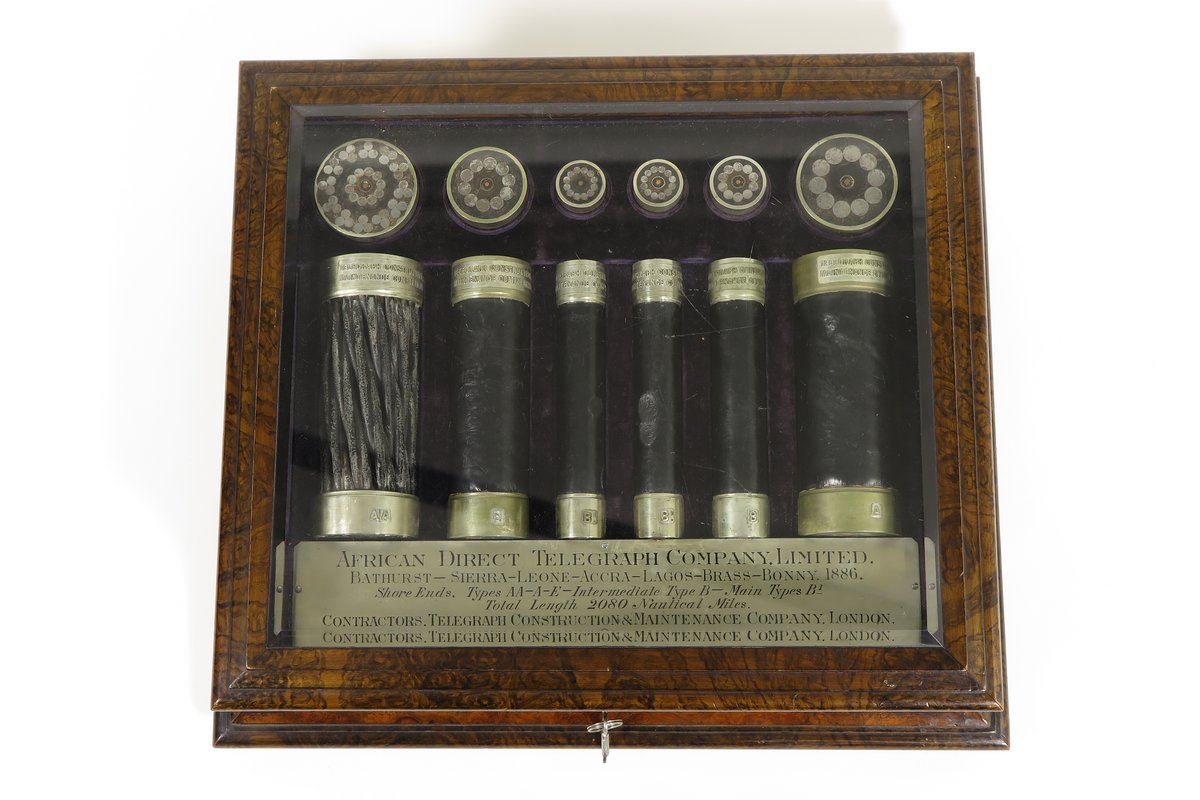
To gain an initial overview of the extent to which objects from colonial contexts are represented in the collection of the Deutsches Technikmuseum, the object database was searched using various terms. These included institutions and companies, such as the German East Africa Line; broader terms such as “colony” or “colonial”; geographic terms such as “German South West Africa”; and raw materials and products such as ivory or rubber.
SDTB
Review of Individual Items
Almost all of the museum’s collection areas contain objects with a possible colonial context, ranging from rail transportation to shipping to communications technology. The range of objects is vast: from a rickshaw to South Sea paddles, harpoons, shackles, opium scales, and more.
The review of the individual objects has begun. Among others, this includes the following objects:
Ceremonial Paddles from the Permanent "Shipping" Exhibition
The museum's permanent Shipping exhibition has two boat paddles on display that are listed in the object database as "Ceremonial paddles, undated". They were purchased in 1991 from a Berlin based collector and antique trader. Questions such as where he found the paddles, when they were made, who made them or what purpose they served are still unanswered at the moment.
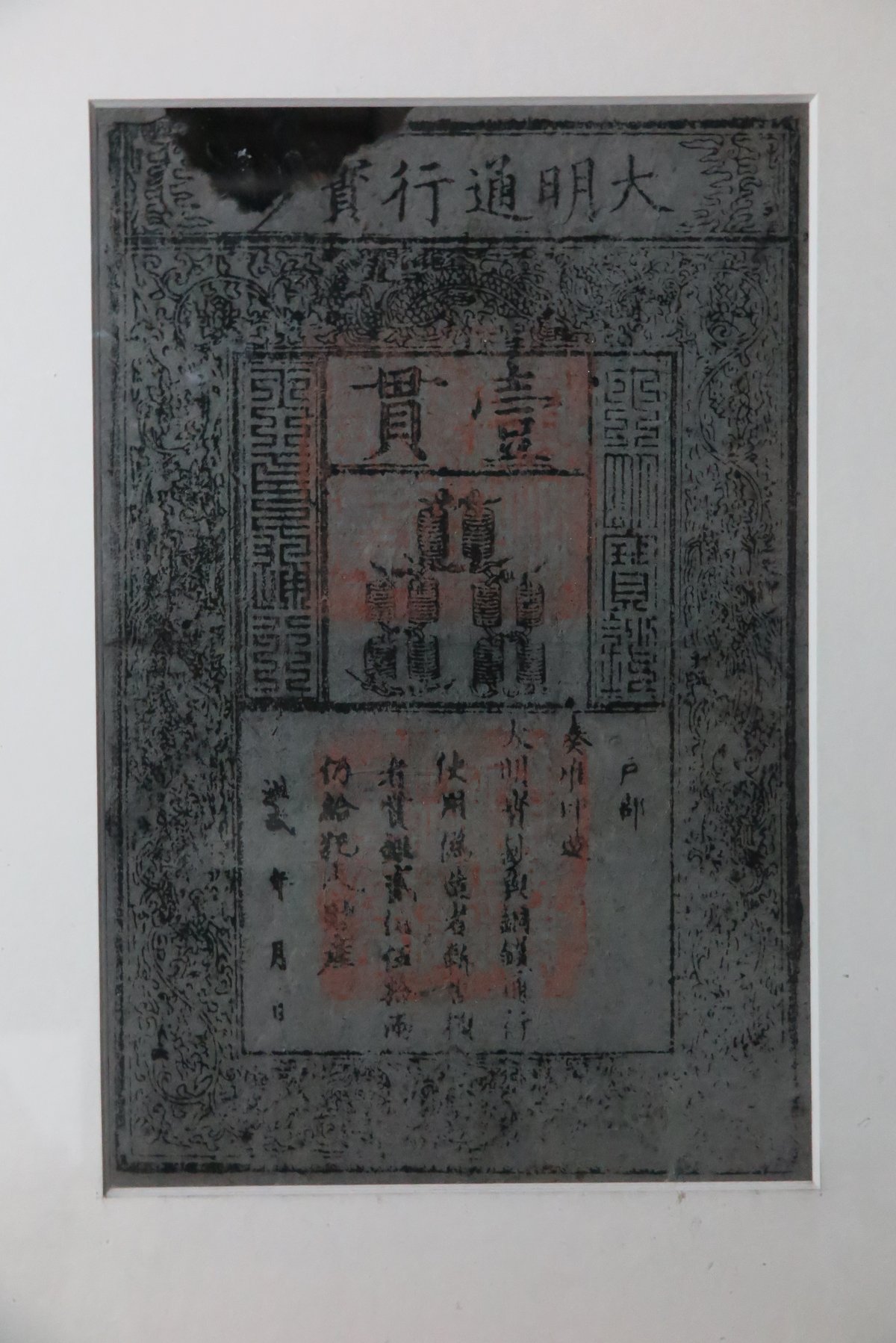
Chinese Banknote, Ming Dynasty, 14th Century
There is a banknote in the museum's archive that for a long time was exhibited as the "oldest surviving printed banknote in the world". The banknote was purchased by a private collector in 1996 as part of a large collection of banknotes.
Comparable banknotes from the Ming dynasty can be found in various museums and private collections around the world. Hosea Ballou Morse, an official of the “Imperial Maritime Custom Service” in China until 1908, reports that during the Boxer Rebellion in 1900/01 European soldiers overturned a Buddha statue in the Beijing Summer Palace that had valuables and bundles of such banknotes in its base. The soldiers are said to have then handed the banknotes over to the American military doctor Dr. Louis Livingston Seaman. According to Seaman, one of the many museums to which he donated banknotes was the British Museum.
What needs to be established now is whether the banknote in fact dates from the 14th century. Likewise, how it came into the collector's possession and which paths it has taken since 1900/01. It must also be critically examined within the context of the so-called Boxer War, which resulted in a great deal of looting in Beijing.
SDTB/ Photo: C. Kirchner
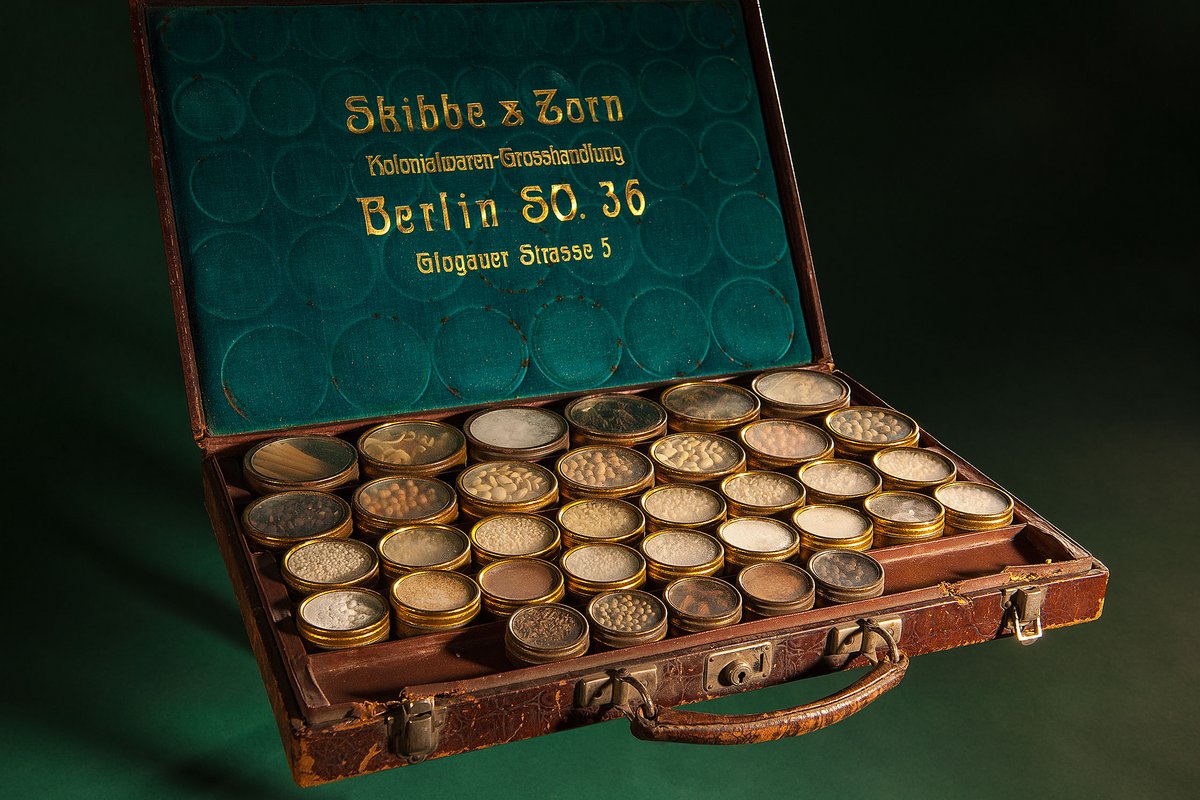
Sample Case with Colonial Goods Such as Rice, Cocoa, Tea and Exotic Spices
This leather-covered sample case, which was manufactured around 1925, was used by the Berlin company “Skibbe & Zorn, Honigwaren-Großhandlung (wholesale honey products).” It holds 35 tins with glass tops that serve to display small samples of rice, sugar candy, coffee, cocoa, tea and many exotic seasonings. Colonial stores ordered whole sacks of these goods and sold them by weight to their customers in the paper bags common at that time. The circumstances under which these products were manufactured in their countries of origin, the working conditions of the people there and how this exploitation by the colonial powers still has an impact today is a topic that the museum will continue to emphasize in the future.
SDTB/ Photo: C. Kirchner