Under National Socialism, those who were persecuted were stripped of their property: from works of art to cars to typewriters. This looted property from the Nazi era can also be found in the collection of the Deutsches Technikmuseum.
Our Objectives
During the Nazi era, those who were persecuted were stripped of their rights, robbed, persecuted, and murdered. Their property was confiscated or forced into sale. The search for such Nazi-looted property — more precisely, cultural property seized as a result of Nazi persecution—is the most important task of provenance research. The goal is to identify looted property, locate heirs, and work with them to find fair and just solutions in accordance with the Washington Principles.
Items identified during the research as suspected of having been confiscated by the Nazis, as well as items whose provenance between 1933 and 1945 has not been fully clarified, are published in the Lost Art database.
Printing Stones from the Paul Pittius Company
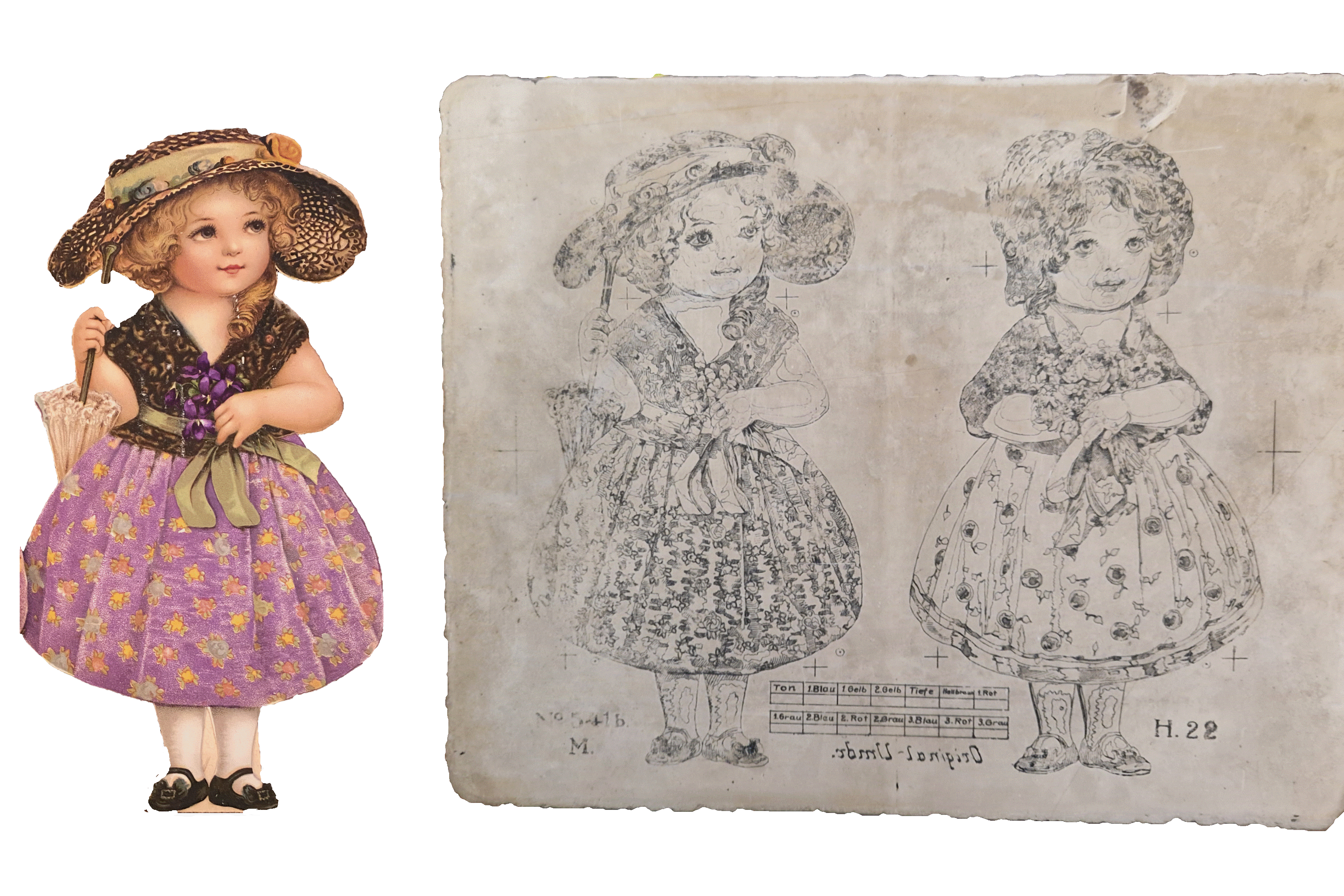
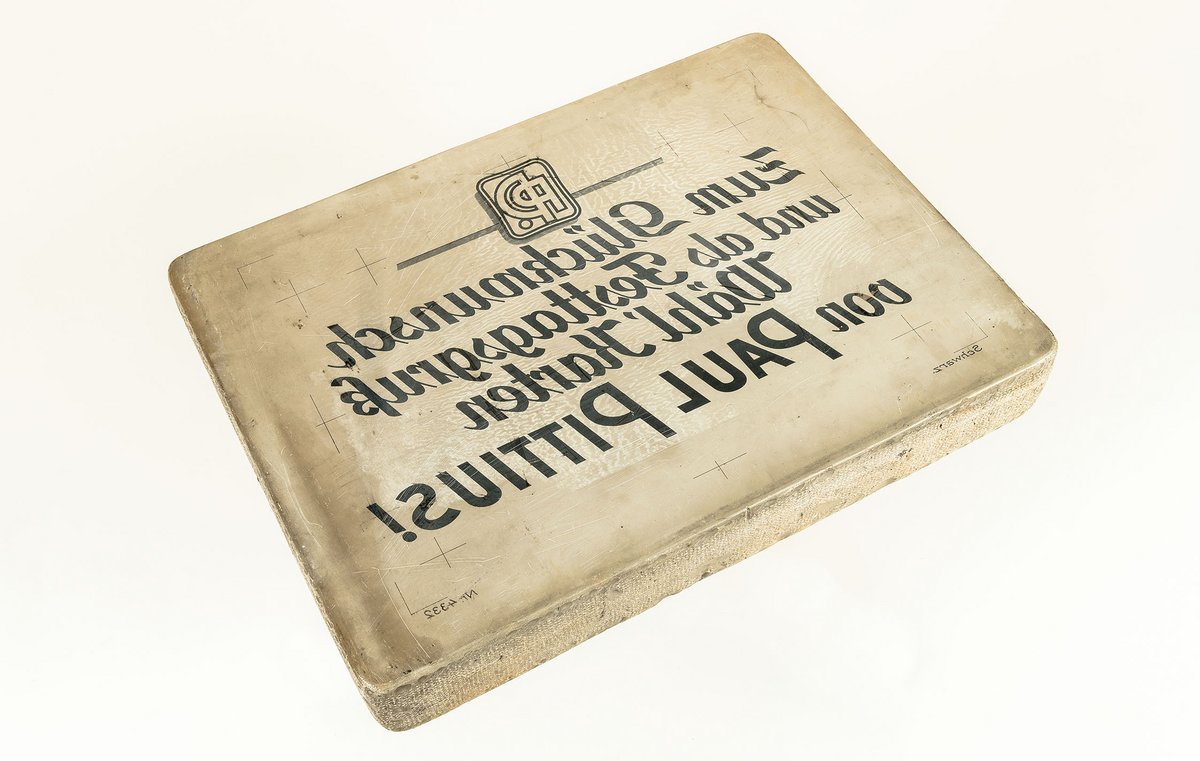
Six printing stones were suspected of being cultural property confiscated as a result of Nazi persecution, since the owners of the company where they were used were among those persecuted as Jews. After extensive research, the German Museum of Technology was able to trace the history of the brothers Julius and Martin Gerson. They were the owners of the “Paul Pittius Printing and Luxury Card Factory” in Berlin. Because they were persecuted by the Nazis as Jews and political opponents, they were forced to sell their company. Both brothers were deported and murdered.
Julius Gerson’s granddaughter, Miki Marcu, who lives in the United States, was contacted with the help of family members. She donated the printing stones to the museum on the condition that the museum would honor the memory of her grandfather and his brother in the future. In August 2023, a memorial stone for the Gerson brothers was unveiled in the presence of family members. Visitors can now learn about the brothers and their company in the exhibition on printing technology or in the online exhibition “Printing Stones Tell Their Story: The History of the Gerson Brothers and Their Paul Pittius Lithography Workshop.” The lithography technique used by the Paul Pittius company is regularly demonstrated at the museum.
SDTB/ Photo: C. Kirchner
A Book from a French Girls' School
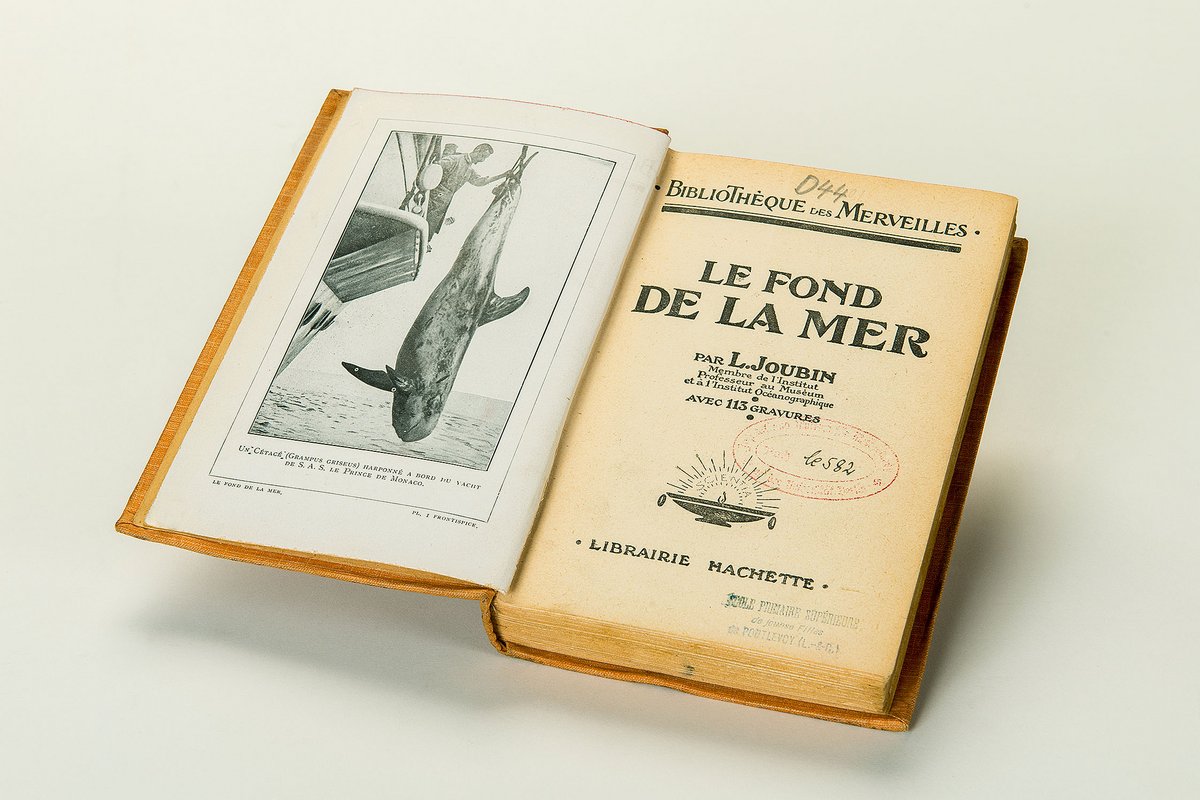
In December 2021, the Deutsches Technikmuseum returned a book that had been looted in France by German occupation forces during World War II. This was the museum’s first such return. The book returned was *Le fond de la mer (The Sea Floor)*, published in 1920 by the French marine zoologist Louis Joubin, which describes the oceans and their inhabitants.
The book’s origin was traced through a stamp on the title page. This led to Pontlevoy, France. In this small town near Tours, there used to be a girls’ school from which the book was stolen. Today, the Lycée catholique de Pontlevoy stands on the same site, and its principal accepted the book in the presence of the students.
SDTB/ Photo: C. Kirchner