
Film Technology
What's it About?
The exhibition “Moving Images” tells stories about milestones in film technology: from the astonishing optical illusions of the 19th century, through the Golden Age of cinema in Hollywood and the Berlin film studios, to the era of ambitious videographers.
In the Footsteps of Berlin's Film Pioneers
The first public film screening in Germany took place on November 1, 1895, at the “Wintergarten” in Berlin. To conclude a variety show, the Berlin brothers Max and Emil Skladanowsky screened the film “Living Photographs” using the Bioskop double projector they had developed—commonly known as the “crank box” and, in the official jargon of the Imperial Patent Office, the “device for the intermittent forward movement of the image strip for photographic series.” The exhibition traces the legacy of Berlin film pioneers such as the Skladanowsky brothers and Oskar Messter. The history of film technology is brought to life through numerous historical film clips, cameras, spotlights, and cinema equipment.
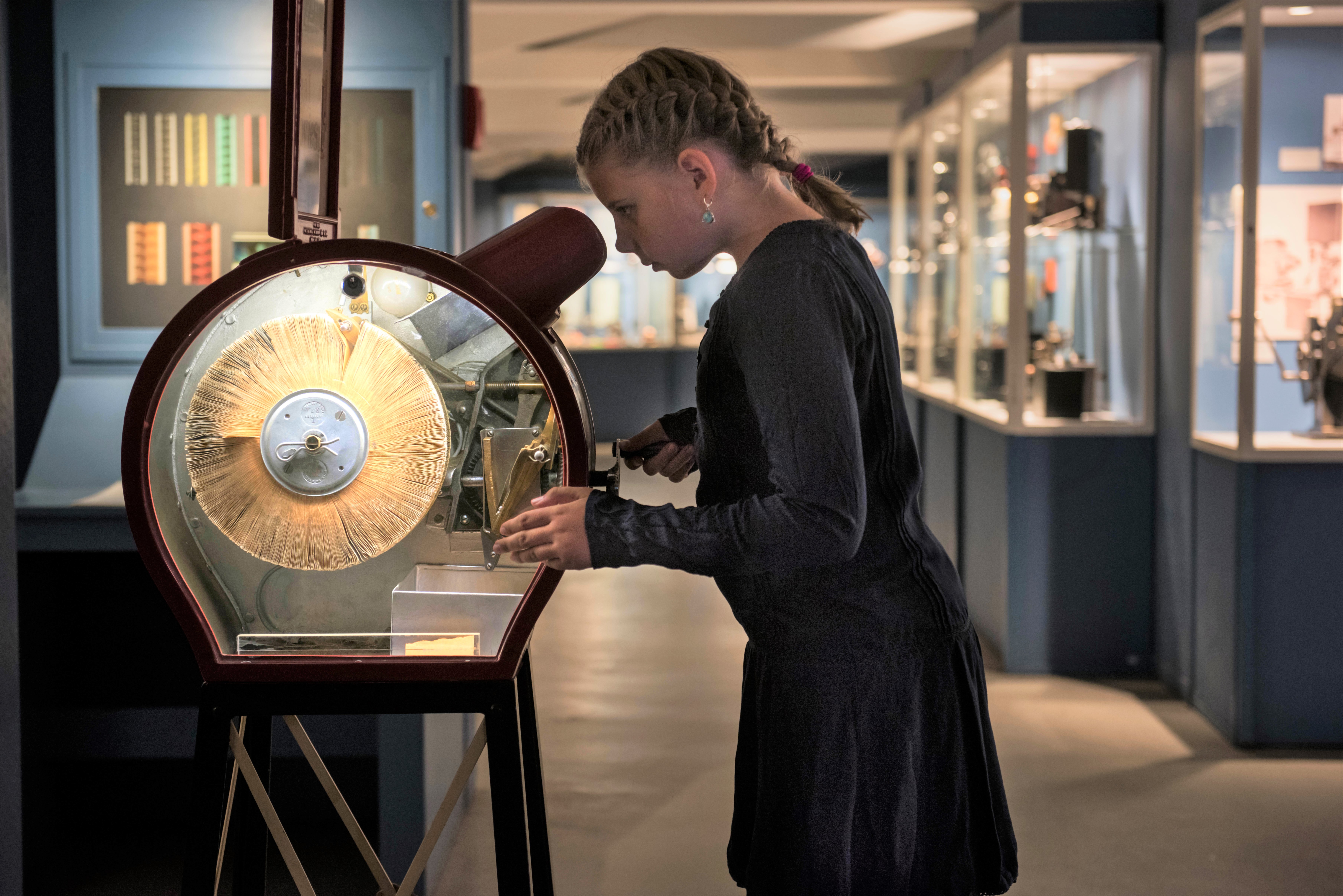
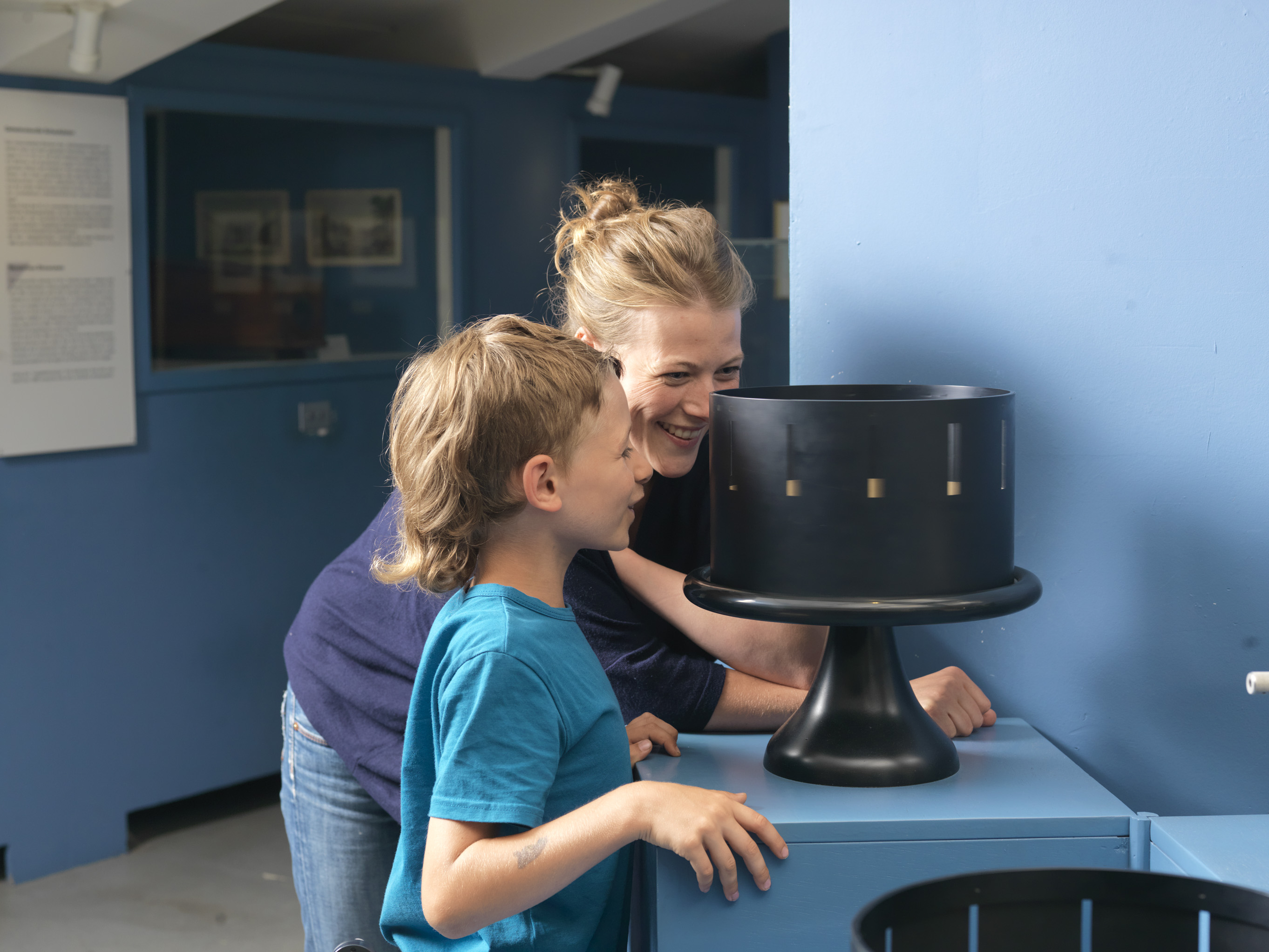
Magic Drums, Wheels of Life, Visionaries of Illusion
Movies had their big breakthrough at the beginning of the 20th century, but moving images had been around much earlier. In the 18th century, projection artists amazed audiences with the “Laterna magica”: they told stories using colorful, mechanically moving glass images and projected them onto the wall as ghost stories or natural spectacles. Miniature versions of the magic lanterns also became popular children’s toys in the 19th century. Visitors can try out these and other optical toys—such as the magic drum, the wheel of life, and the illusion viewer—in the exhibition.
Dreams Need Technology
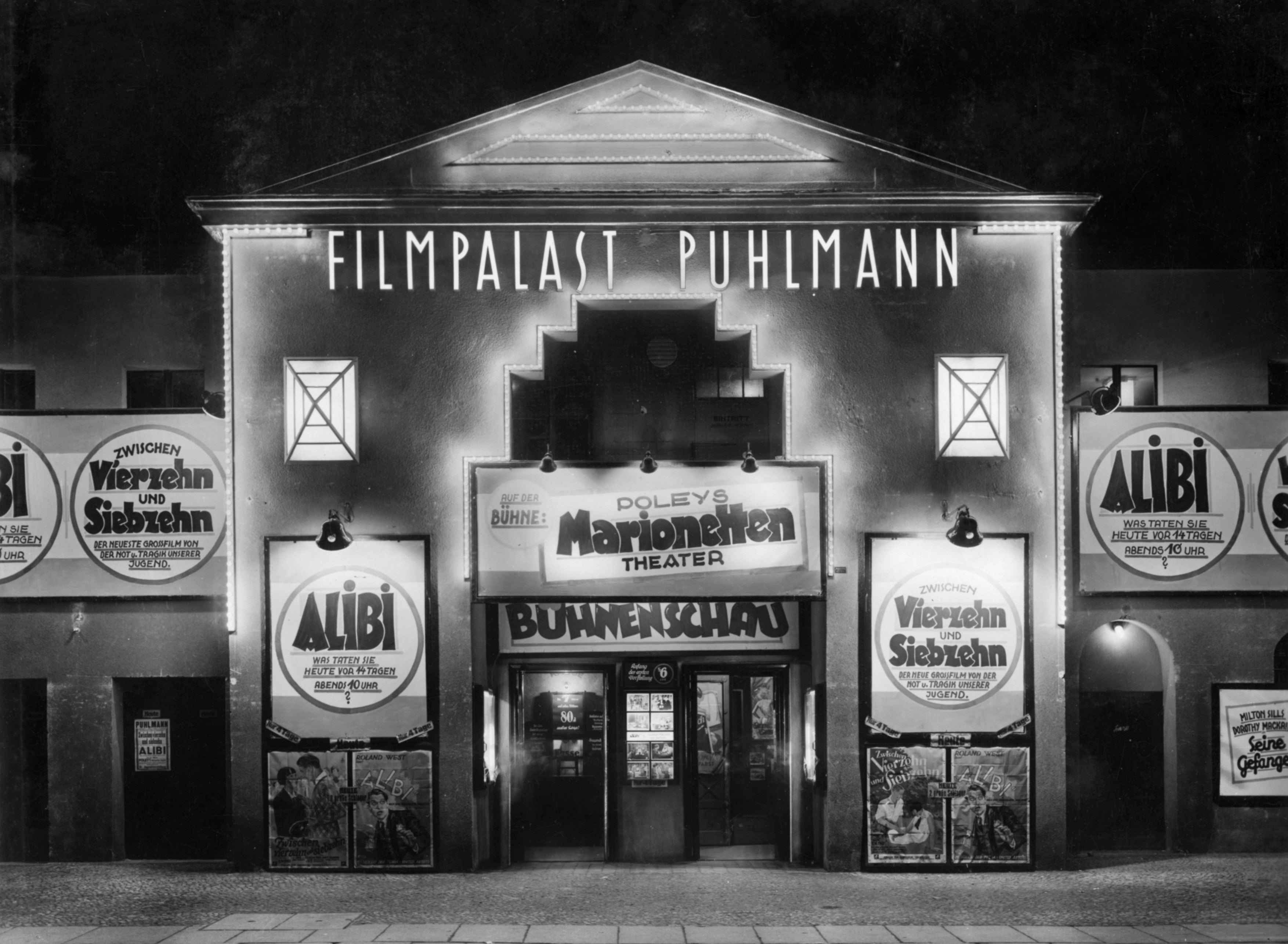
Starting in 1900, innovation in projectors and cameras advanced at a rapid pace, and Thomas Edison’s 35mm film became the standard for cinema. This opened up new possibilities for storytelling and boosted the popularity of cinema: by the late 1920s, there were around 5,000 movie theaters in Germany, selling 350 million movie tickets annually. With the rise of sound films in the 1930s, movie studios finally became “dream factories.” From the Golden Age of cinema, the exhibition features, among other things, a large-scale model of the Babelsberg Studios and the documentary “A Movie Within a Movie” about the production of a feature film in the 1950s.
Everyone Is a Director: From Super 8 Film to Videotape
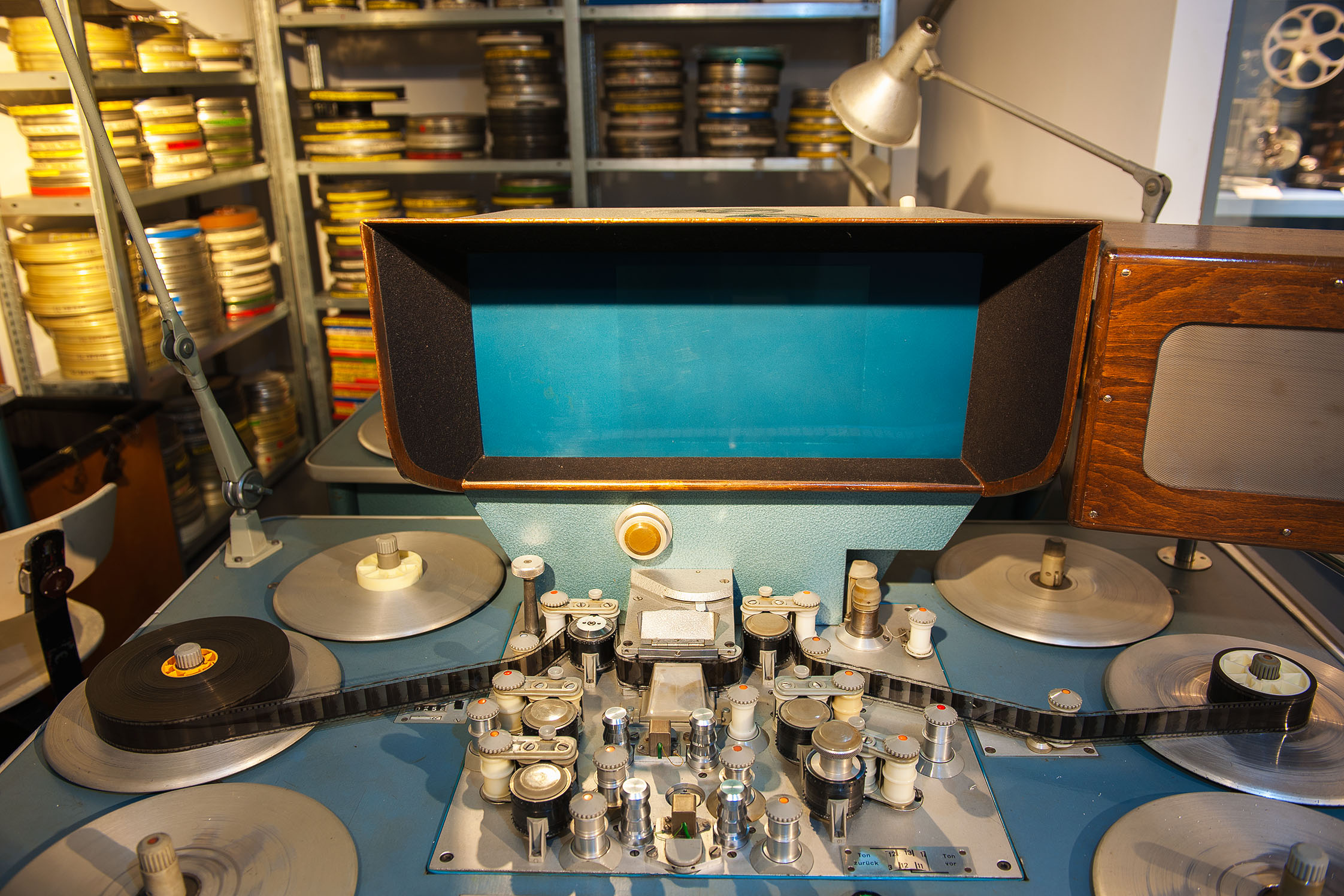
As technology advanced, film drove box office success and inspired a growing number of amateur filmmakers. The smaller the film format, the lower the cost — 35mm was simply too expensive for amateur filmmakers. As early as the 1920s, 16mm film came onto the market, followed by 8mm film in the 1930s and the new Super 8 standard in the 1960s, which also included sound starting in 1973. With that, there were no longer any limits to ambitious family cinema on 8mm film. In the mid-1980s, the invention of the videocassette brought this era to an end. In the exhibition, you can follow this development step by step, not only through design classics like the Nizo P Super 8 camera. On display are fascinating narrow-gauge films made by amateurs from 1907 to 1985. Take a seat in the theater!
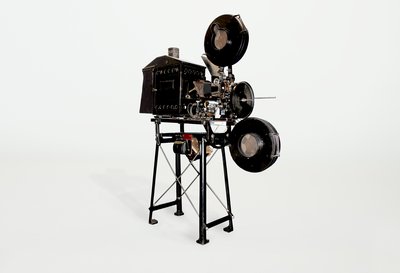
Kinoprojektor Ernemann I
Der Ernemann I definierte lange Zeit den Standard der Filmprojektion in Kinos. Er besaß Feuerschutztrommeln, um der Brandgefahr des leicht entzündlichen Nitrofilms vorzubeugen. Dieses ursprünglich für Stummfilmproduktionen hergestellte Gerät, wurde durch zwei Anbauteile der Firma Klangfilm für Lichtton- und Magnettonwiedergabe erweitert. Auch das Kohlebogenlicht wurde zu einem späteren Zeitpunkt durch leistungsstarkes Xenonlicht ersetzt.
Ernemann-Werke AG, 1927
SDTB/ Foto: C. Kirchner
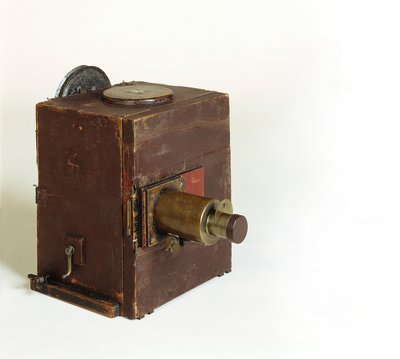
Filmprojektor Bioscop von Max Skladanowsky
Das Bioscop, im Volksmund „Kurbelkasten“, das die Gebrüder Skladanowsky 1895 in Berlin vorstellten, war eines der ersten Geräte zur Projektion bewegter Bilder. Der Vorführer kurbelte und setzte damit zwei 54mm Filmschleifen in Bewegung. Das Bioscop zeigte eine aus maximal 24 Einzelbildern zusammengesetzte Sequenz in Endlosschleife – zum Beispiel „Italienischer Bauerntanz“ oder „Das boxende Känguruh“.
Nachbau (Original: 1895), Leihgabe: Deutsches Historisches Museum
SDTB/ Foto: C. Kirchner
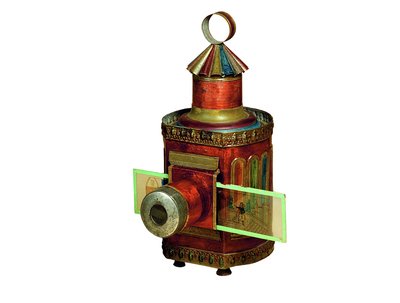
Laterne Riche / Laterna Magica
Die Laterna magica begeisterte ein breites Publikum. Mit farbigen, mechanisch beweglichen Glasbildern und schauerlichen Geschichten beeindruckten Projektionskünstler ihr Publikum auf den Jahrmärkten des 18. und 19. Jahrhunderts. Die „Zauberlaterne“ hielt auch Einzug in die heimische Wohnstube. In vielen Formen und Farben wurde sie als Blechspielzeug bis in die 1920er Jahre hinein produziert.
Lapierre Frères, 1880
SDTB/ Foto: C. Kirchner
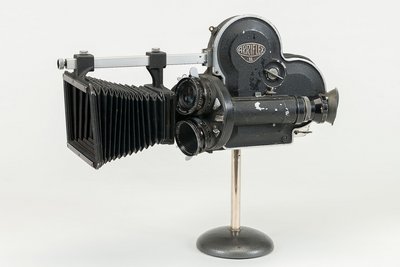
Arriflex 16 ST Film Camera
The Arriflex 16 ST was manufactured by Arnold & Richter KG in Munich. The three Arriflex-Cine-Xenon camera lenses (2/50 mm, 1.4/25 mm, 2/16 mm) were produced by Schneider Kreuznach. The 16mm camera stood out for its light weight and versatility, which is why it was used primarily in sports and news reporting.
Arnold & Richter KG / ARRI AG, 1952
SDTB/ Photo: C. Kirchner