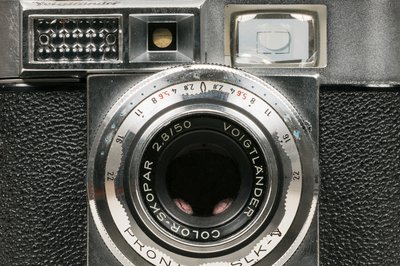
Photo Technology
What's it About?
Cameras are just as diverse as the people who press the shutter button. That’s why the exhibition “The Fascination of the Moment” focuses on people and their portraits. Embark on a journey through time across the 200-year history of photography!
Photos Capture the Magic of the Moment
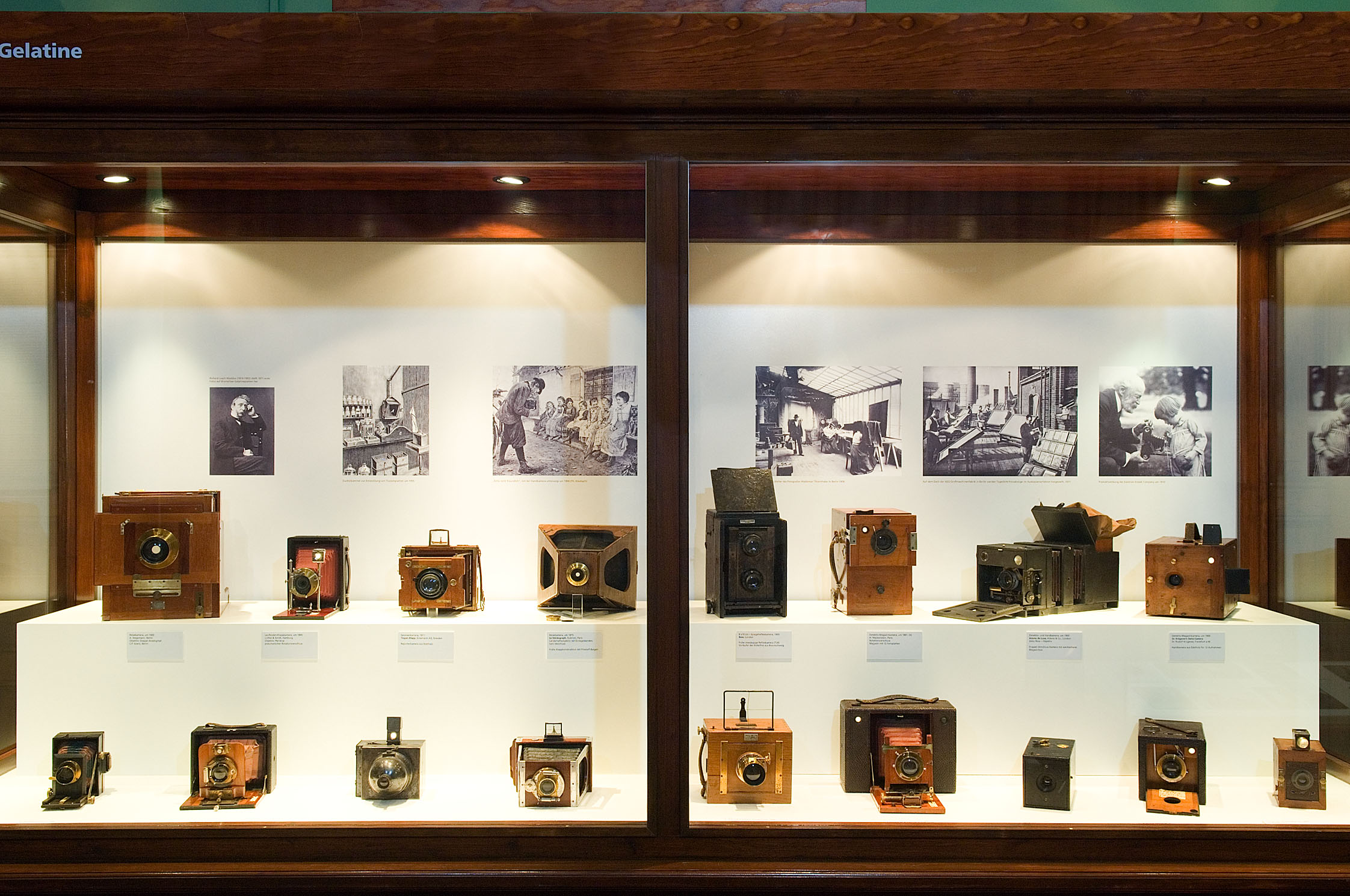
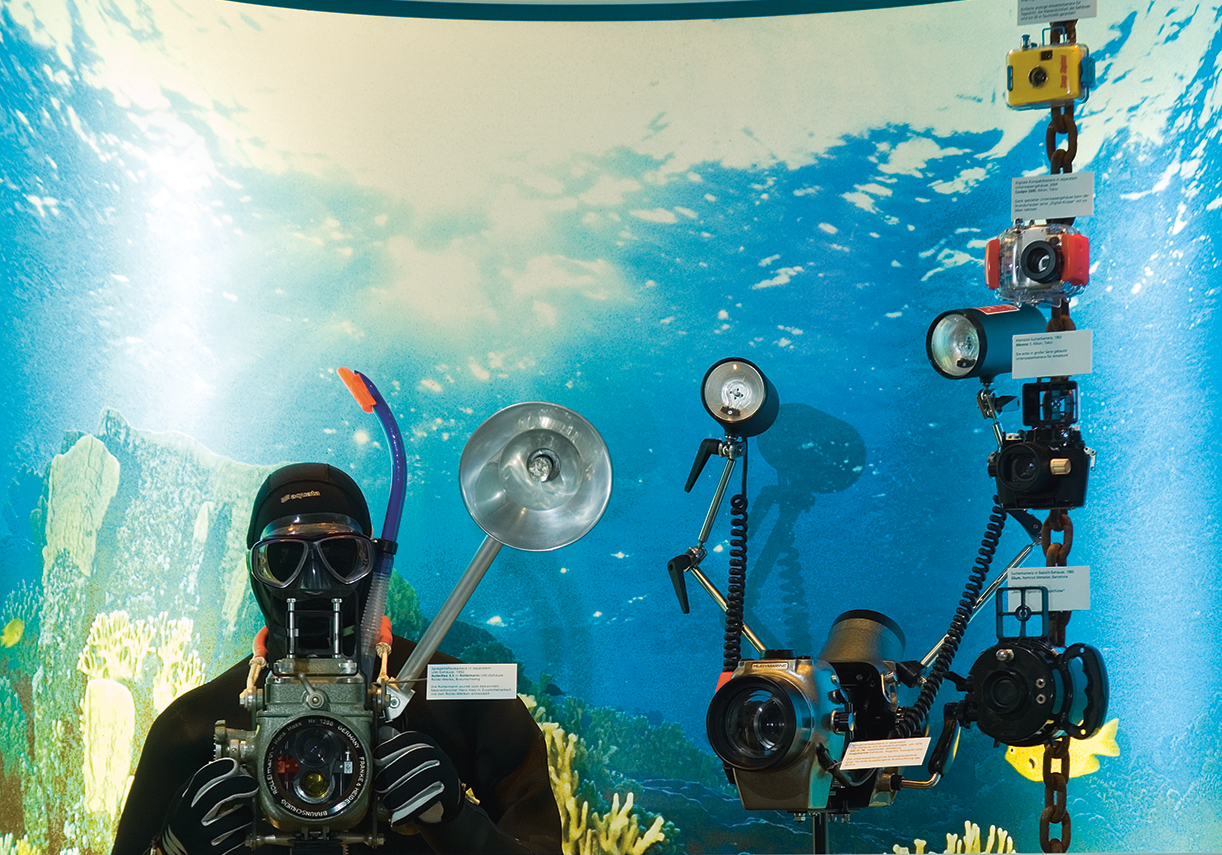
Anyone who owns a cell phone today also has a camera. The result: We are inundated with an overwhelming flood of images. And yet, time and again, there are photos that capture the world’s attention. Our permanent exhibition on photographic technology shows how, for nearly 200 years, the art of photography has managed to capture the fascination of the moment. One area is the history of photography, from heliography to 3D photography using concave mirror projection. Photographic practice is the second major theme, ranging from personal portraits and advertising photography to war and espionage photography.
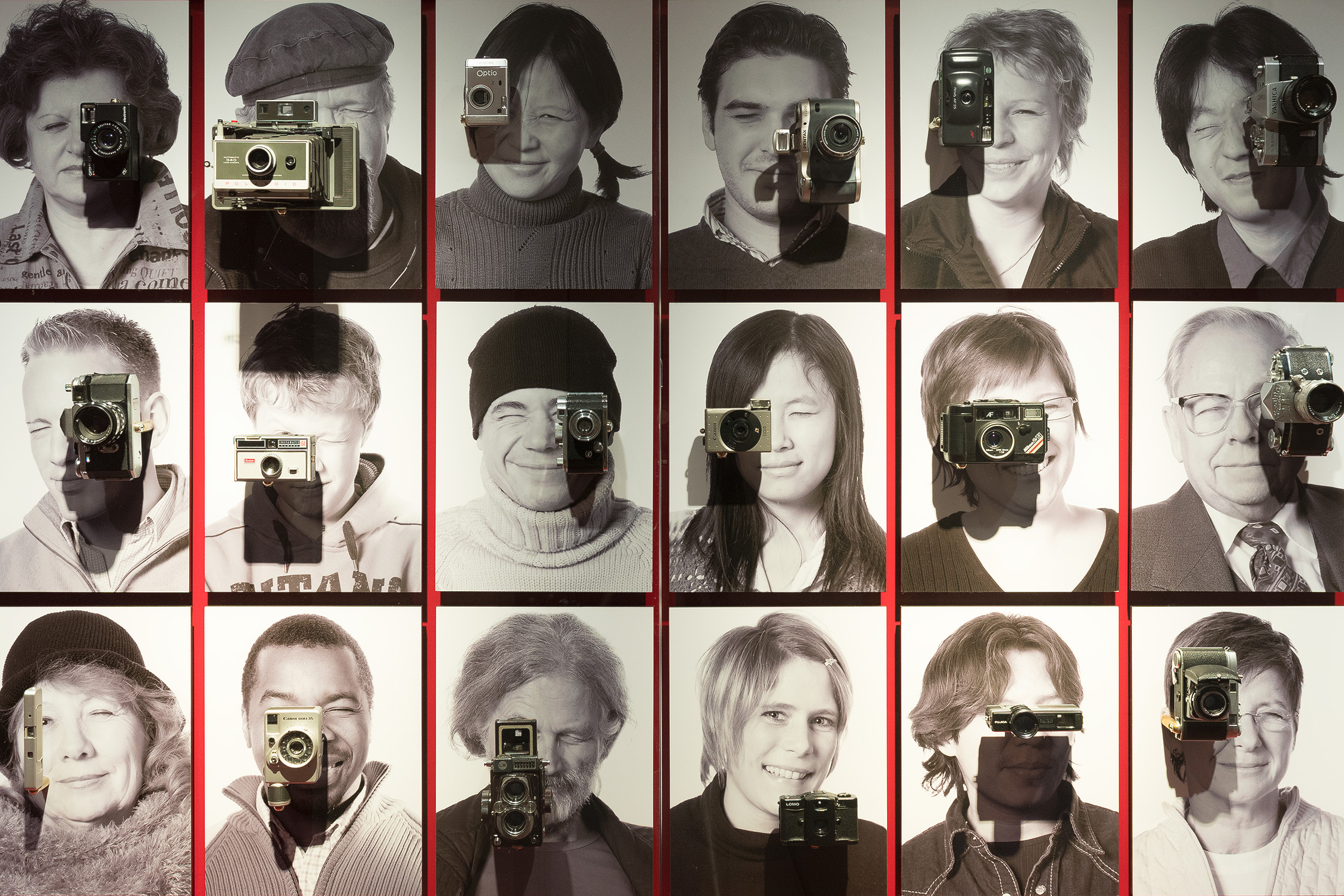
The Big Challenge: Photography for Everyone
Early photography was a complicated process: In order to present a photograph to an amazed audience, the image ultimately had to be fixed onto a support medium. These so-called imaging processes required specialized knowledge, chemicals, and elaborate equipment. With development processes such as the daguerreotype or the wet collodion process, photographers had to contend with toxic fumes or fragile glass plates. This was brought to an end by George Eastman, who began producing rolls of photographic paper capable of holding 24 exposures in the United States in 1885.
Just three years later, Eastman introduced the first Kodak box camera. Now anyone could take pictures: All you had to do was press the shutter button, and after 24 shots, you sent the box camera to the Eastman factory to be developed. It was simple, but expensive—each camera cost $25. That’s why Eastman developed the “Brownie” camera, which sold for $1. The first camera for the masses was on the market.
In the age of digital photography, storing photos is no longer a technical problem, and storage space is available at virtually no cost. Good old analog 35mm negative film has become a relic for enthusiasts.
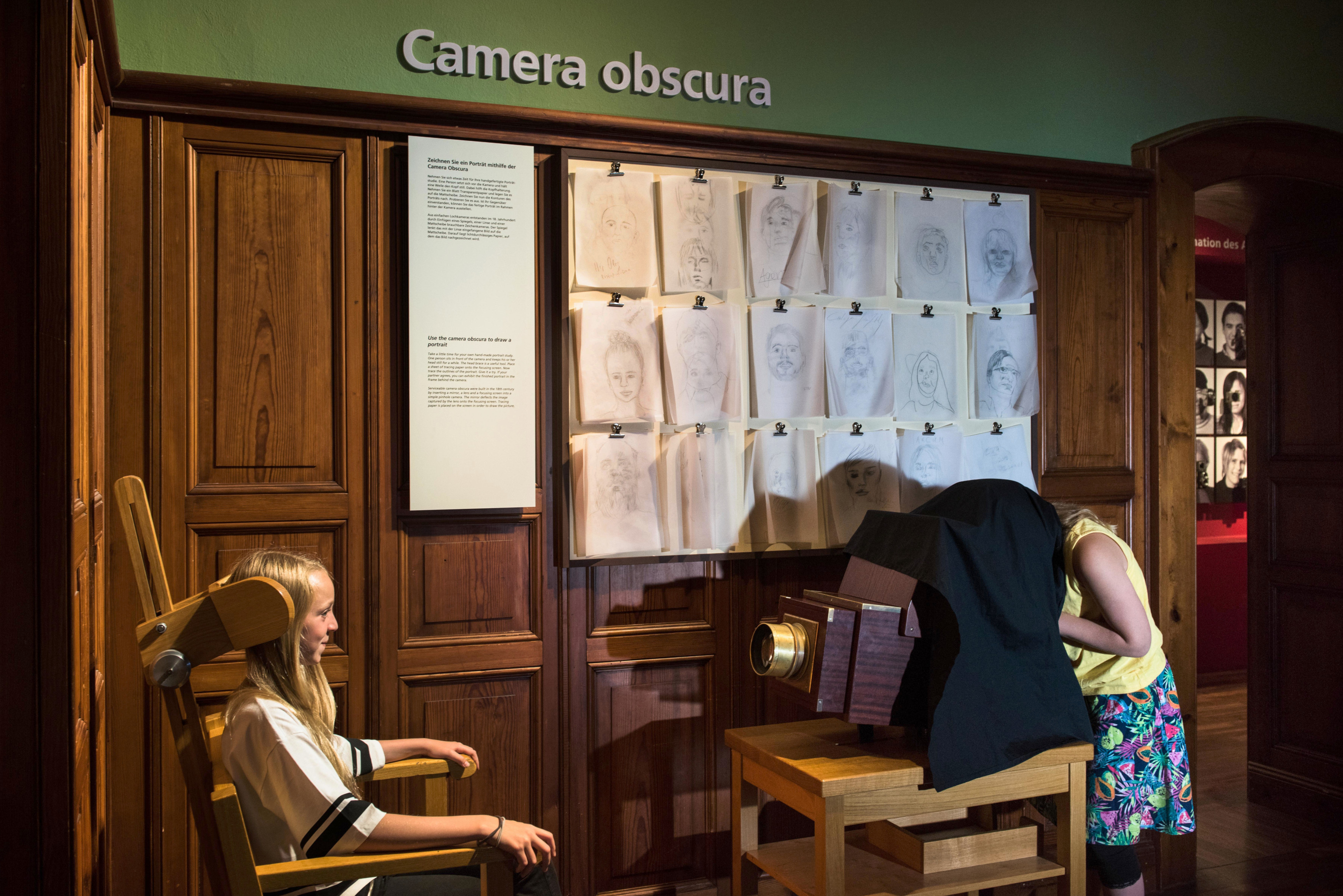
How Do You Take the Perfect Photo?
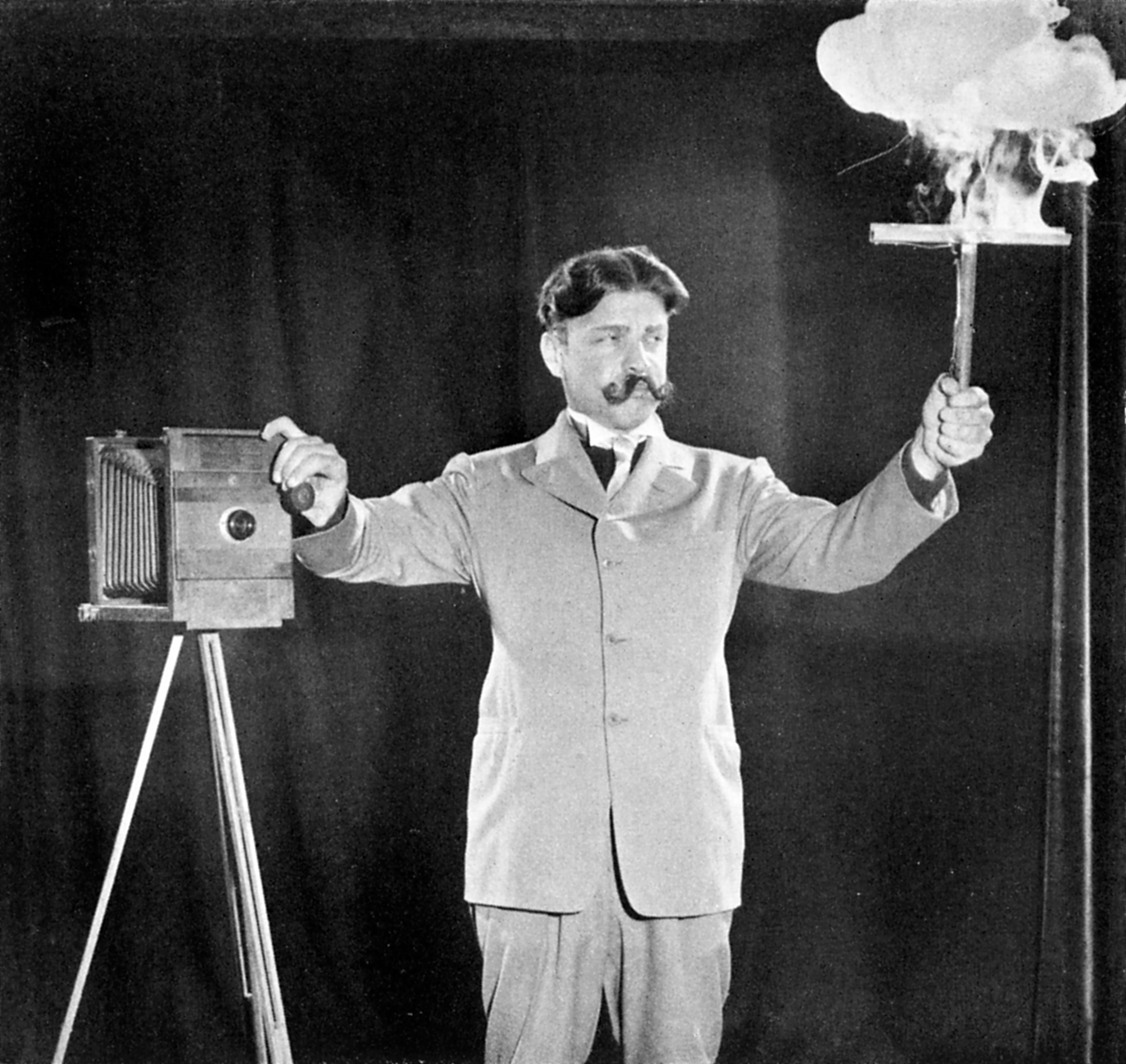
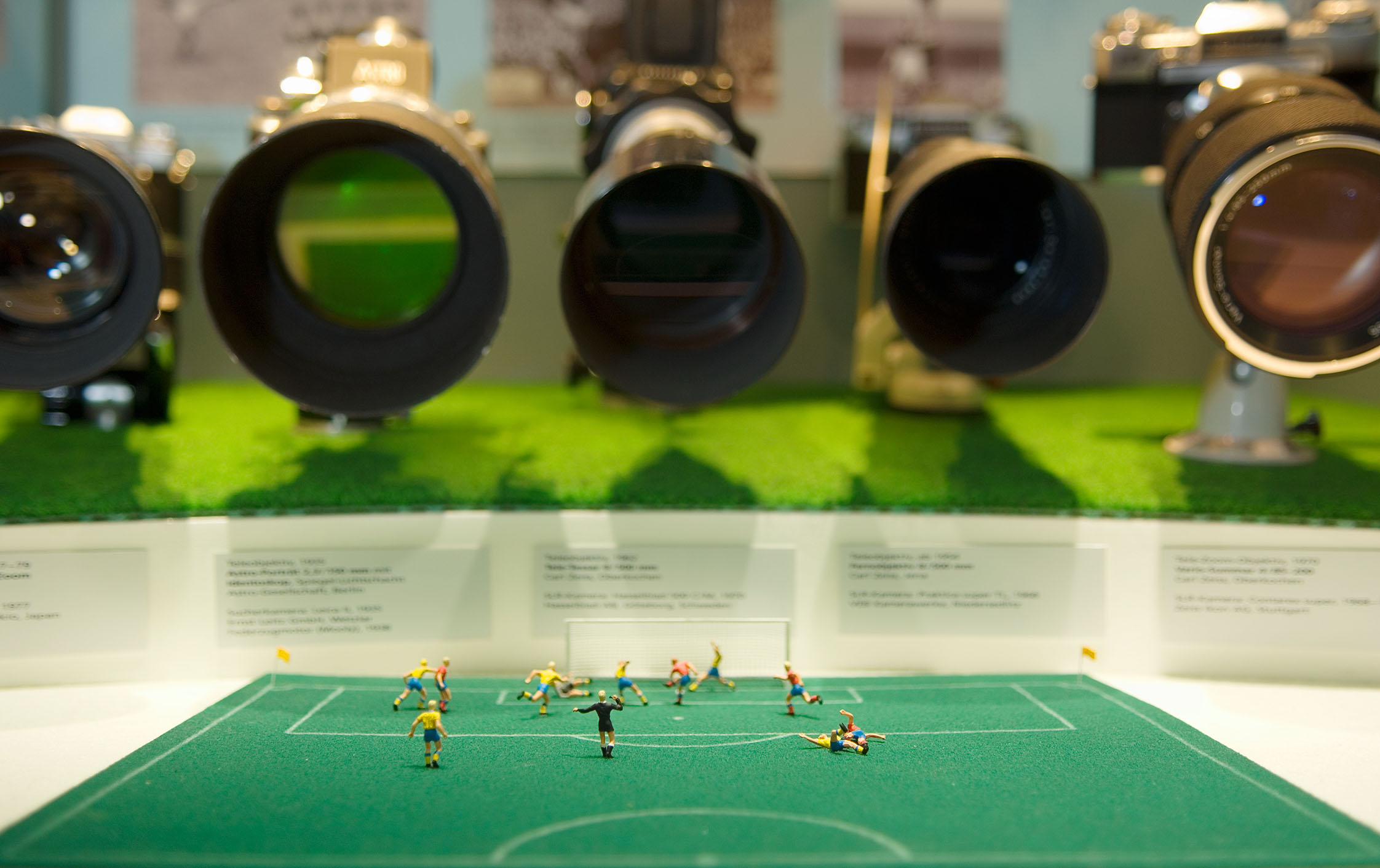
The inventive minds behind photography have always been searching for ways to take better — and ideally, perfect — photos. The exhibition traces advancements in technology and design: How did the Leica become the model for all 35mm cameras, and why did innovations in SLR cameras come primarily from Germany for decades? The fact that photographers’ ingenuity knows no bounds when it comes to improving shooting conditions is also evident in niche areas such as artificial lighting — whether through pyrotechnic powder flashes or electronic spark discharges, technological advances have shed light on the darkness.
The Photo — A Reflection of Reality?
Ever since photography was invented, there has been debate about the authenticity of what is depicted. Because digital photography is part of everyday life and it’s so easy to edit photos on your own cell phone, this discussion is more important than ever. At an interactive morphing station, you can try your hand at image manipulation.
Voigtländer Daguerreotype Camera
The daguerreotype was the first photographic process. It is named after its inventor, the French painter Louis Jacques Mandé Daguerre. He used the light sensitivity of silver-plated copper plates treated with iodine to capture images on them. In 1841, Friedrich von Voigtländer built a metal camera for daguerreotypes equipped with the first scientifically calculated portrait lens. The camera lens was sixteen times more light-sensitive than the lenses used previously.
Rolf Oberländer, 1985, reproduction (original: 1841)
SDTB/ Photo: C. Kirchner
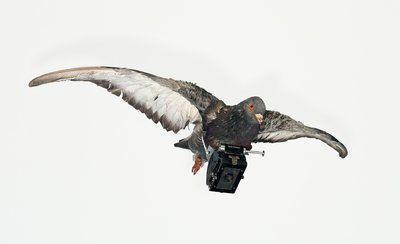
Carrier Pigeon Camera: Doppelsport
In the early days of aerial photography, the term “bird’s-eye view” could be taken literally. The first aerial photographers were carrier pigeons. The Doppelsport carrier pigeon camera is part of the permanent exhibition on photographic technology at the Deutsches Technikmuseum. In December 1908, the Imperial Patent Office granted the patent “Method and Apparatus for Photographing Sections of Terrain from a Bird’s-Eye View” to pharmacist Julius Neubronner. However, the hoped-for commercial success failed to materialize.
Rolf Oberländer, 1991, reproduction (original: 1907)
SDTB/ Photo: C. Kirchner
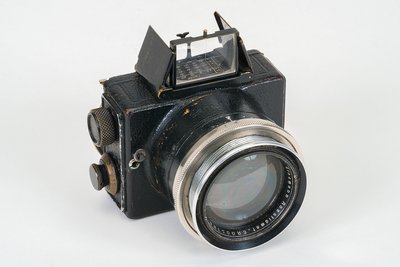
Ernemann Ermanox Tube Camera
The 1924 Ernemann Ermanox was the reporter’s camera of its time. Not only was it compact, but its greatest advantage was its fast Ernostar lens (f/2), which allowed for short exposure times of up to 1/1000 of a second and made it possible to take photos indoors without a flash. The Ermanox was developed and built in Dresden. It became famous, among other things, for the photojournalistic work of the Berlin journalist Erich Salomon.
Ernemann-Werke AG, 1925
SDTB/ Photo: C. Kirchner
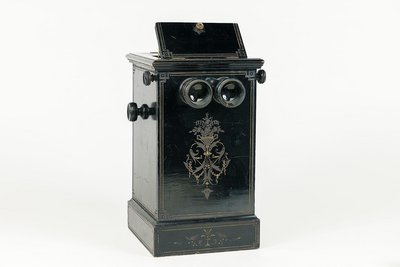
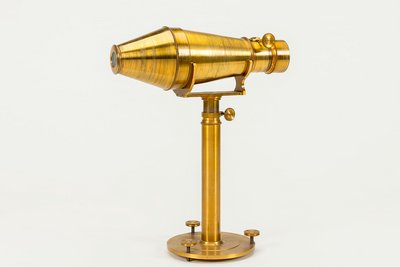
Magazine-Style Tabletop Stereoscope
Stereoscopes were very popular devices for viewing images in the 19th century. They combine two separate images to create a single three-dimensional image. This black-lacquered tabletop stereoscope from France, decorated with floral motifs, holds 50 picture cards measuring 9 x 18 centimeters.
circa 1890
SDTB/ Photo: C. Kirchner