Historical Brewery
What's it About?
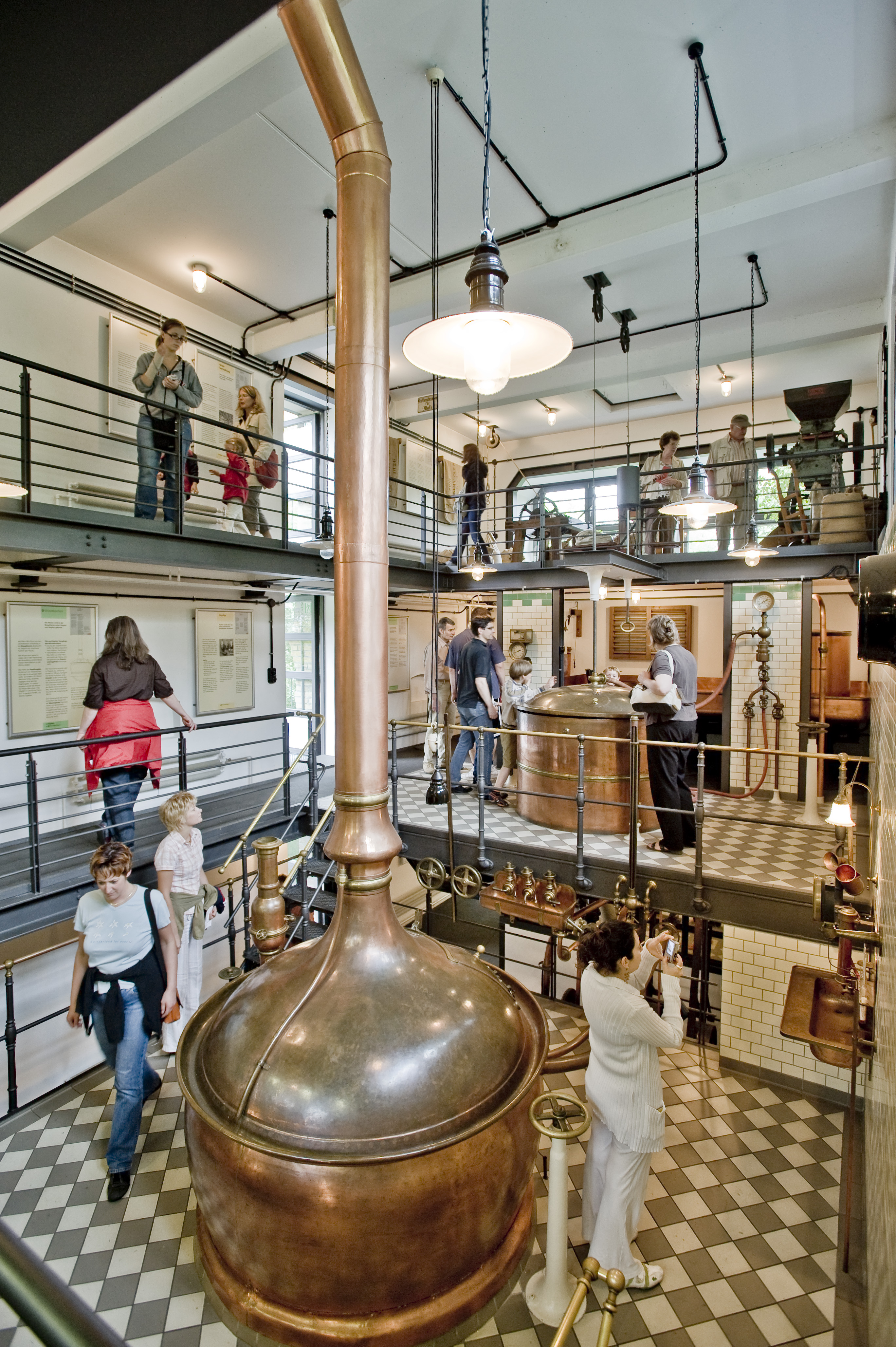
How is beer brewed? You can learn all about the centuries-old craft of brewing—including the steps of malting, boiling, cooling, fermenting, and aging—in the former warehouse of Nürnberger Tucher Bräu AG on the museum grounds.
The Land of Poets, Thinkers, and 5,000 Beers
Germany is not only the land of poets and thinkers, but also of beer brewers and beer drinkers. German beer has been brewed according to the Purity Law for over 500 years. Using the four ingredients specified in the law — malt, water, hops, and yeast — the Germans have created a variety of beers unlike almost anywhere else in the world: There are currently over 5,000 different beers in this country. The heartland of the art of brewing is in Franconia. But Berlin, too, used to be one of the largest brewing cities. Dozens of breweries once operated in the capital.
From Artisanal to Industrial Beer Brewing
The history of beer stretches far back into human history. The earliest written record of a brewing process is approximately 6,000 years old and comes from the Sumerians of Mesopotamia, in present-day Iraq. They are thus considered the forefathers of the art of brewing. From these early beginnings, the art of brewing evolved over the centuries. Until the mid-19th century, it was characterized by empirical knowledge and manual labor. During the second half of the 19th century, the German brewing and malting industry evolved from a craft trade into a fully-fledged industry. The Historical Brewery explains this development and the underlying scientific discoveries and innovations.
The Brewhouse — a Technical Landmark
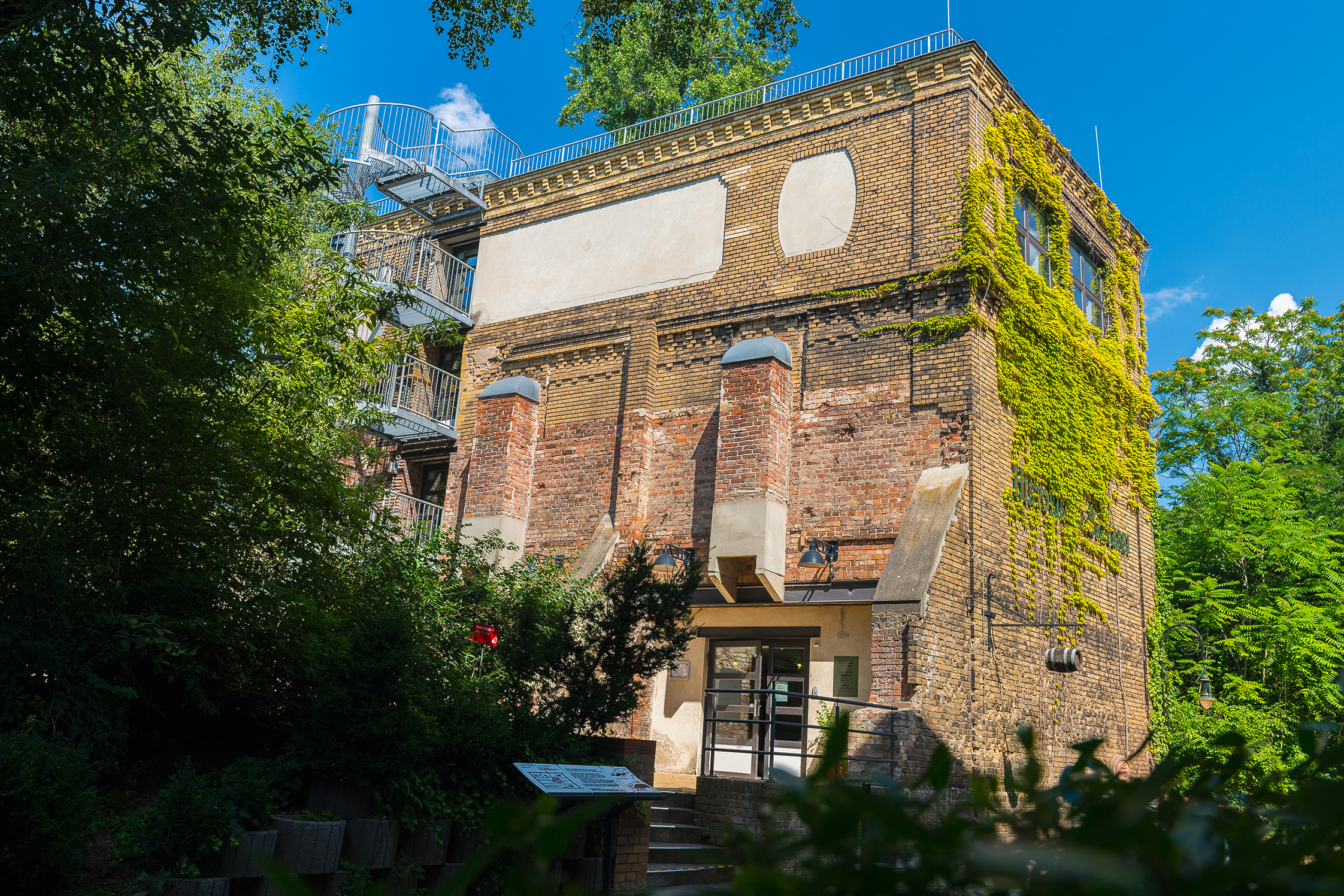
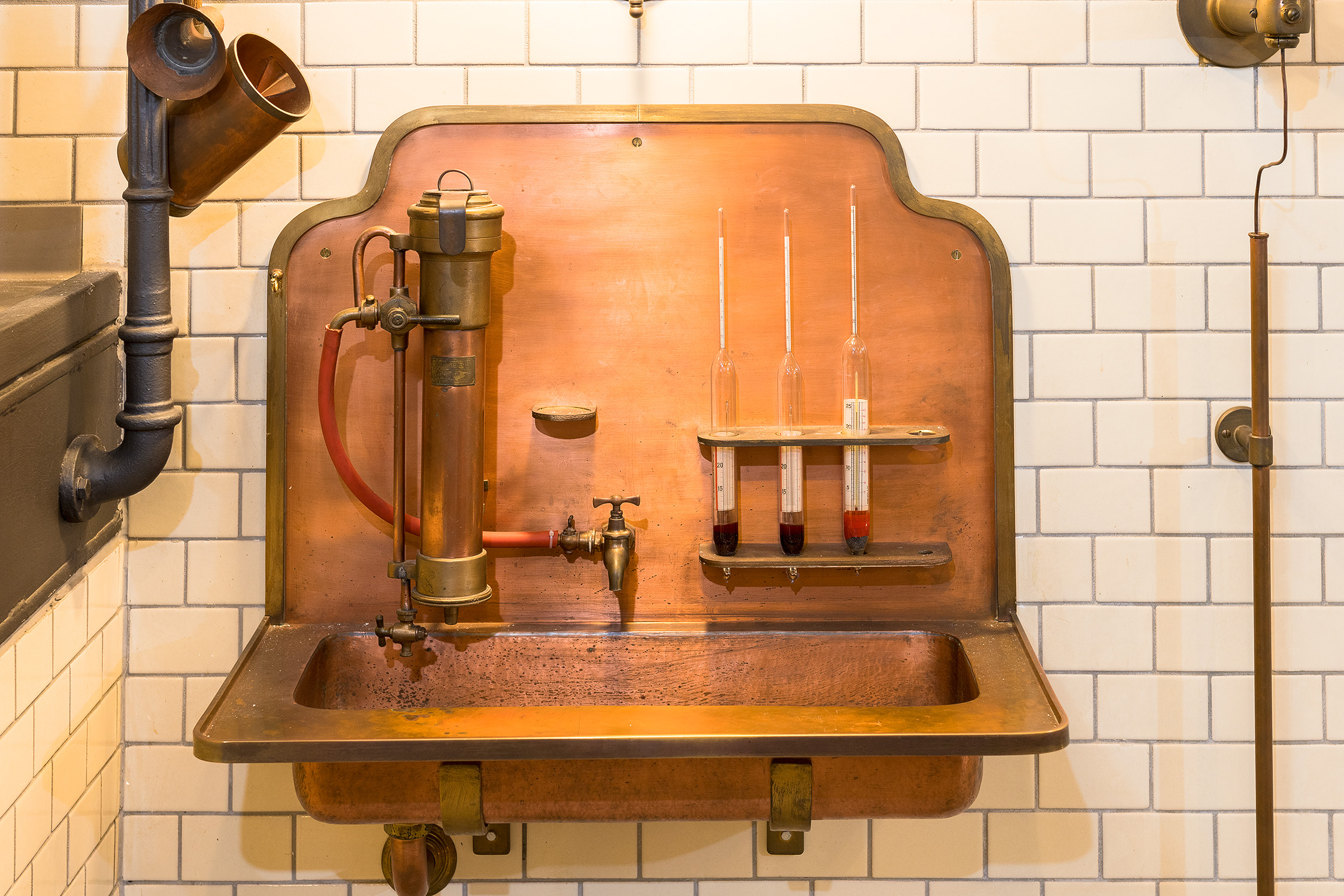
In a former beer warehouse belonging to Nuremberg’s Tucher Bräu AG, various pieces of brewing equipment have been arranged to reflect the beer-brewing process as it was carried out in the early 20th century. Brewers distinguish between three production stages: malting in the malt house, boiling in the brewhouse, and finally the processes of cooling, fermentation, and aging, which take place in the cellar. The centerpiece of the exhibition is the gleaming copper brewing kettle with its lauter tun. With its handwheels and piping, it stands as a technical monument. It was here that the wort was once brewed from water, hops, and malt and filtered along the way. At a small workbench, the brewer monitored the breakdown of starch into malt sugar. In large wooden barrels, the wort was transformed into finished beer through a fermentation and aging process lasting several weeks, after which it was ready to be bottled.
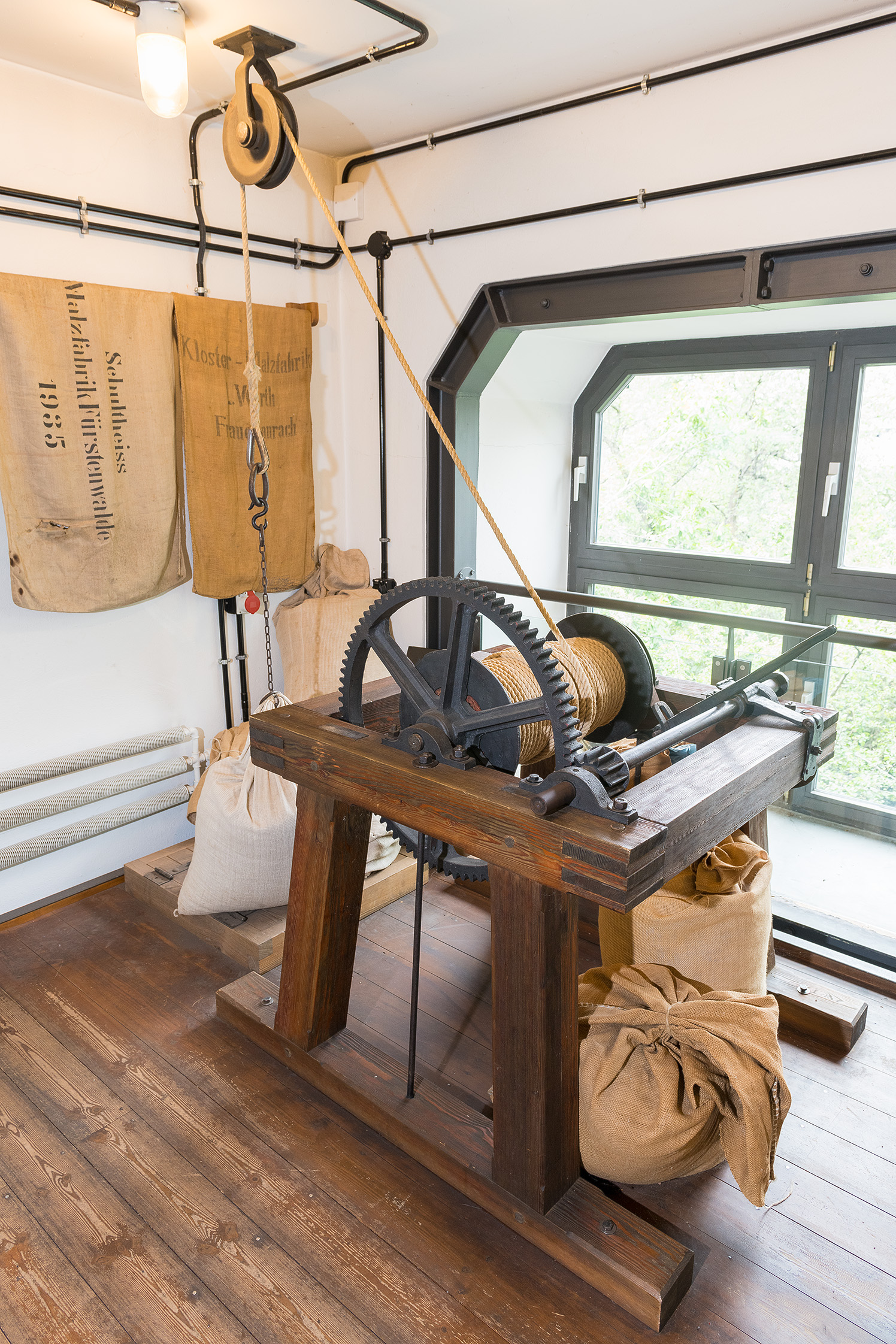
All other brewing equipment and machinery are neatly arranged on four floors surrounding the brewhouse, allowing you to easily follow the key steps in malt and beer production.
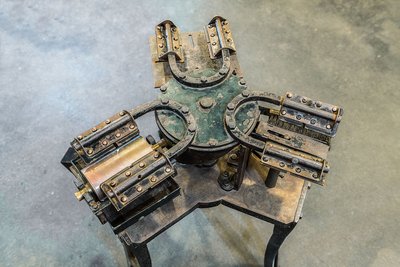
Labeling machine
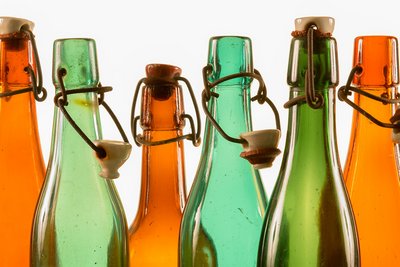
Modern bottle labeling machines can label up to 50,000 bottles per hour. In manual operation, the labeling machine shown here was used to apply a label to each bottle individually. Beer bottles used to be a luxury; only wealthy people could afford bottled beer.
Date unknown
SDTB/ Photo: C. Kirchner
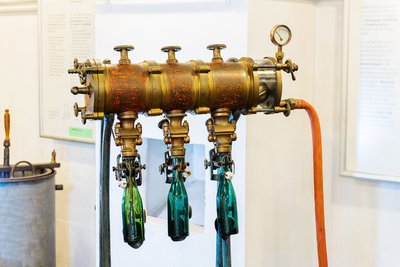
Battery Filler
Each bottle was filled individually in the bottling machine. To do this, the pressure between the keg and the bottle was first equalized, and then the beer was poured in.
Date unknown
SDTB/ Photo: C. Kirchner
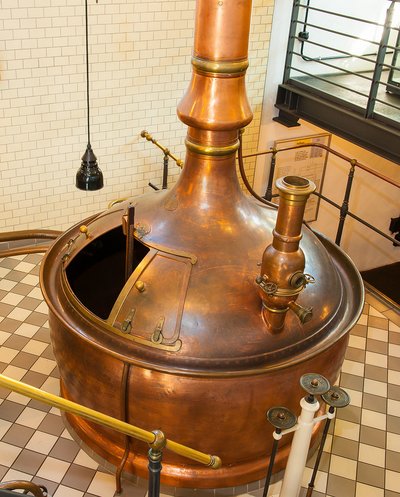
Brewing Kettle
The brewing kettle is used by the brewer to boil the mashed malt. The liquid produced during mashing is called beer wort. After filtering in the lauter tun, hops can be added. This extends the beer’s shelf life. The more hops the brewer adds, the more hoppy — that is, the more bitter — the finished beer will taste.
A. Ziemann, date unknown
SDTB/ Photo: C. Kirchner
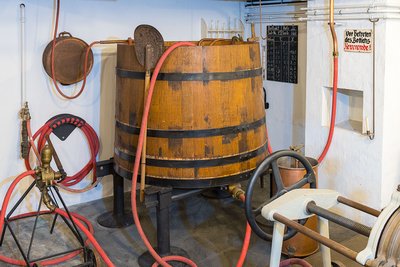
Fermentation Vat
The actual fermentation process in beer brewing takes place in the fermentation tank. To do this, the heated beer wort — also known as the brew — is cooled down so that the yeast, which is now added, is not destroyed. The yeast converts the malt sugars dissolved in the wort into carbon dioxide and alcohol. Depending on the type of beer, primary fermentation lasts anywhere from a few days to two weeks. In a separate keg or tank, secondary fermentation — which traps the carbon dioxide — creates the fizz in the beer.
Date unknown
SDTB/ Photo: C. Kirchner