Aviation
What's it About?
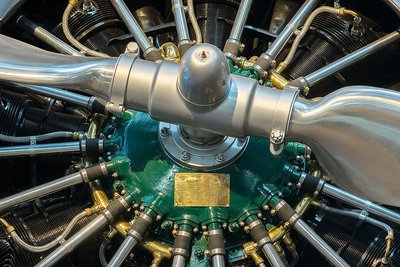
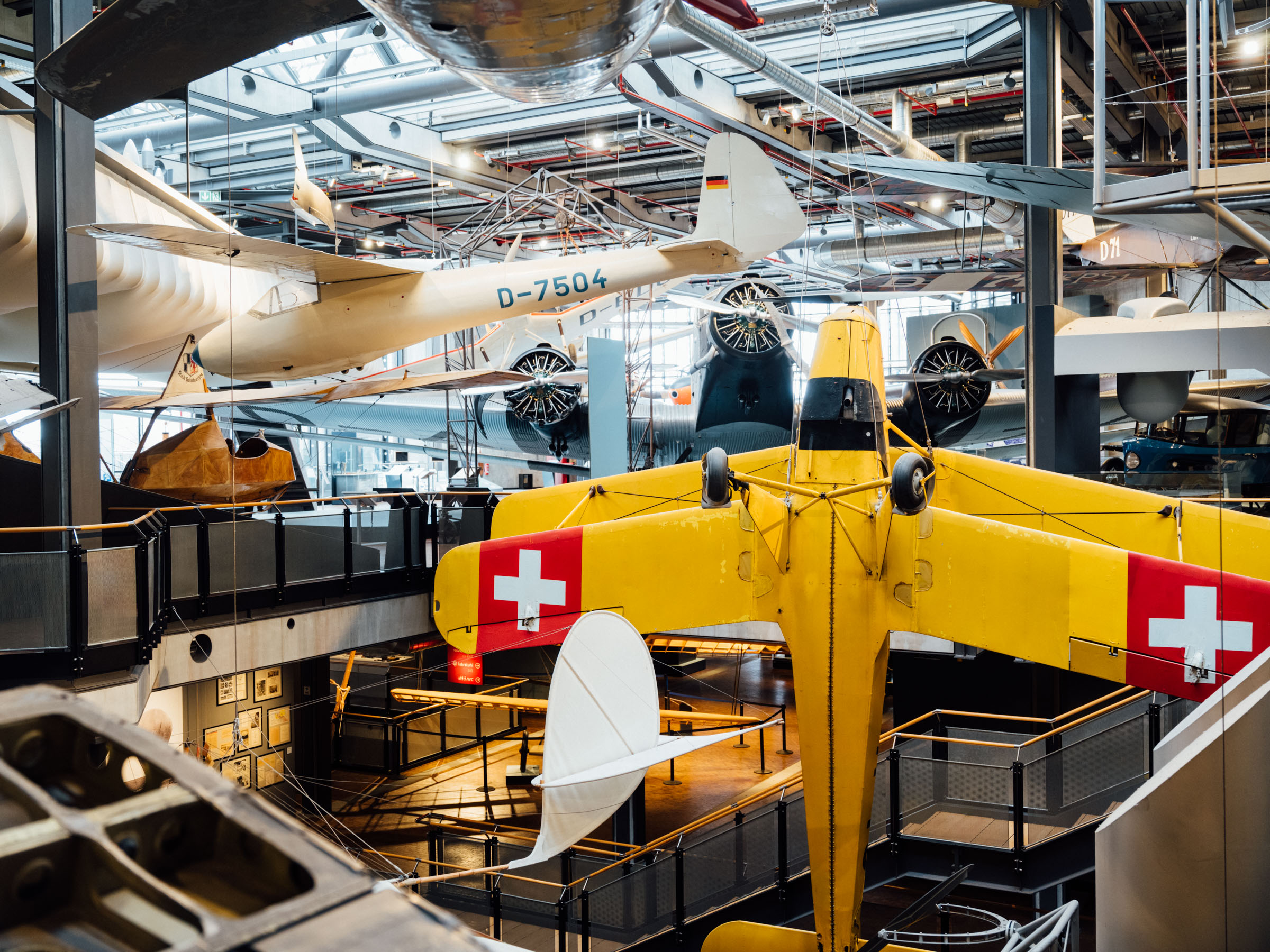
From the first unpowered glides to the development of an air transport network, as well as bombing raids and forced labor: The exhibition “From Balloon to Air Bridge” highlights the highs and lows of aviation in Germany through more than 40 aircraft and large-scale objects. The spaceflight section of the exhibition is currently under construction and features a small selection of rocket models and engines.
The Beginnings of Aviation
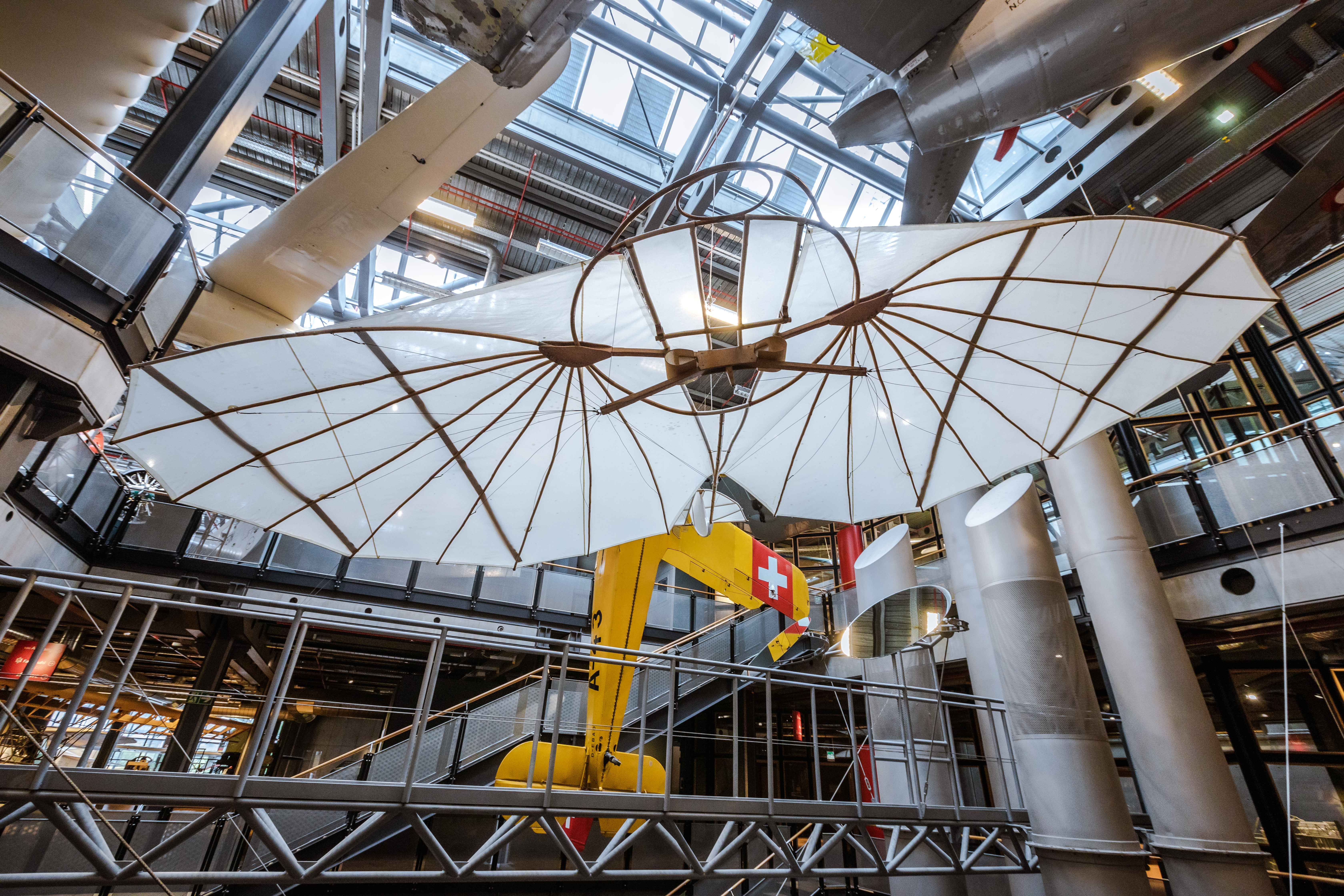
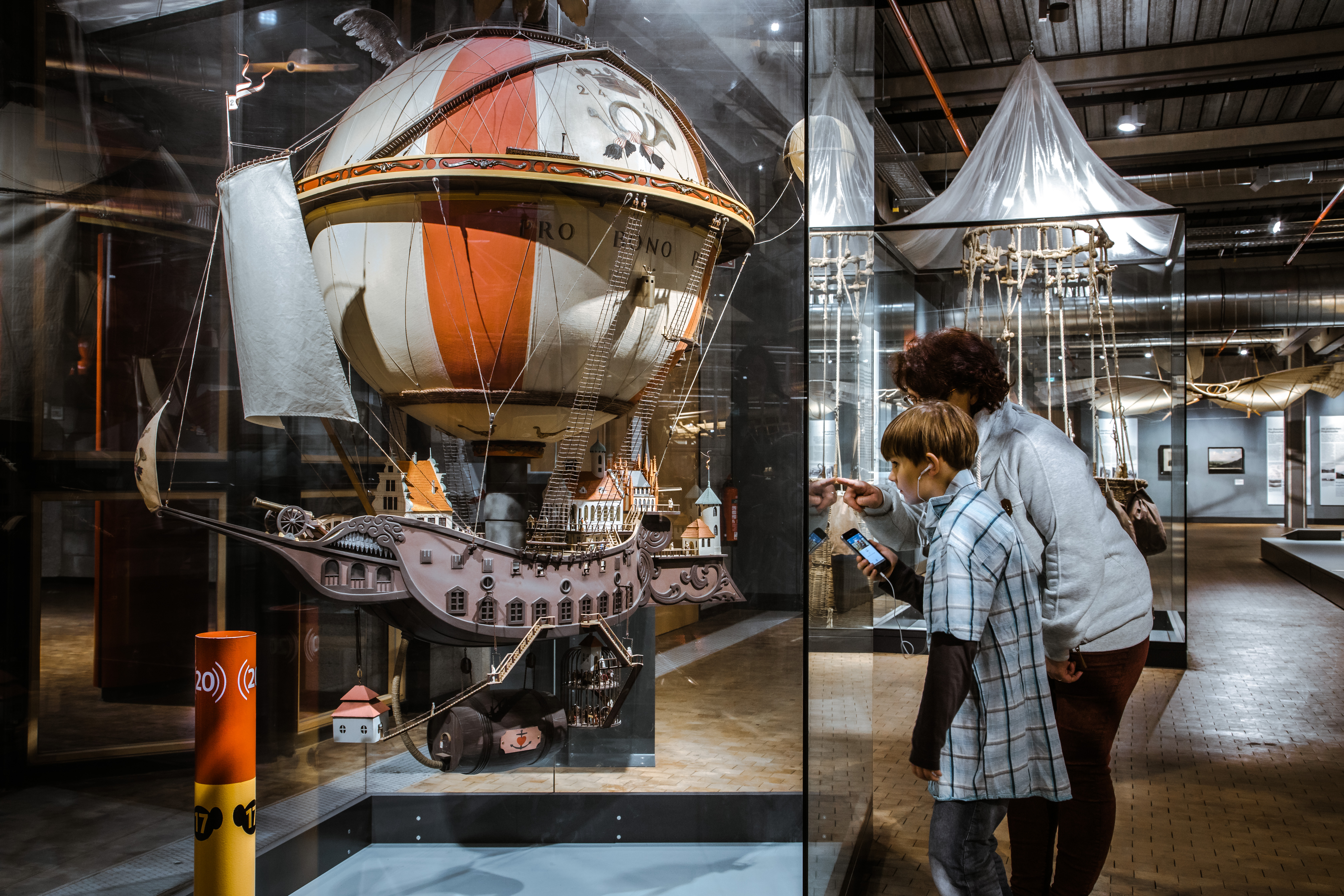
The exhibition begins with a model of a balloon featuring an unusual gondola. It was modeled after a satirical drawing from 1790 and illustrates how the first balloon flights toward the end of the 18th century captured people’s imagination. A good hundred years later, the steerable airship and Otto Lilienthal’s successful gliding flights ushered in a rapid advancement in aviation technology. The exhibition explains how Lilienthal researched the fundamentals of flight and shared his knowledge with aviation enthusiasts around the world. It also takes a look at the history of the Johannisthal airfield, which, starting in 1909, became one of the first centers of powered flight in Germany. In a historic workshop, visitors can discover some curious flying machines from the early years of aviation.
World War I and the Interwar Period
During World War I, aircraft were further developed, mass-produced, and used for reconnaissance and combat missions. The exhibition shows how aerial cameras, radio technology, and weapons found their way into aircraft and how fighter pilots were glorified as “knights of the skies.” The exhibition contrasts this heroic image with the “invisible” work of ground crew and female workers in the aircraft factories.
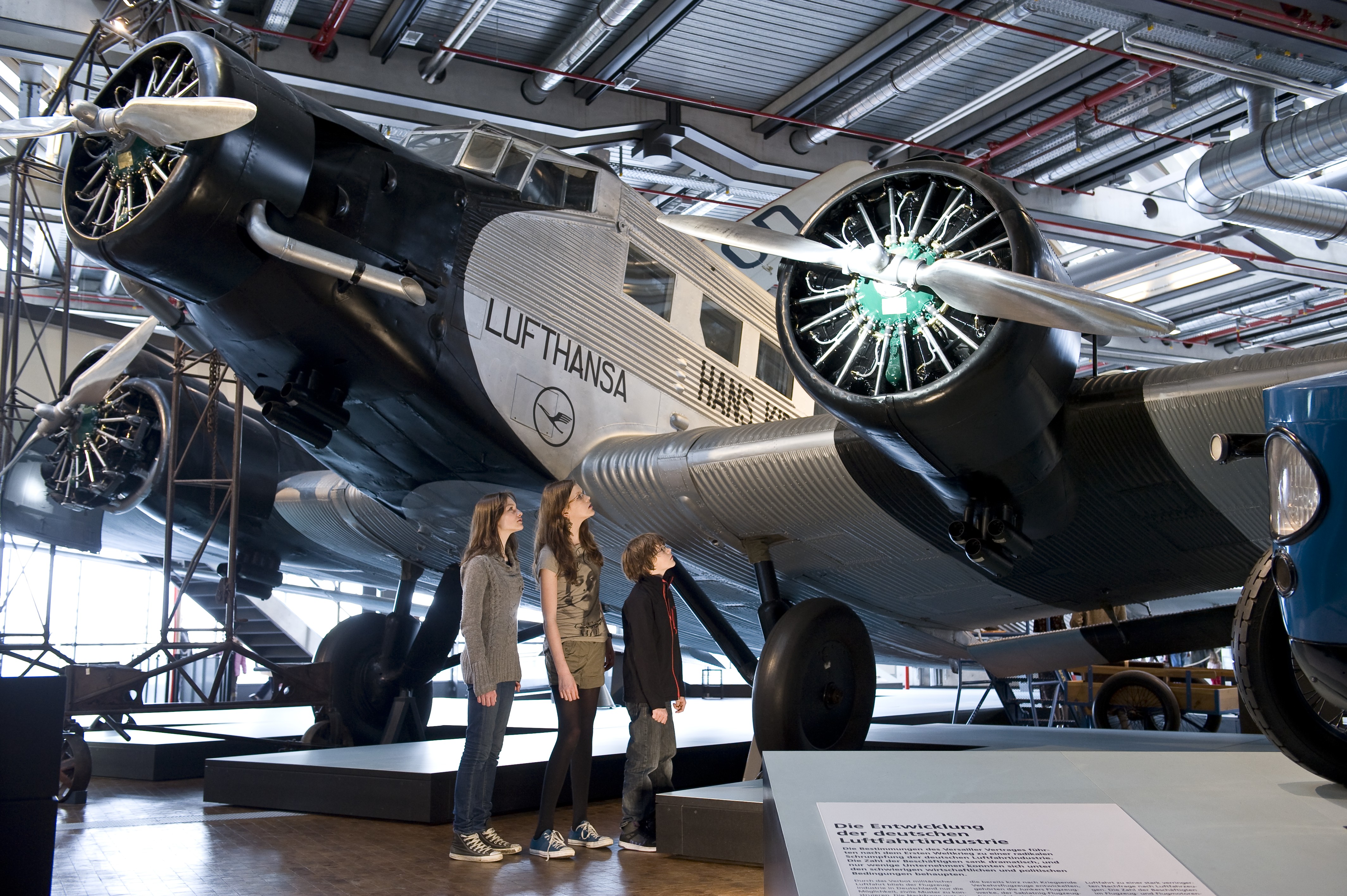
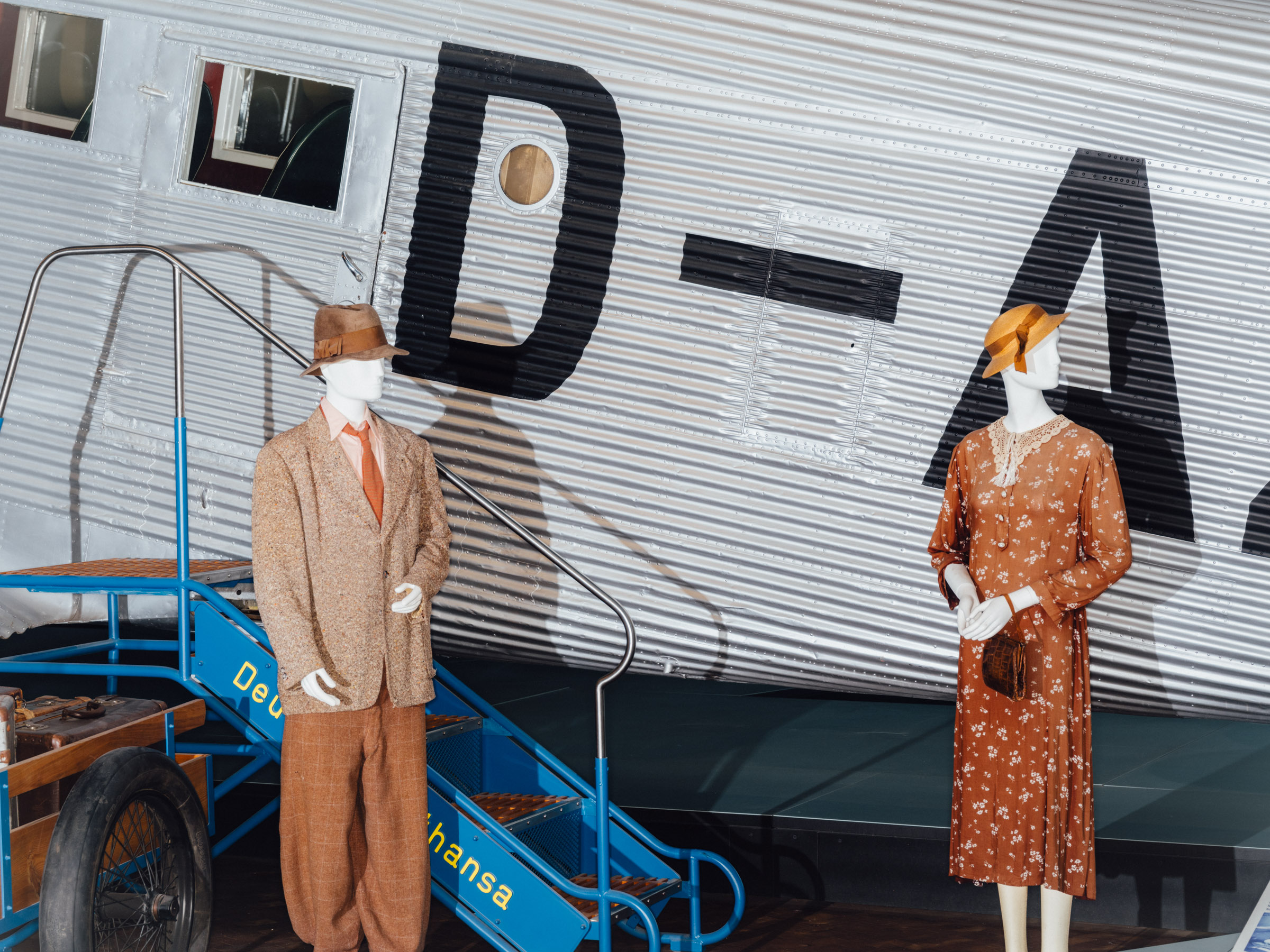
After the war, decommissioned military aircraft were used to transport mail and passengers. Traveling on them was an adventure. The exhibition features a Halberstadt Cl IV fighter plane converted into a passenger aircraft and a Junkers Ju 52 from the 1930s. A direct comparison highlights the technical developments in commercial aircraft construction during that period. In addition, the exhibition explains how the restrictions of the Treaty of Versailles affected German aviation and why women had no chance of establishing themselves professionally in the male-dominated field of aviation.
A Devastating Mission During World War II
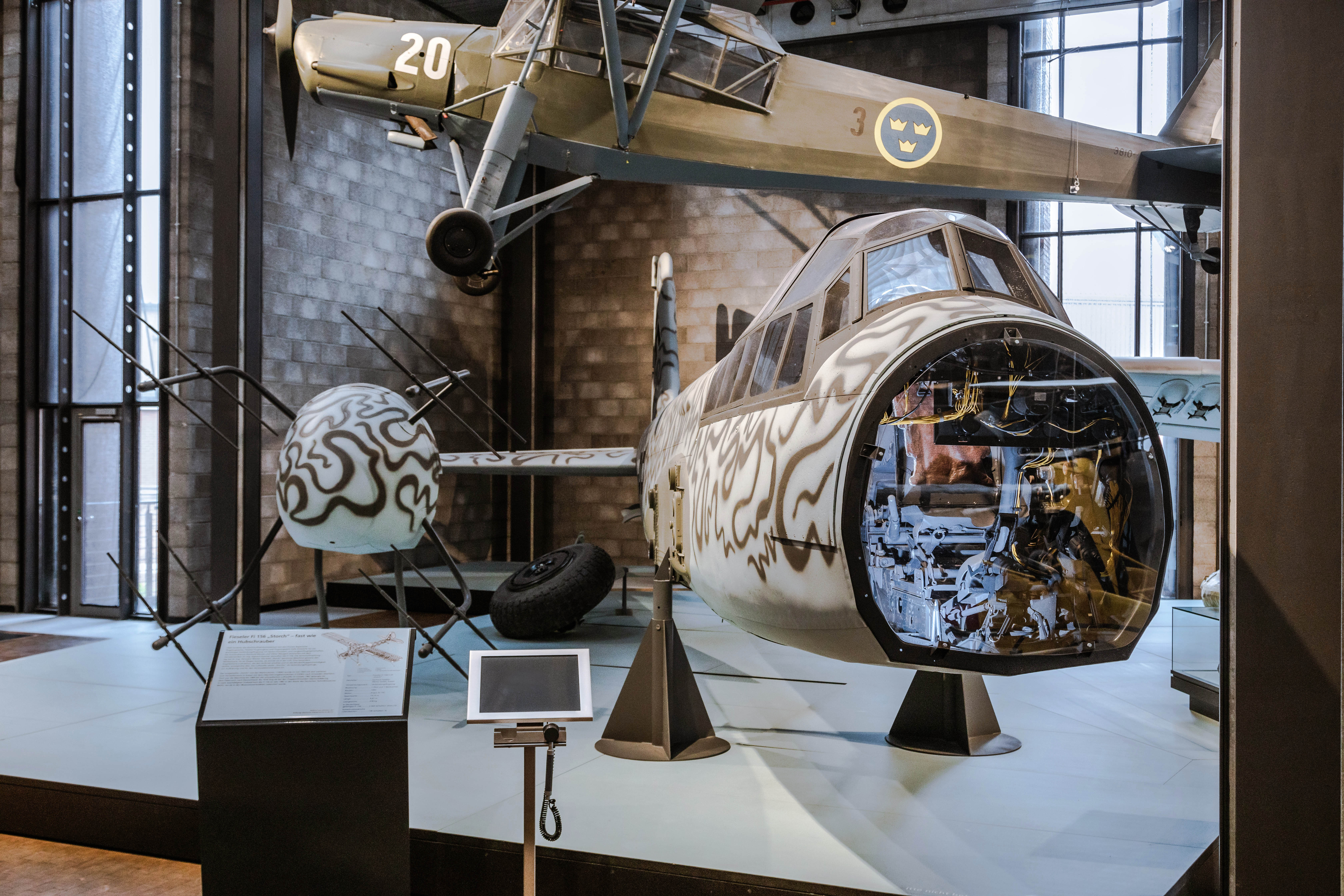
During World War II, aerial warfare reached a new level. Widespread bombing destroyed European cities and claimed the lives of hundreds of thousands of civilians. The wreckage of a Ju 87 dive bomber symbolizes the horrors of the bombing campaign, and using the example of the production of the A4 rocket — which the Nazis referred to with the propaganda term “Vergeltungswaffe” V2, the exhibition demonstrates how male and female forced laborers, as well as concentration camp prisoners, were exploited to build German aircraft and rockets under inhumane conditions.
The Air Lift and Aviation in Divided Germany
The Douglas C-47, visible from afar, is attached to the facade of the Deutsches Technikmuseum as a reminder of the 1948–49 Airlift. At that time, “candy bombers” supplied the western sectors of the city with essential goods during the Berlin Blockade imposed by the Soviet military. Through specific examples, the exhibition illustrates how differently aviation developed in divided Germany.

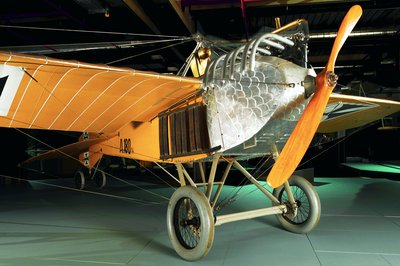
Jeannin Stahltaube (Steel Pigeon), Type 11
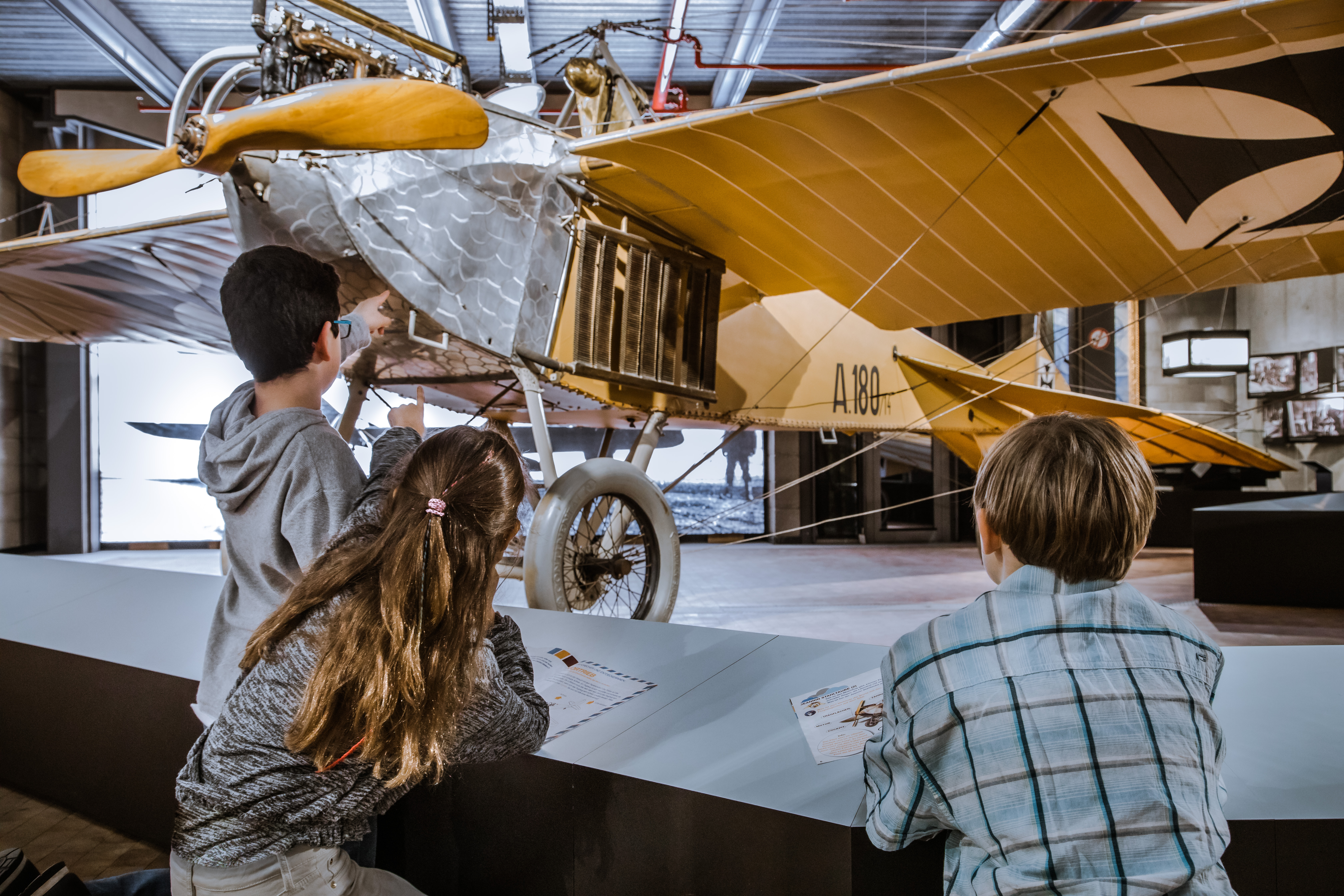
The fuselage of the Jeannin Stahltaube (Steel Pigeon) is welded from steel tubing — hence its name. It is not only the oldest fully preserved aircraft in the collection, but also the only surviving aircraft designed by Johannisthal-based engineer Emil Jeannin. Before World War I, the “Taube” was the standard aircraft for training and reconnaissance flights. However, it was of military significance only at the beginning of the war, as it was already technically obsolete by 1914.
Emil Jeannin-Flugzeugbau GmbH, 1914, on loan from the Museum of Aviation and Space in Krakow
Photo: M. Knickriem
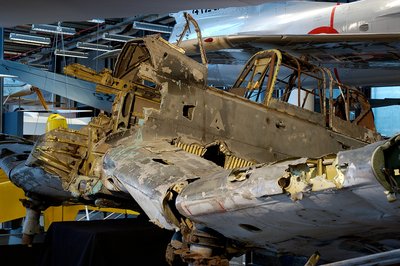
Ju 87
The Ju 87 was a dive bomber, known as the “Stuka” for short, that was used by the German Luftwaffe during World War II to carry out precision bombing runs on targets in a dive. The Ju 87 saw its first combat action as early as 1938, when it was flown by the German Condor Legion during the Spanish Civil War. The wreck on display was recovered in Russia in 1994. It had made an emergency landing there in 1942.
SDTB/ Photo: C. Kirchner
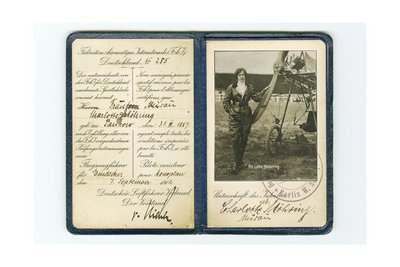
Pilot Charlotte Möhring's Pilot's License
Charlotte Möhring was the fourth of six women in Germany to earn a pilot’s license before World War I. She overcame prejudice and opposition and worked as a flight instructor and aerobatic pilot until women were excluded from aviation at the outbreak of the war in 1914. Starting in the 1920s, women once again began advocating for their place in aviation, but remained subject to severe restrictions in their professional practice. It wasn't until 1986 that they were granted access to commercial pilot training in Germany.
1912
SDTB/ Photo: C. Kirchner
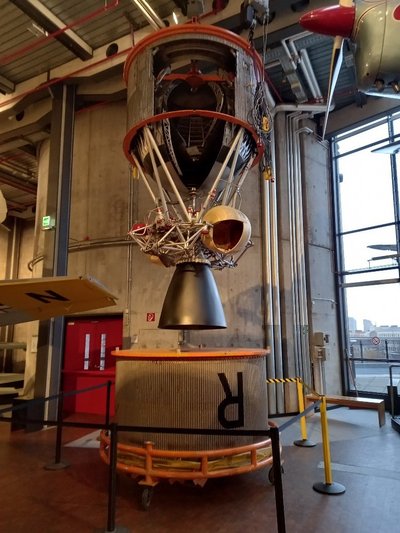
Astris Rocket Stage
“Astris” was the third stage of the “Europa” rocket. Developed by six European nations in the 1960s, the rocket was intended to carry satellites and was meant to provide Western Europe with access to space independent of the United States and the Soviet Union. The “Europa” rocket program was unsuccessful and was discontinued in 1974. The rocket stage on display was never used.