Shipping
What's it About?
“The Ship as a World of Experience”—this exhibition lets you experience the fascination of seafaring. Be inspired by the close relationship between people and ships, between cultural history and maritime history, and by people’s desire to broaden their horizons.
The Cultural History of Shipping
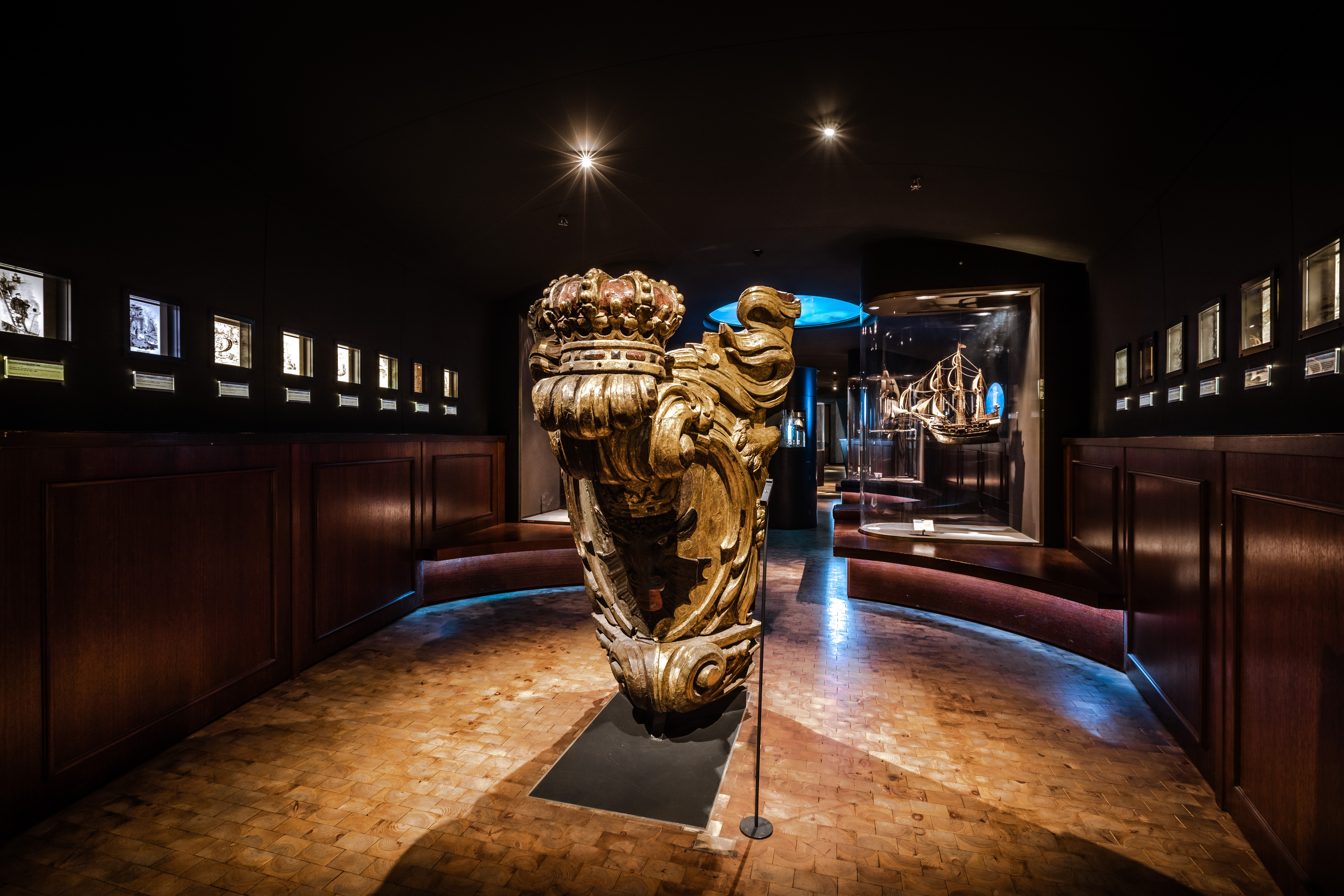
In the Shipping exhibition, Captain Nemo welcomes visitors against the backdrop of the NAUTILUS submarine: The sailor from Jules Verne’s novel “20,000 Leagues Under the Sea” talks about water, the oceans, and the dangers at sea. And he talks about superstitions: sea monsters and figureheads. For many sailors, these decorations on the ship’s bow embodied the ship’s soul. Any damage to them was considered a bad omen.
The world of shipping is reflected in countless stories, myths, symbols, and sayings that have emerged around ships, the sea, and the people who sail them. More than 1,100 exhibits spread across three floors and 6,500 square meters bring you the history of ocean and inland waterway shipping through 30 thematic areas — one of the world’s largest exhibitions on this topic.
From a leather boat to an aircraft carrier
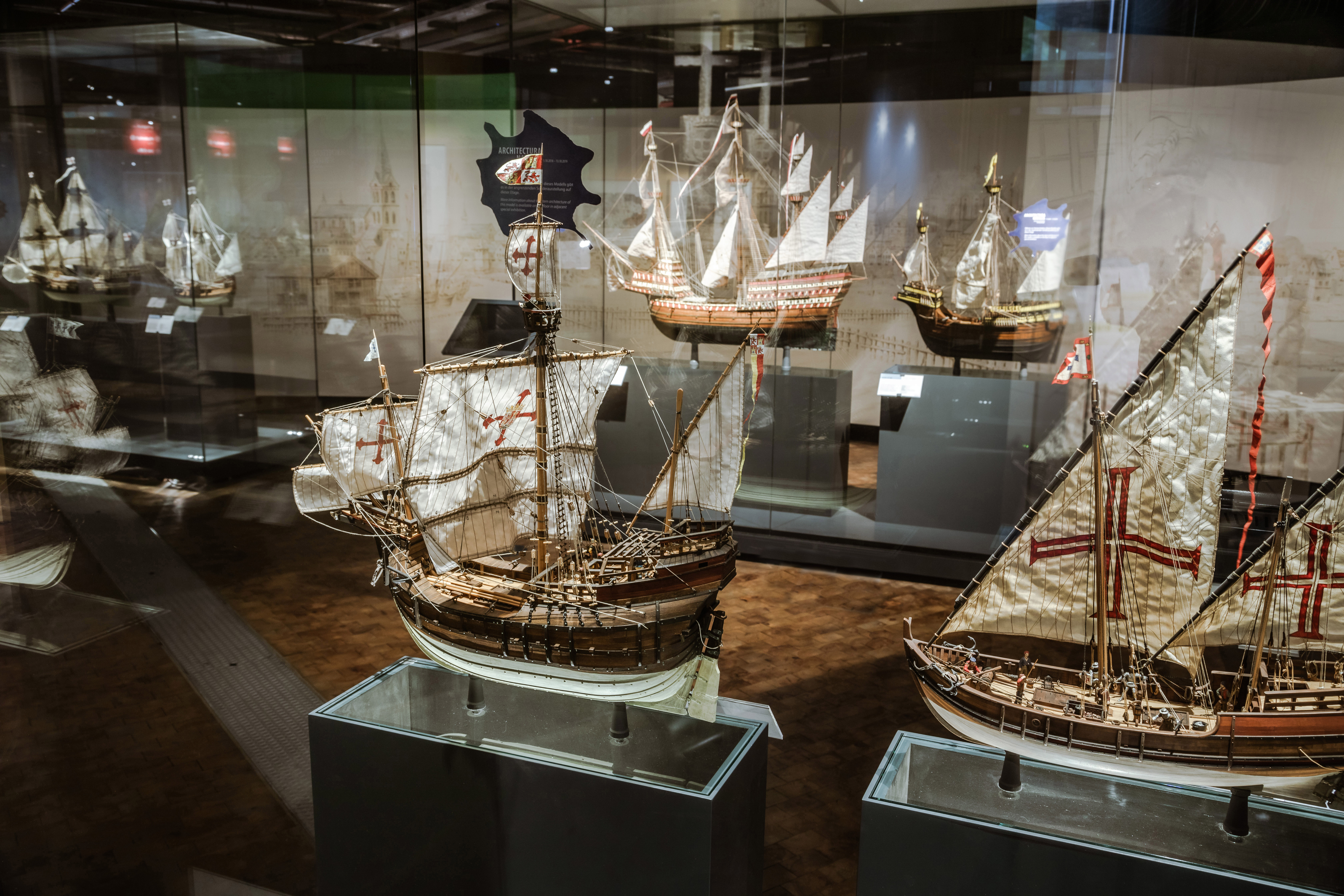
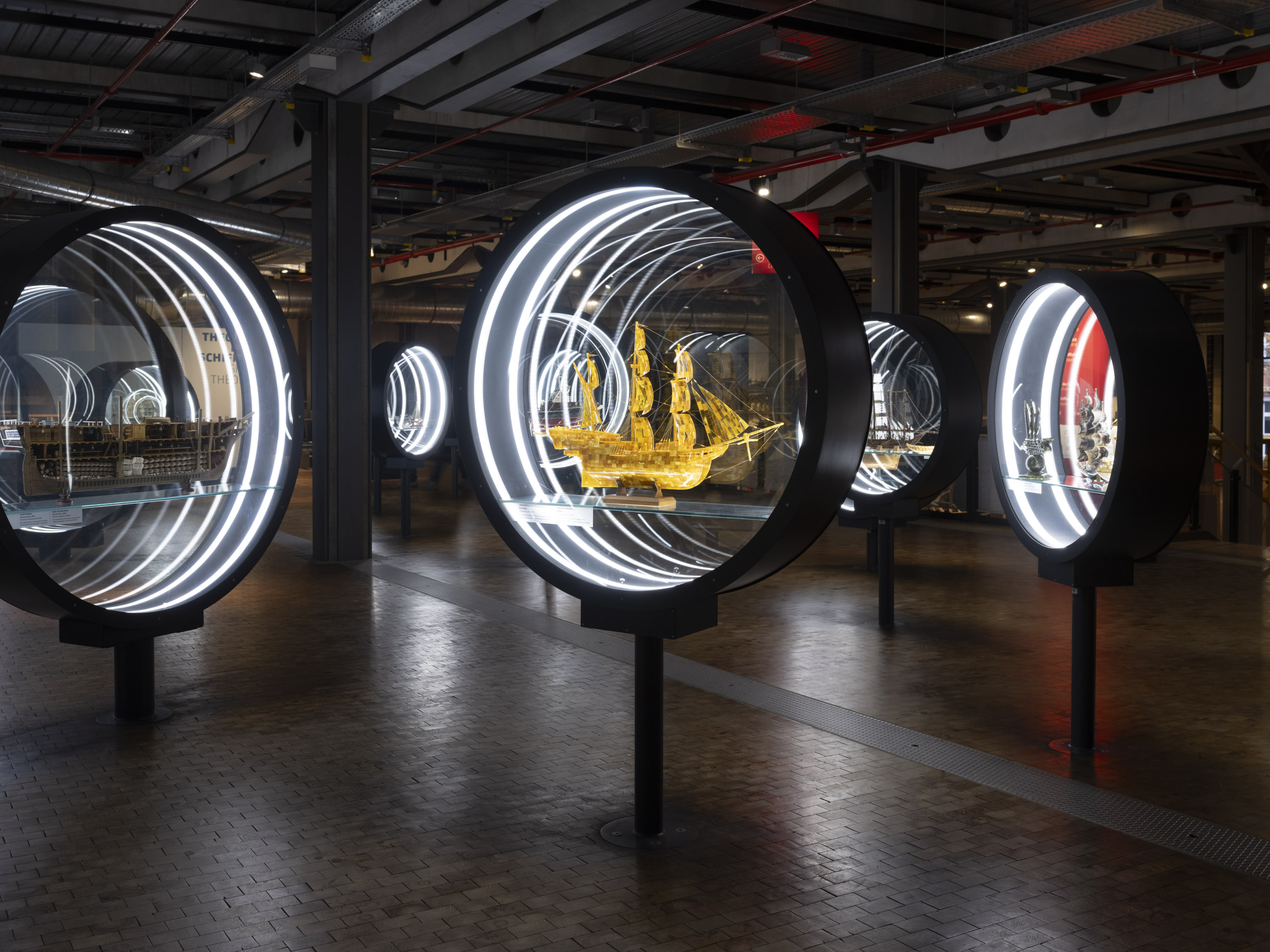
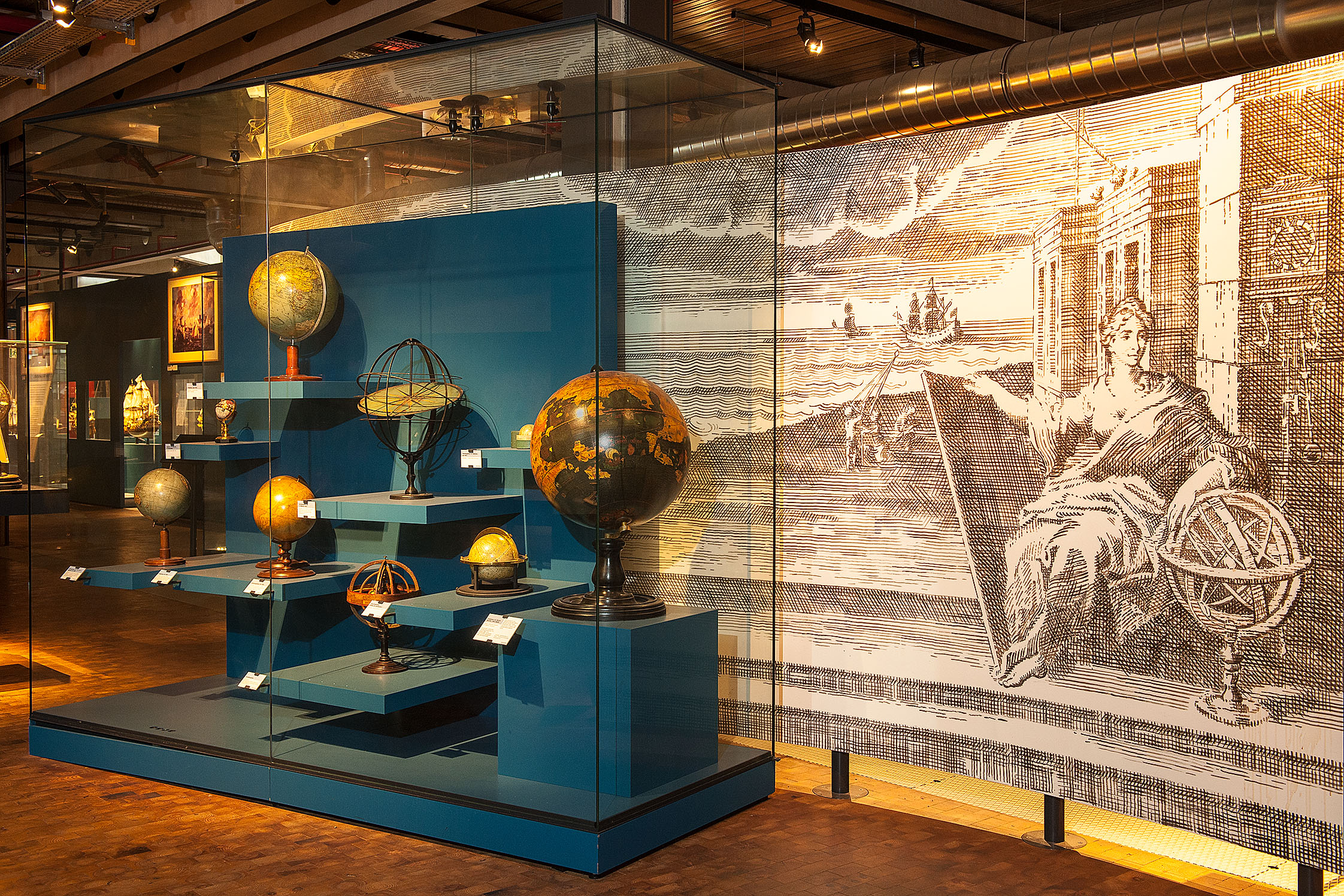
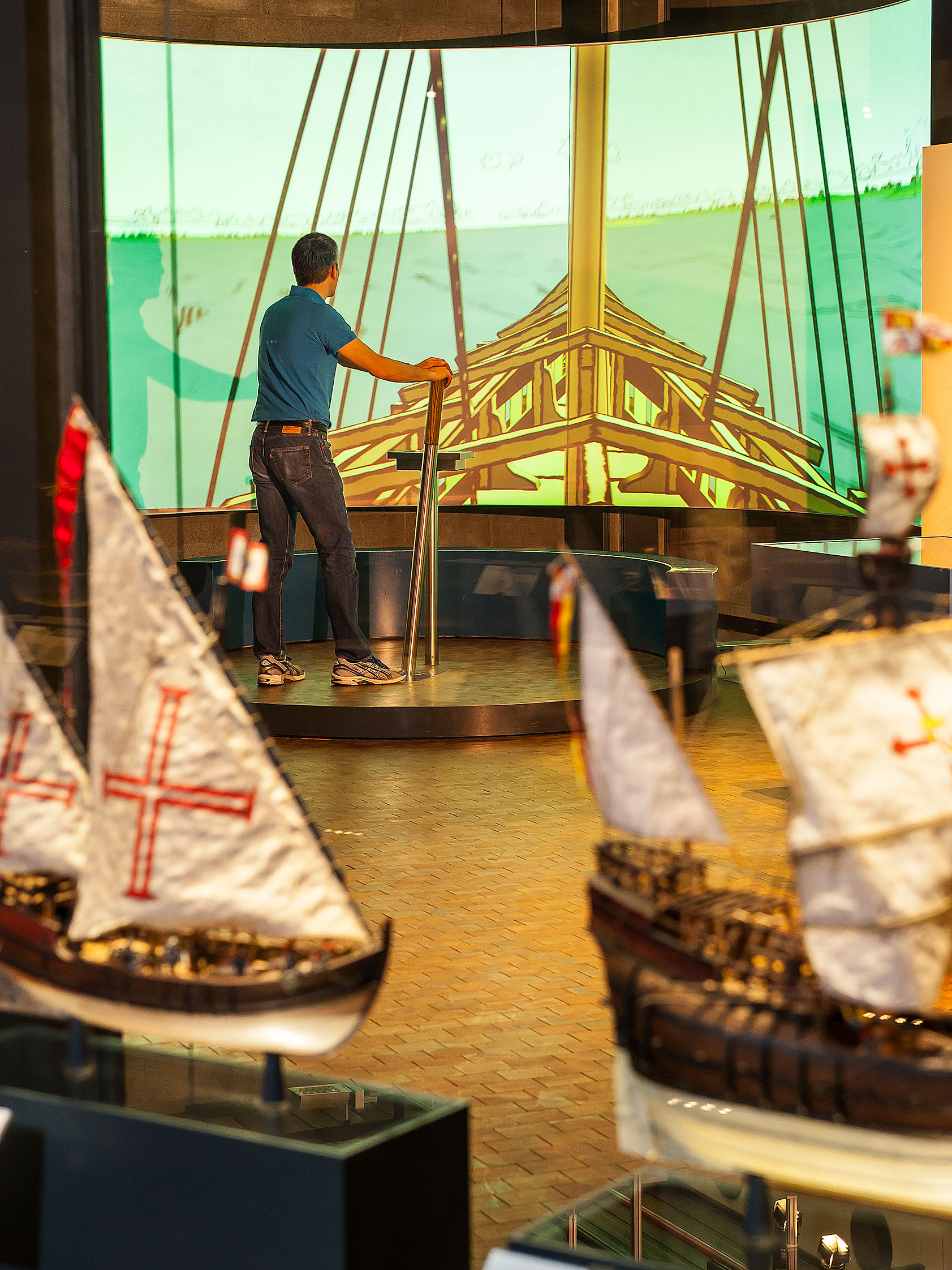
The main section on ocean-going shipping begins with the chronologically organized exhibit “Shipping and History.” Fifty-two ship models on a 1:50 scale illustrate developments in size and shape over the past 10,000 years — from leather boats to aircraft carriers. Many other exhibits showcase a wide variety of facets of ocean-going shipping. Five thematic areas alone focus on the history of navigation and the various methods of navigation: from the earliest navigational instruments to modern satellite navigation.
Without further developments in navigational instruments, the global sea voyages undertaken by the Portuguese and Spanish around 1500 would not have been possible. These voyages, in turn, transformed navigation techniques and shipbuilding in Europe, created a new worldview, and gave rise to new power dynamics on the world’s oceans; European colonialism thus began. In addition, the exhibition takes a look at sea rescue, whaling, and the manufacture of sails and ropes. You can also learn about James Cook’s voyages of discovery and German emigration.
How does a ship behave in the water?
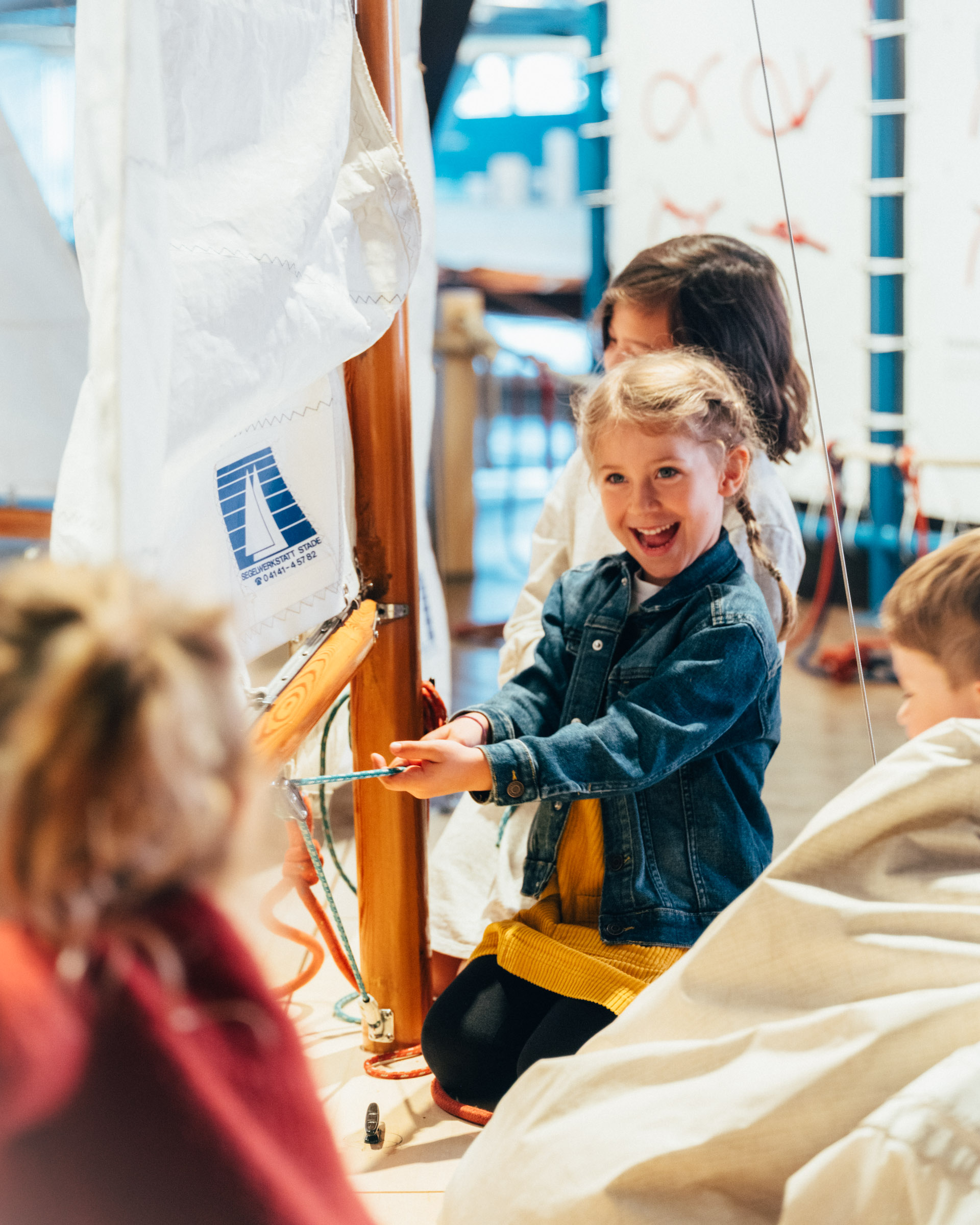
For thousands of years, shipbuilding — with its complex challenges — was based purely on experience. It wasn’t until the 18th century that mathematical knowledge became increasingly important in ship design. You’ll learn about the forces acting on a ship’s hull and how ships move, and you’ll have the chance to try your hand at dry sailing and tying sailor’s knots.
Inland Waterway Shipping Between the Elbe and the Oder
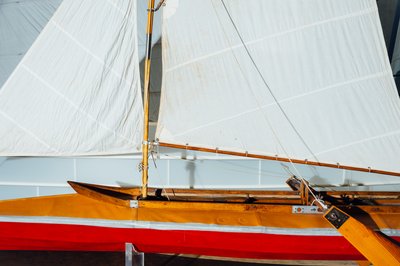
The section titled “Water Sports Between the Havel and Spree,” featuring many original sailboats, rowboats, and motorboats, leads into the ground floor. Next comes “Inland Waterway Shipping Between the Elbe and Oder,” which played a key role in Berlin’s development. So-called “Kaffenkähne” transported large quantities of goods and building materials into the city via the numerous waterways. Locks and lifts enabled ships to navigate small and large differences in elevation and continue their journey along various waterways. The exhibition features historical models from the former Institute and Museum of Oceanography as well as the Museum of Transportation and Construction.
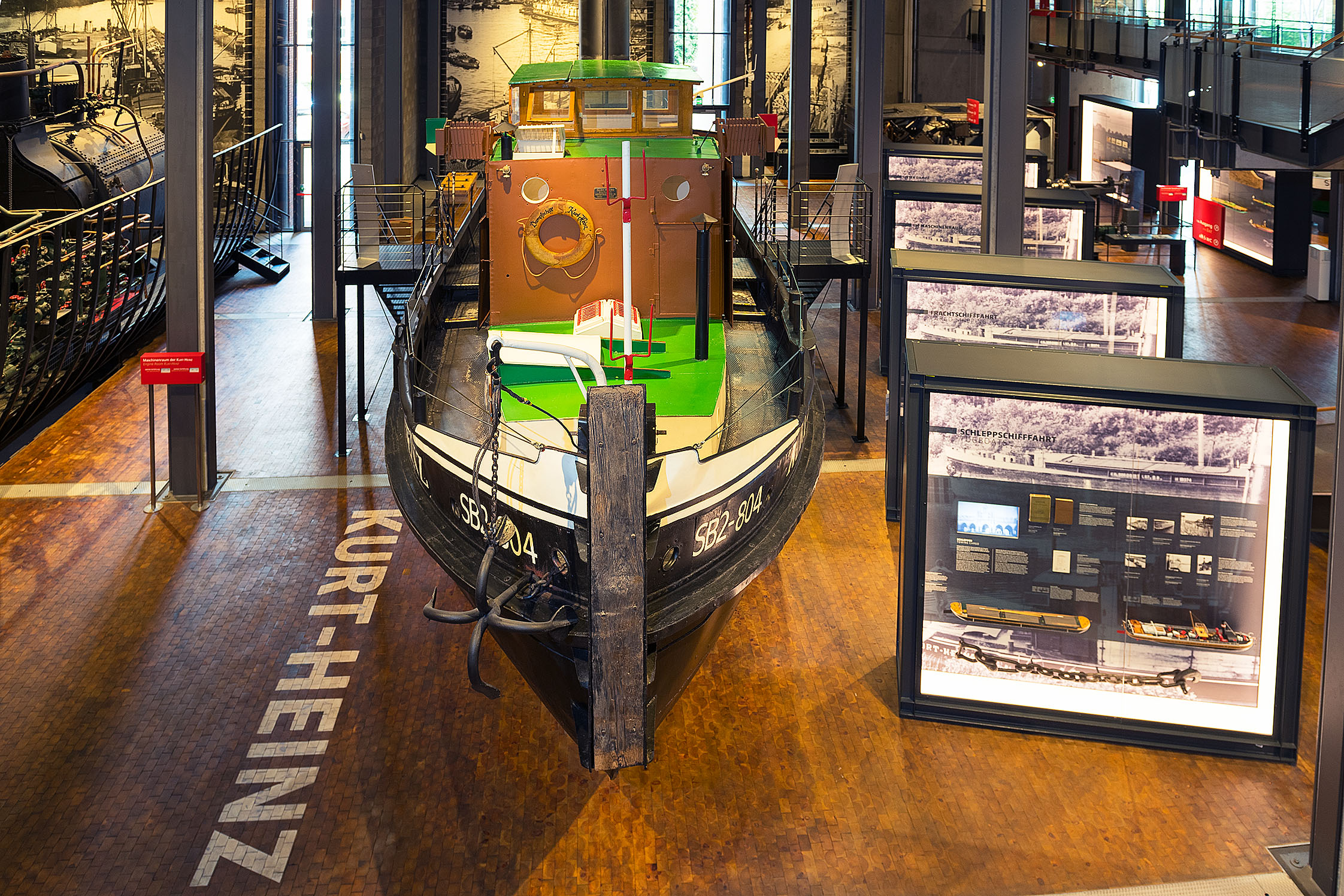
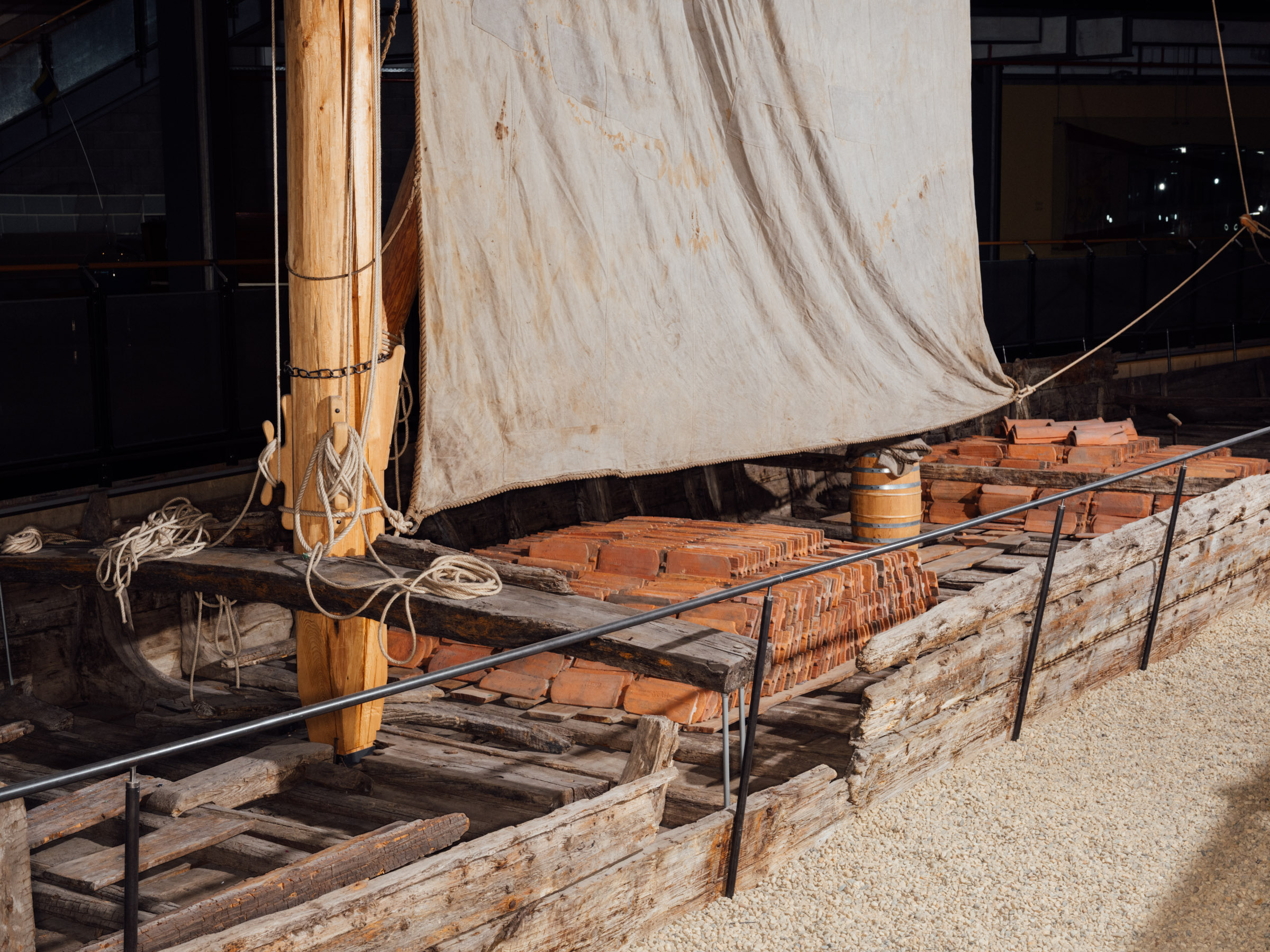
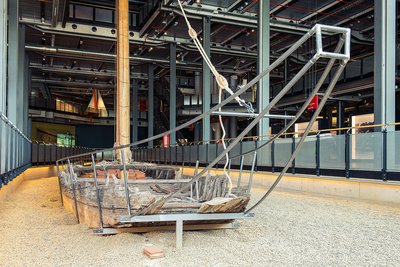
Kaffenkahn
“Berlin was built from a barge”: The foundation for Berlin’s development was the many waterways in the surrounding area, along which large quantities of goods were transported into the city. The Kaffenkahn, salvaged from the Havel River, once carried roof tiles and is the largest object in the exhibition.
circa 1840
SDTB/ Photo: Ériver Hijano
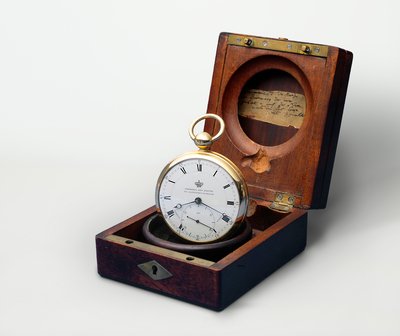
Alexander von Humboldt's Pocket Chronometer
The Danish king presented Alexander von Humboldt with this precision watch in 1830. For a time, it was kept at the Berlin Observatory. Humboldt noted this on the lid of the mahogany case. In 1799, Alexander von Humboldt ushered in a new era of scientific expeditions on the American continent, using the latest measuring instruments.
Johann Heinrich Kessels, 1828
SDTB/ Photo: C. Kirchner
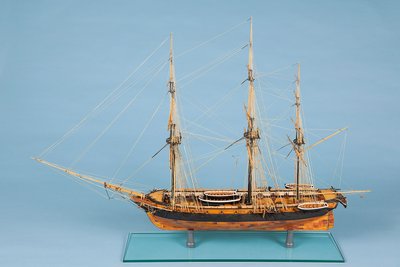
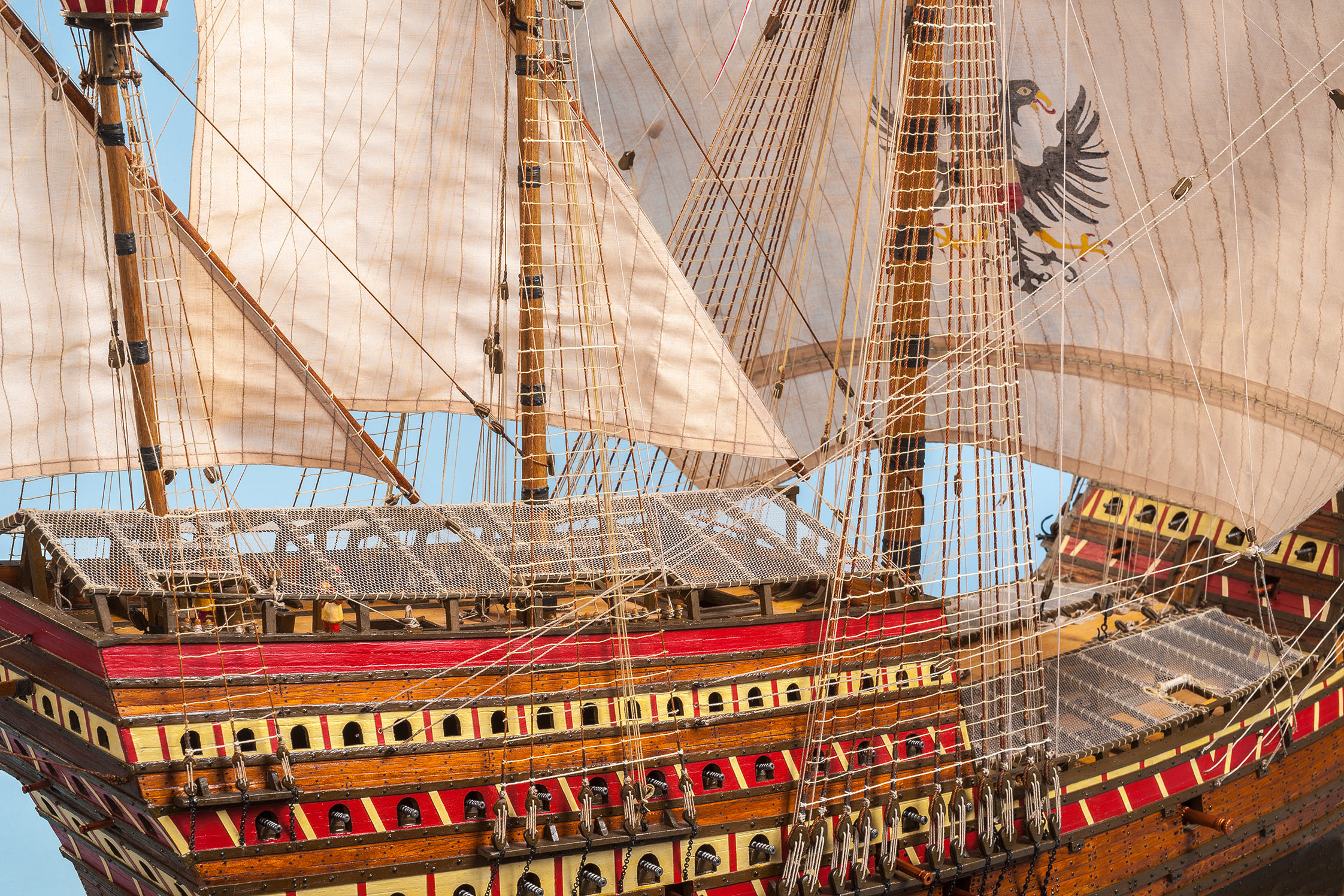
Model of the CREOLE, a flat-deck corvette from 1826
A (sailing) corvette is a three-masted, fully rigged warship ranked below a frigate. The flush-deck corvette CREOLE had only small superstructures at the bow and stern instead of a forecastle and quarterdeck. These fast ships were used primarily for reconnaissance. The model of the CREOLE is on a 1:50 scale.
Michael Keyser, 2003
SDTB/ Photo: C. Kirchner
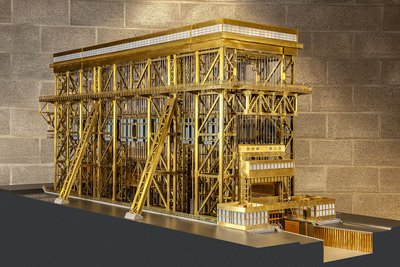
Model of the Niederfinow Boat Lift
Locks, inclined planes, and boat lifts make it possible to overcome differences in elevation between sections of the canal. At the Niederfinow boat lift, the elevation difference is a full 36 meters in five minutes — discover how it works using a 1:50-scale brass model. The model of the Niederfinow boat lift was crafted at the museum over a period of 20 years, largely by volunteers.
Rudolph, Lambrecht, Masella, Tannenberg, 2014
SDTB/ Photo: C. Kirchner