Machine Tools
What's it About?
Machines have changed the way human beings perform work, making work easier and production more effective. Come and see the tools that drove the Industrial Revolution – in action! The Historical Machine Shop provides practical insight into 150 years of industrialization.
The Power of Steam
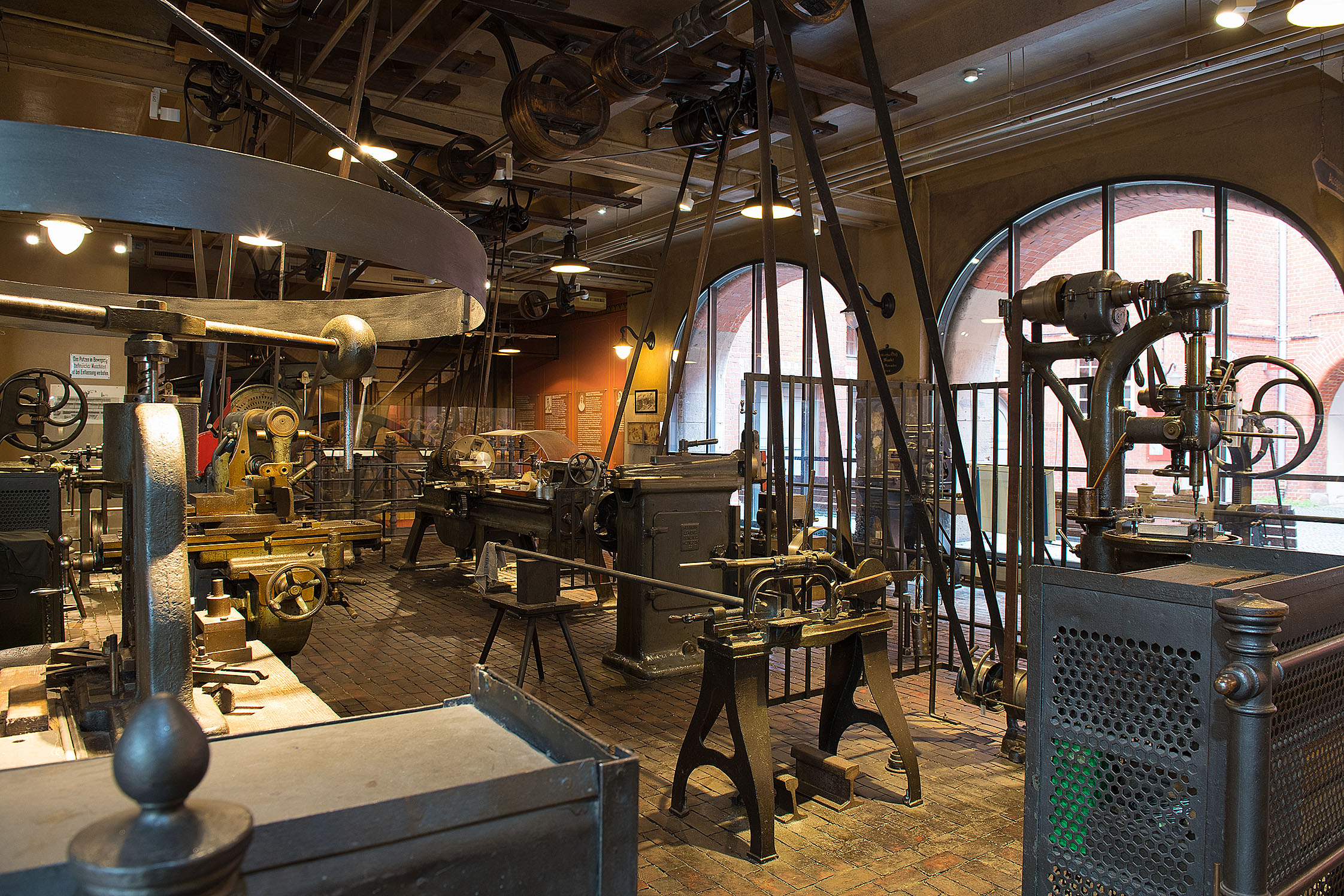
The steam engine with its flywheel, and a leather transmission belt for transferring the wheel’s rotary motion to the line shaft – these were the main components of the Industrial Revolution and the mechanization of production. The flywheel transformed the power produced by the steam engine into rotational energy, and the transmission belt and line shaft transferred this energy to other machines using additional belts. Steam hisses, gears creak, and woodchips fly in the Deutsches Technikmuseum’s Historical Machine Shop. The most important machines from a machine tool factory dating to around 1900 can be seen here in action.
Steam Engine from 1860 with 16 PS
Most of the machines come from West Berlin factories, where they were in use until the 1970s. One very special exhibit, on loan from the Science Museum in London, is the Whitworth universal lathe, built in England in 1860. It was used to make parts for steam engines and locomotives. As for the steam engine at the heart of the Workshop, it was built by Thomas Horn in Westminster in 1860. It was used to drive a grain mill in the county of Sussex until 1914. The engine weighs ten to twelve metric tons and has 16 hp. A flywheel 1.98 meters in diameter transmits the engine’s power, thus driving the machines.
Depiction of a Historical Machine Shop
A huge mural behind the steam engine, painted in 1983 by Manfred Bleßmann, gives the exhibition a very special atmosphere. It provides visitors with a view inside a machine shop from the late 19th century. Workers stand at their workbenches in long lines. Many belts can be seen, connecting the machines at each individual workstation with the line shaft.
Drilling, Sawing, Milling, and Smoothing
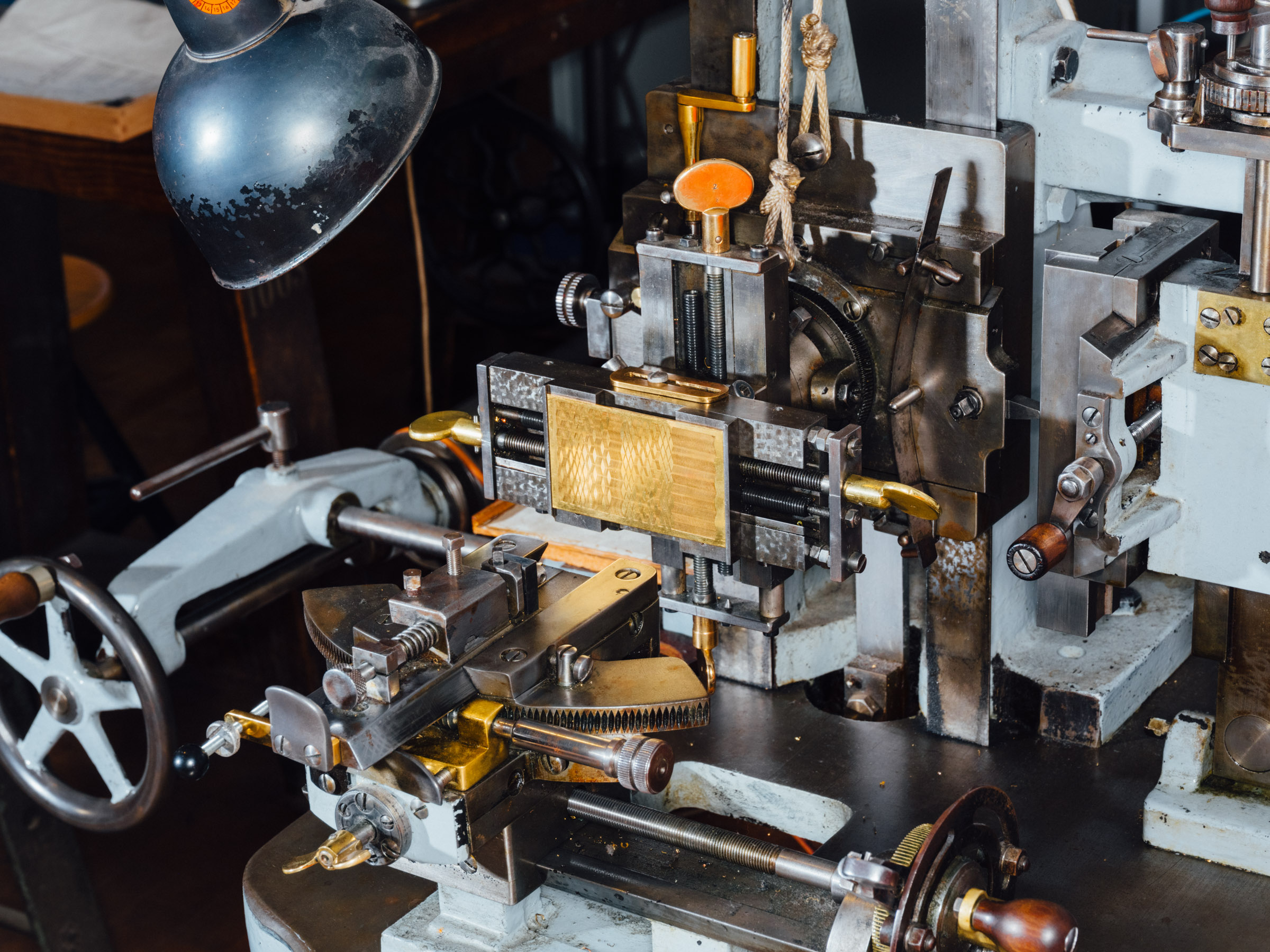
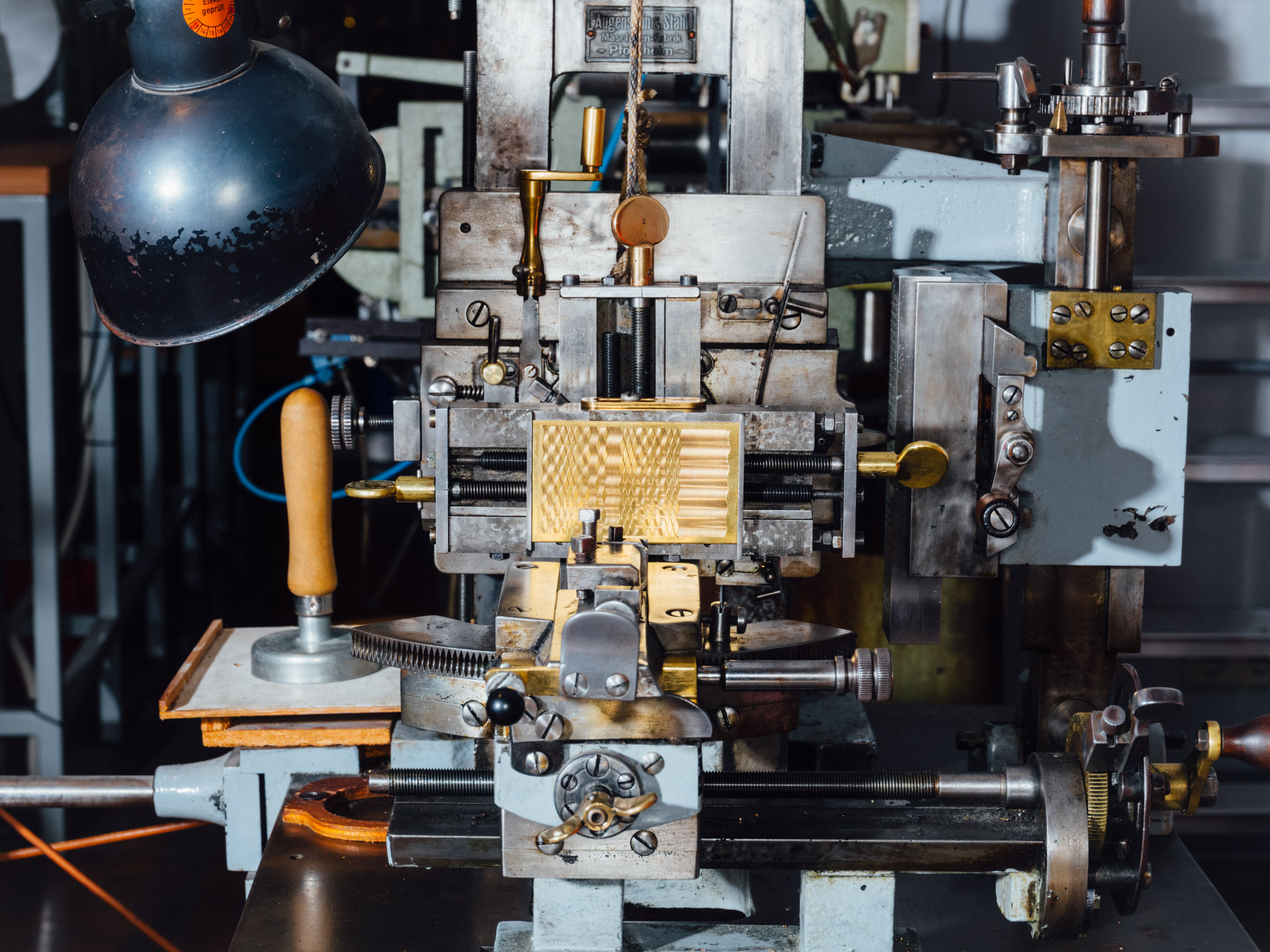
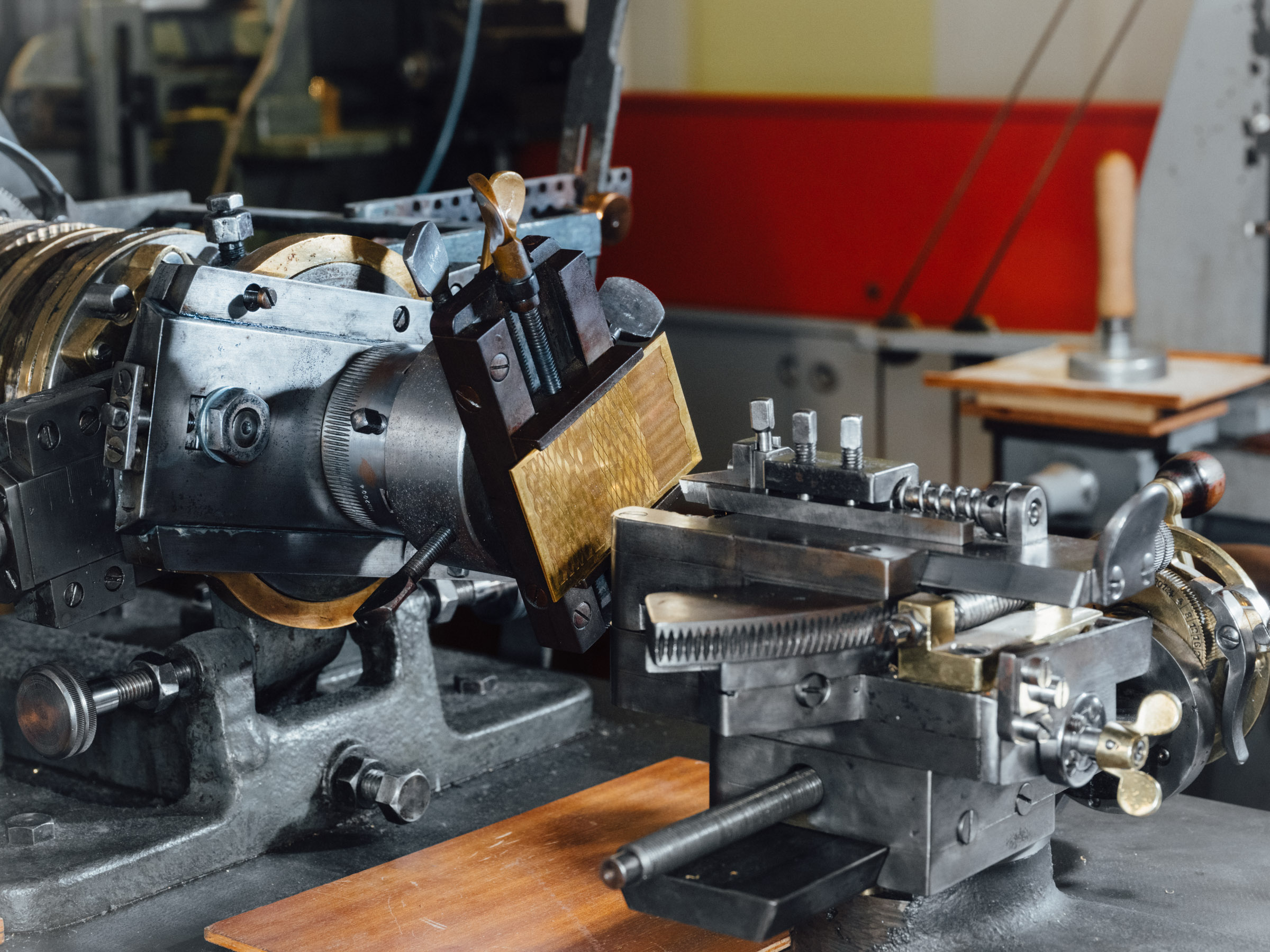
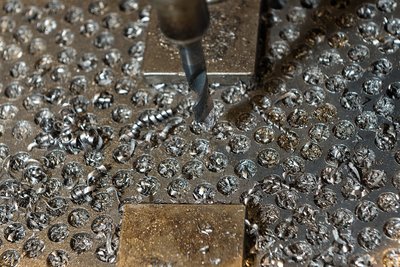
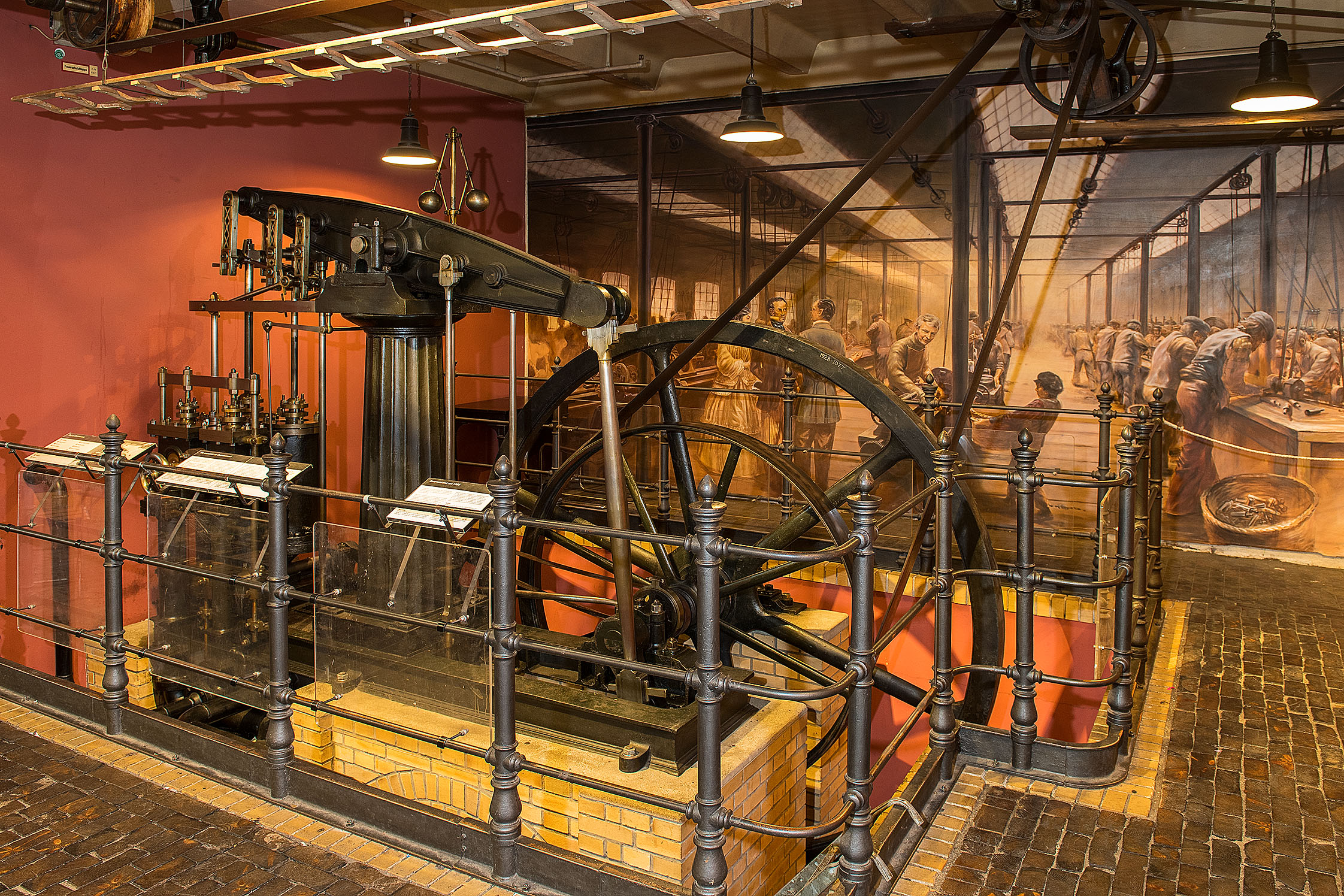
The machines in the exhibition were used to make metal parts for other machines. Mechanical engineering was and still is the heart of German industry. Every aspect of metal processing and finishing could be done with machines like these, be it drilling, sawing, lathing, milling, smoothing, or stamping. Visitors to the regular demonstrations in the Historical Machine Shop can have small metal souvenirs stamped for them on an eccentric press dating to around 1920.