Chemicals and Pharmacy
What's it About
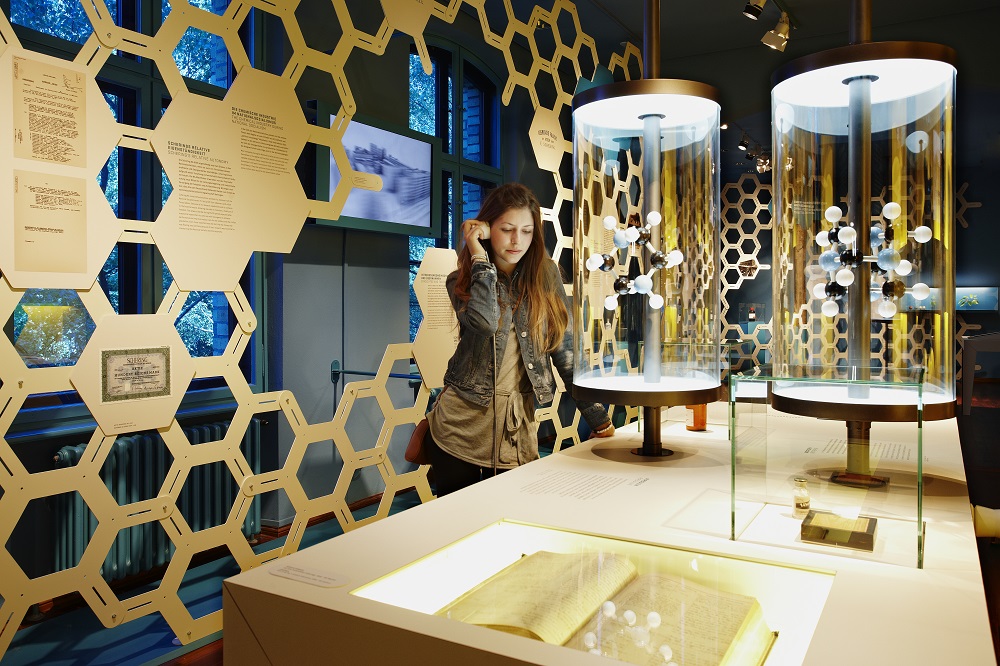
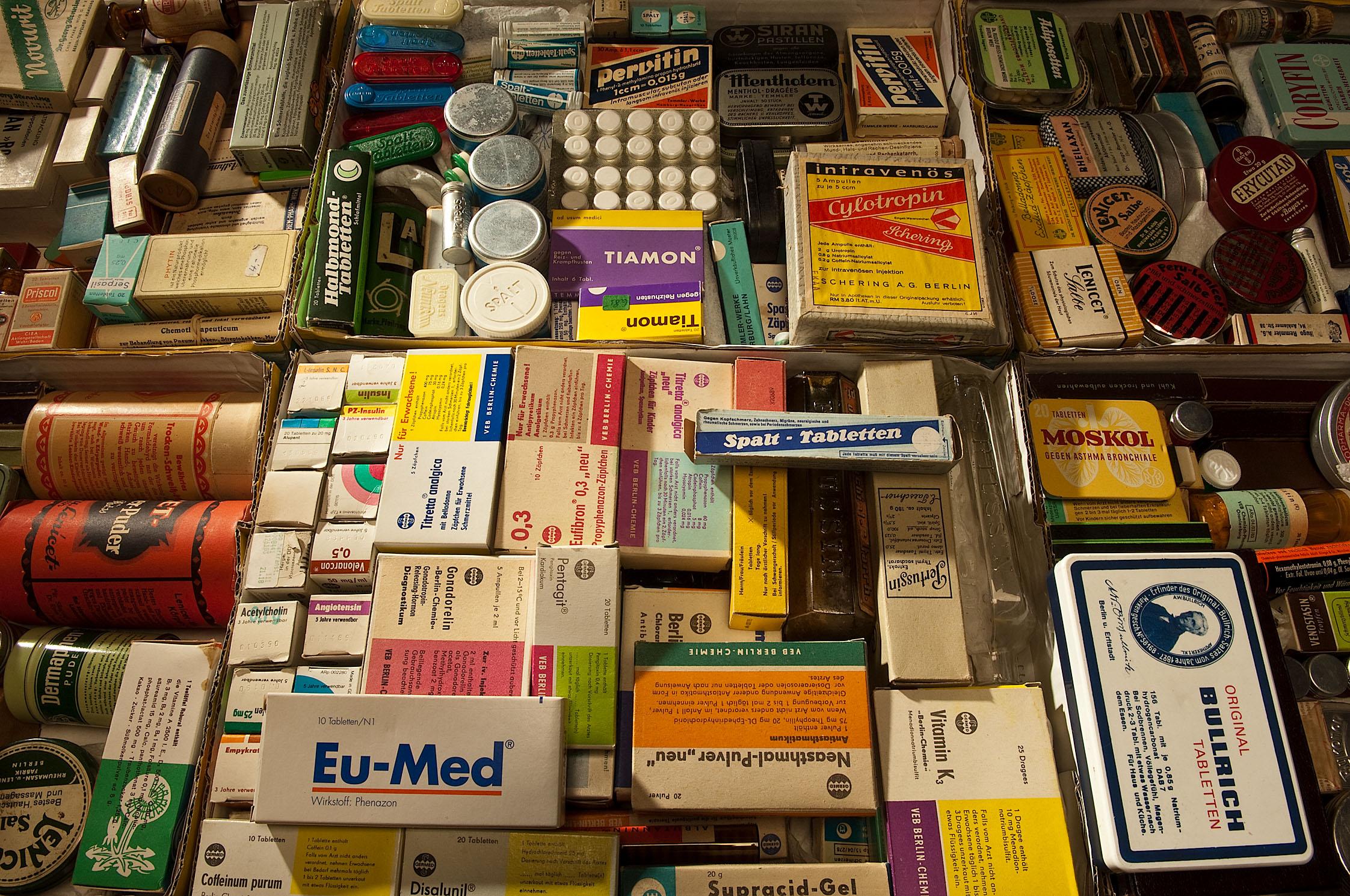
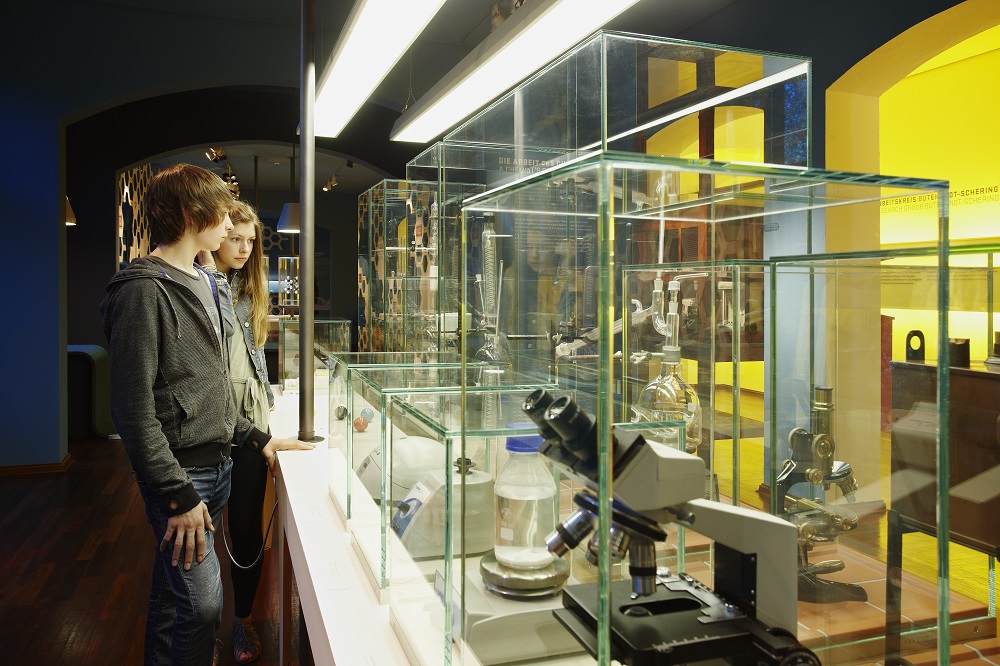
The exhibition “Pills and Pipettes” explains the processes involved in the production of chemicals and medications, as well as the properties and effects of these substances.
Chemistry and Pharmacy: Two Sides of the Same Coin
Spanning 400 square meters, the exhibition is divided into two large sections: chemistry takes center stage in the blue section, while pharmacy is the focus of the green section. The close connection between these two disciplines quickly becomes clear: Medications help the body regulate chemical and hormonal processes. Their manufacture follows the same chemical principles as the production of “ordinary” chemicals. After all, all substances are made up of molecules. And the study of the composition and transformability of these molecules is chemistry.
Talking Molecules and Fireworks
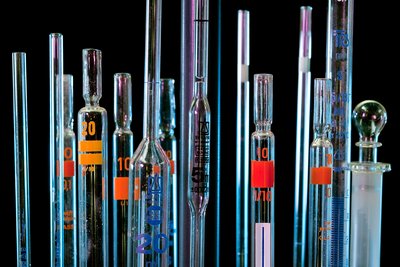
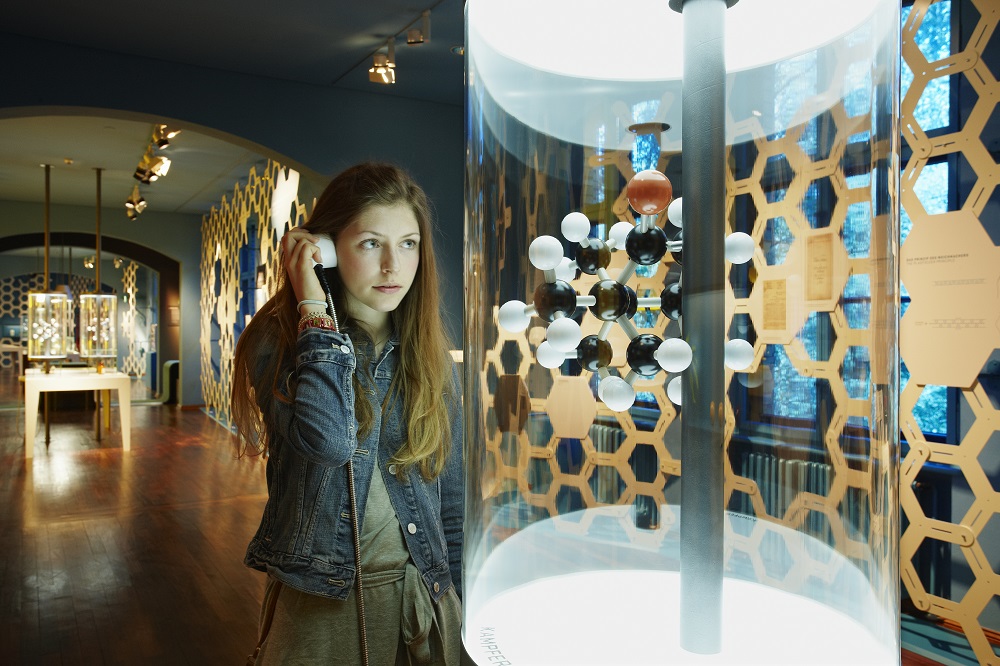
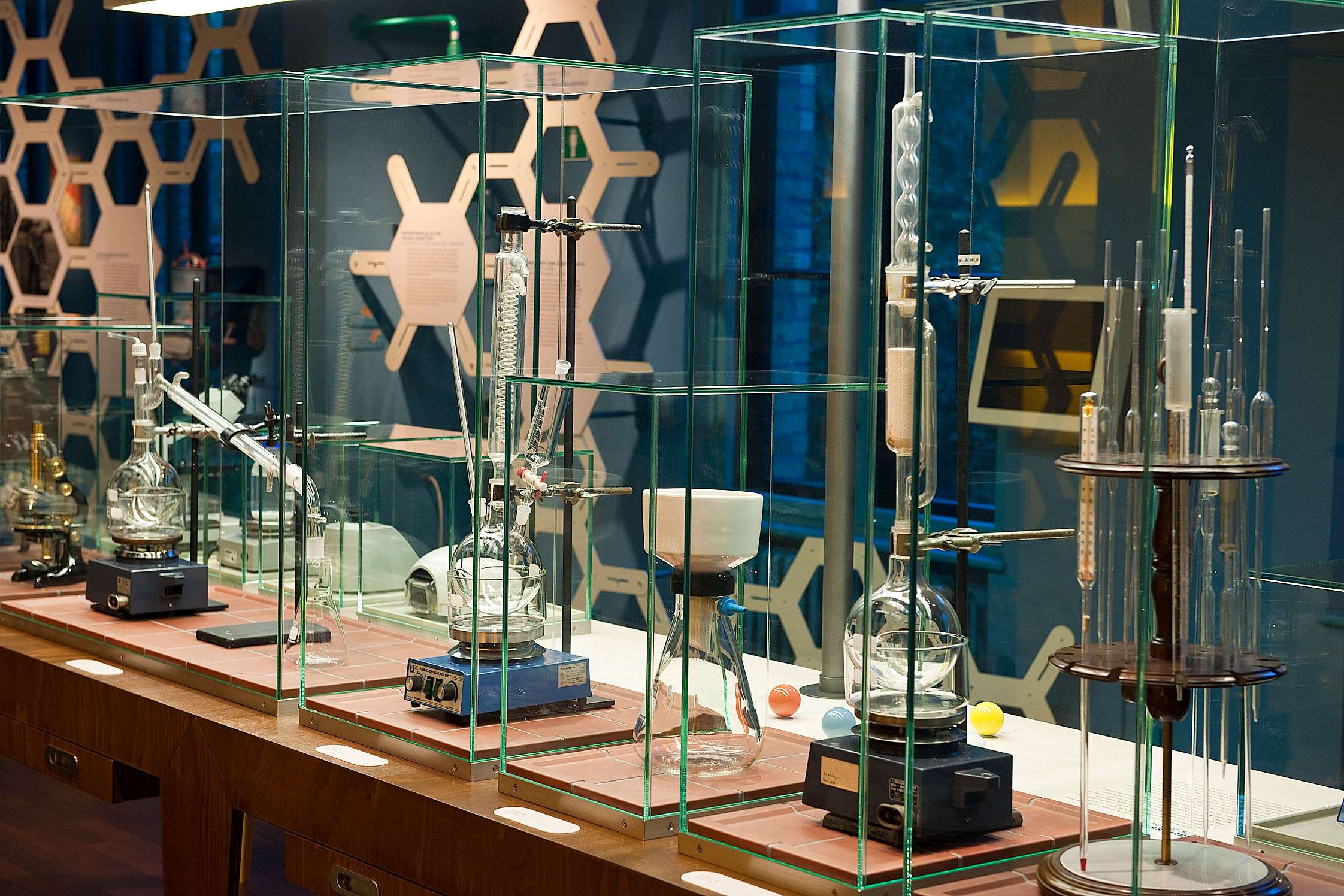
In the exhibition, you’ll learn about the techniques and tools used in a laboratory: from glass pipettes to modern pipetting robots. At audio stations, molecules tell the exciting story of their discovery. And right at the start of the exhibition, you can get hands-on: a media station invites you to try your hand at being a pyrotechnician and to build and set off a firework of your own choosing. Pyrochemicals are one example of the chemical industry's wide range of products.
Schering: An Early Berlin-Based Startup in the Chemical Industry
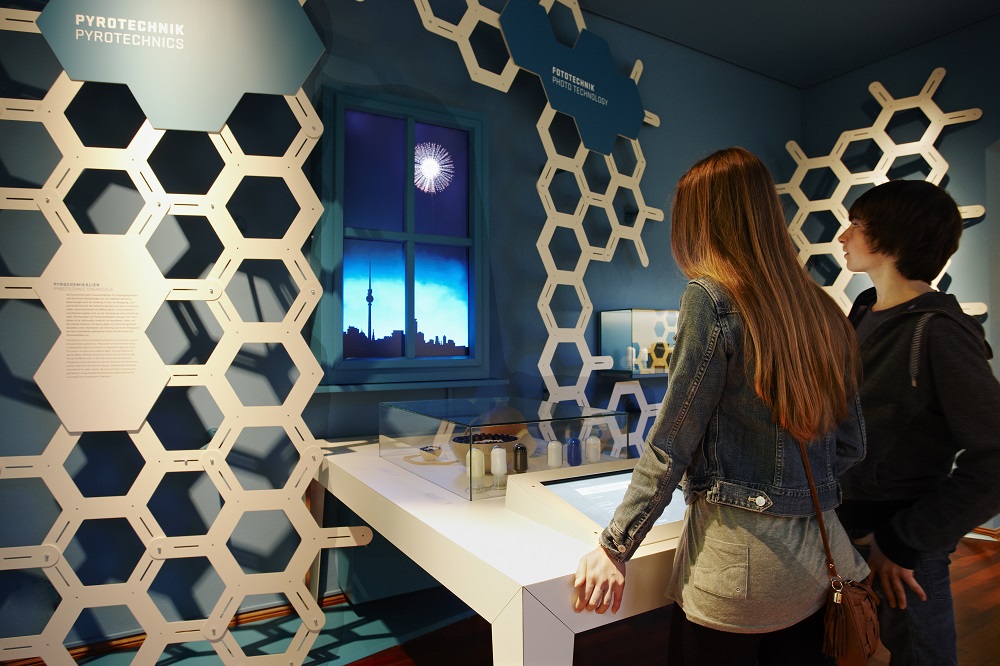
Since the 19th century, the chemical and pharmaceutical industry has shaped modern society like almost no other. Berlin was a central hub in this development, and the Schering company was a key driving force. The exhibition vividly illustrates laboratory work, industrial production, and questions regarding the use and safety of the products. On a special large-screen display, you can follow the transformation of the company’s campus in Wedding through a stereoscopic animation.
The Discovery of Hormones and Contraception
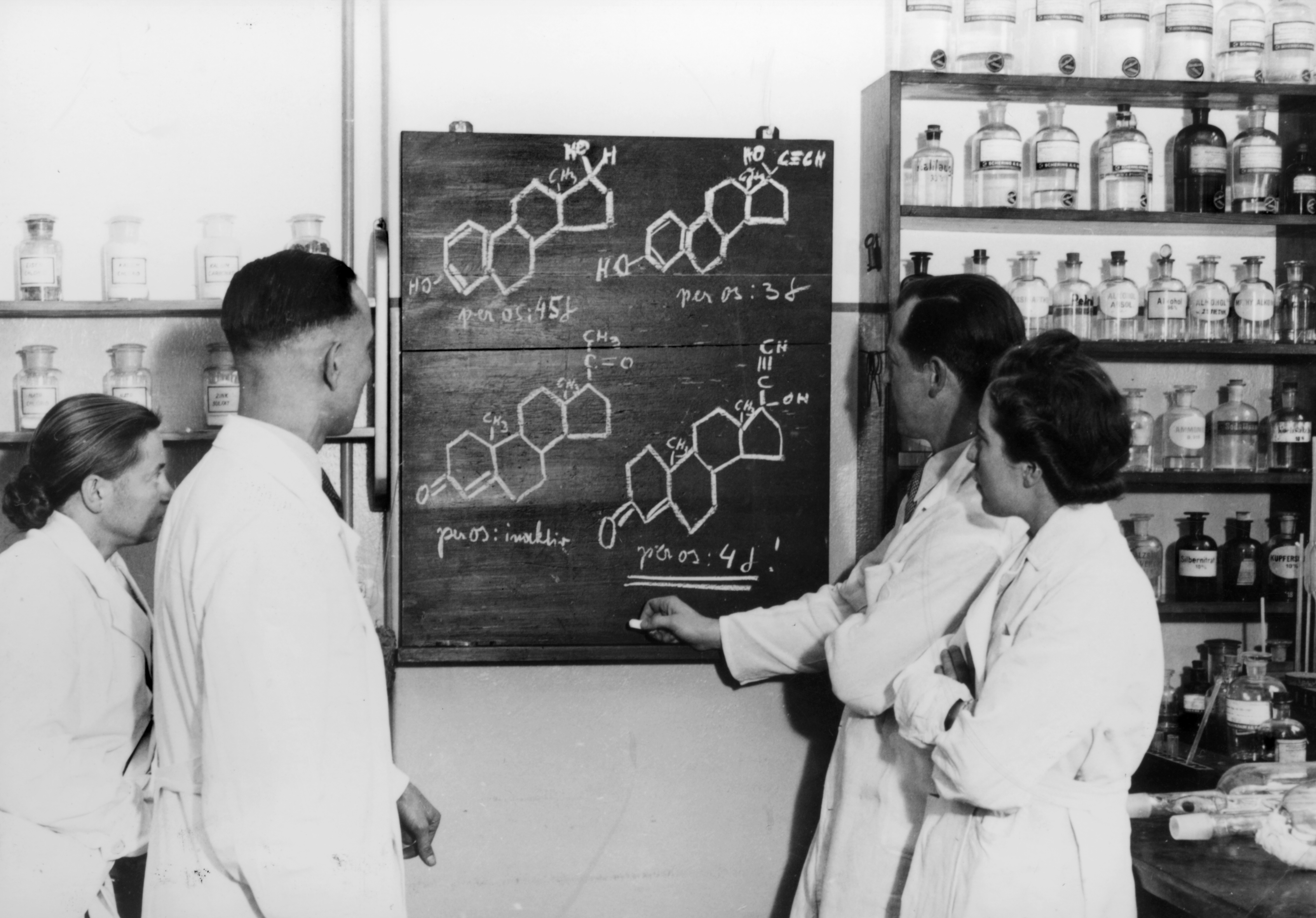
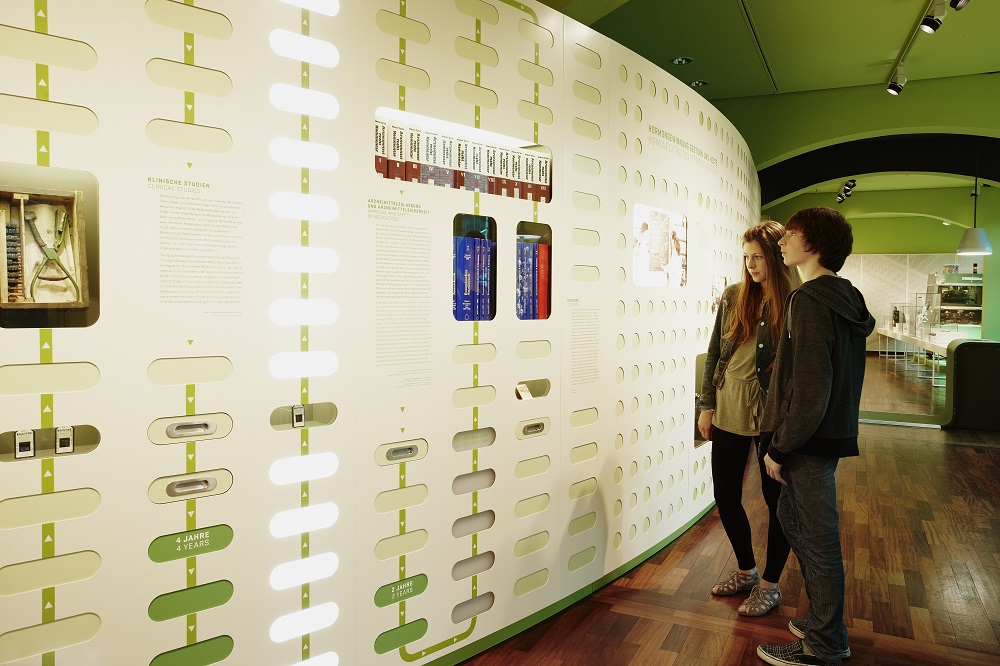
Schering also serves as a good example of the first-ever collaboration between a university and a company in the field of sex hormone research. The discovery of these hormones in the 1920s was the result of this successful collaboration. Schering’s subsequent development of the birth control pill traces the history of a pharmaceutical product and is another focal point of the exhibition. In a listening room, you can listen to original audio recordings on the topic of “birth control pills” from the past 50 years. The various methods of contraception, as well as their social impact on family planning and sexuality, are also presented.
For information on risks and side effects, ask your doctor or pharmacist.
It takes a long time and costs a lot to develop an active pharmaceutical ingredient. After that, the rule is: no effect without side effects. This raises legal questions about drug safety. Finally, at an interactive dialogue station in the exhibition, you can hear different opinions on the matter — and form your own.
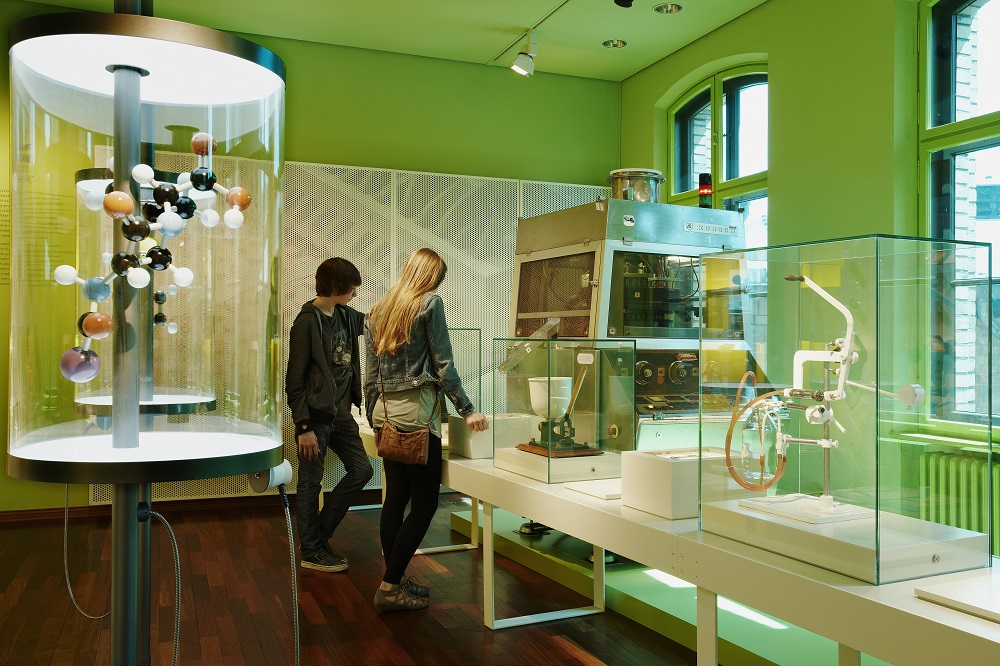
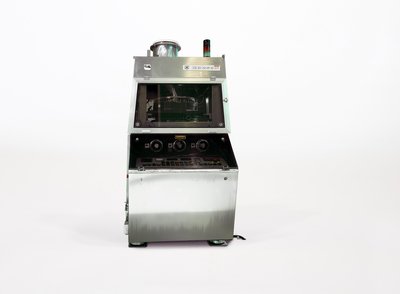
Korsch PH 300–43 Rotary Tablet Press
The Korsch PH 300 is a typical rotary tablet press, such as those used in industrial manufacturing since the 1980s. A rotor drives the circular die table. An upper and a lower punch compress the powder — fed into the machine via a filling shoe — into a tablet, which is discharged onto a conveyor belt via a chute after compression. The machine has 43 punch sets and, under normal operating conditions, produces 216,000 tablets per hour. It was one of the most modern of its time.
Korsch AG, 1984
SDTB/ Photo: C. Kirchner
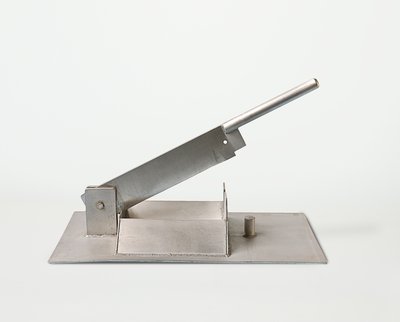
Bull Testicle Cutter
The discovery of hormones is a central theme of the exhibition. Bull testicles proved to be a rich source of male hormones. They first had to be chopped up to make it easier to extract the desired hormones. Special instruments were manufactured in Schering’s research laboratories specifically for the hard bull testicles. This bull testicle cutter was built there around 1950.
Schering AG, circa 1950, on loan from Schering AG
SDTB/ Photo: C. Kirchner
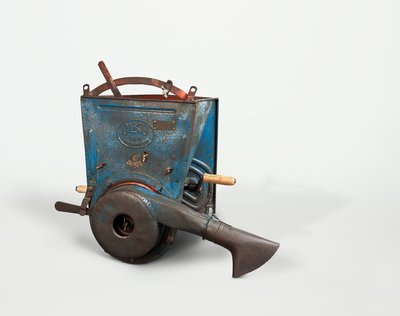
Dusting Device
People have long sought to protect crops from pests, for example by using toxic salts. This is because insects and fungi have repeatedly caused the loss of entire harvests throughout history. The dusting device shown here dates from the 1930s. The powder was released evenly using the hand crank, and the plants were dusted with insecticide. The user then worked in a cloud of calcium arsenate, Schweinfurt green, or DDT.
Circa 1935, Donated by: Dorf Mecklenburg District Agricultural Museum
SDTB/ Photo: C. Kirchner
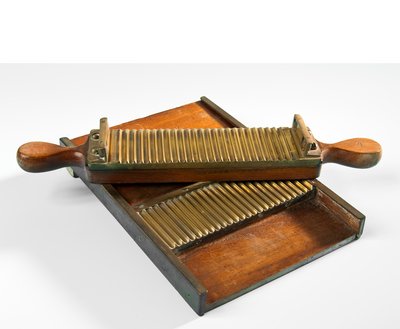
Pill Board
Until the 17th century, each pill had to be rolled by hand one at a time. It was only with the help of pill boards like these that the manufacturing process could be simplified. This required a malleable dough. Once the correct consistency was achieved, the mixture was rolled into a strand that was the same width as the ridged surface on the pill board. There were no precise manufacturing instructions, which is why the properties of the pills (disintegration, dissolution, and drug release) were unpredictable.
J. W. Pindar & Co., 1880, on loan from Schering AG
SDTB/ Photo: C. Kirchner