Jewelry Manufacture
What's it about?
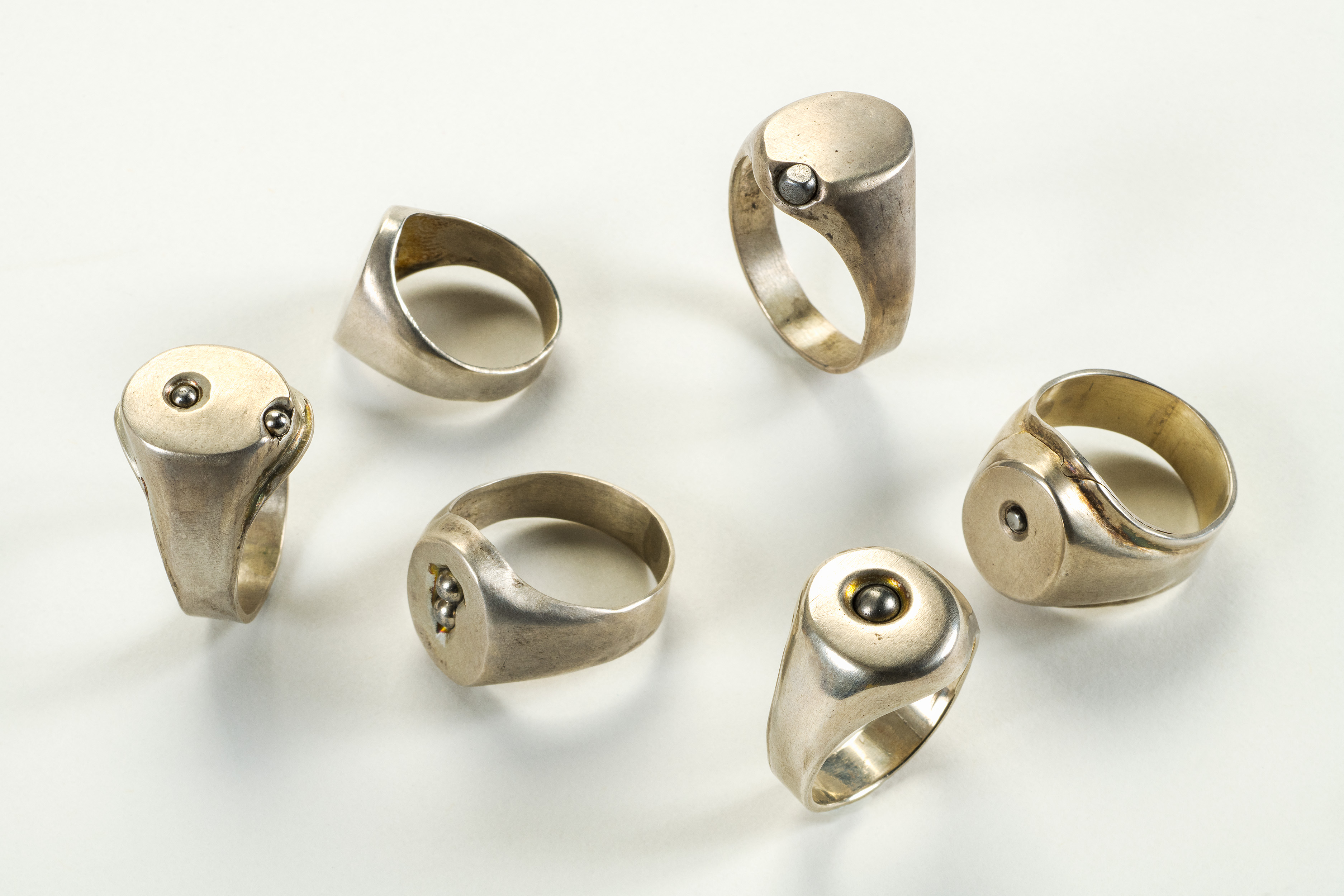
It’s not just the piece of jewelry itself that’s special — it’s also the way it’s made. The Deutsches Technikmuseum preserves these production methods. In the exhibition “Artisanal Jewelry Production—People, Machines, Masterpieces,” you can see the steps involved in creating a piece of jewelry.
Craft Techniques and Steps in Jewelry Manufacture
Almost all of us own a piece of jewelry: a ring, a necklace with a pendant, or a piercing. But jewelry only became a mass-market accessory when industrial jewelry production emerged in the mid-18th century: techniques that had previously all been part of the goldsmith’s trade became independent apprenticeship trades. Thanks to this specialization and the interplay between human and machine, craft workshops were able to produce very efficiently. Unlike in traditional goldsmithing, the creation of a single piece of jewelry involves about 50 different trades. The jewelry exhibition at the Deutsches Technikmuseum offers many insights into this artisanal mass production and its various steps.
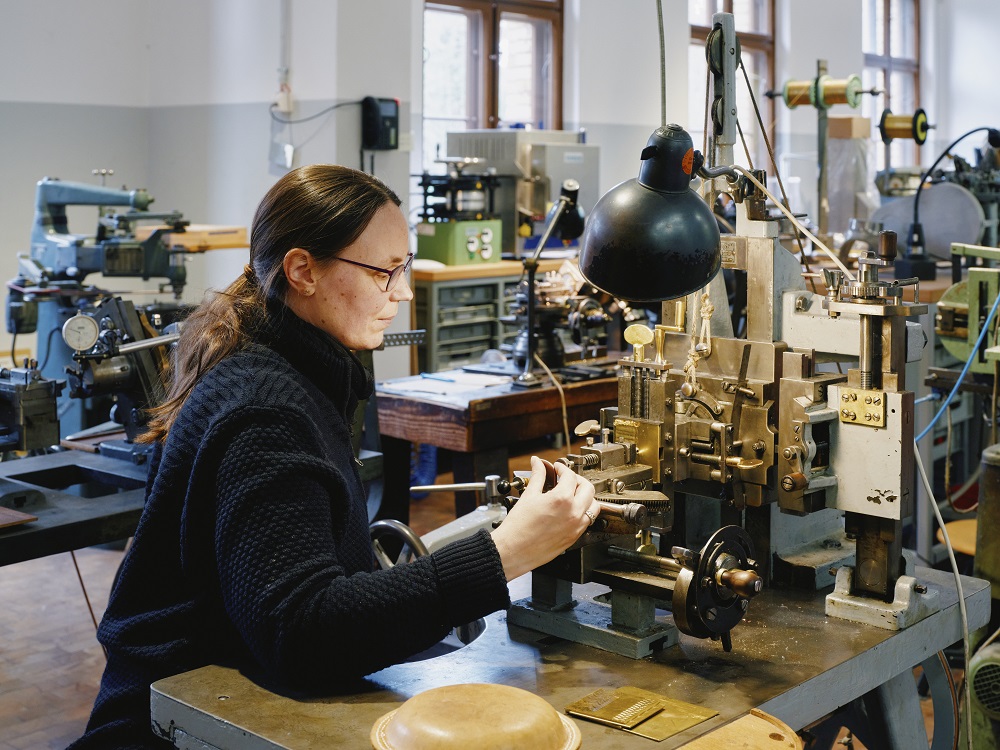
How a Piece of Jewelry Is Made: Historic Machines at Work
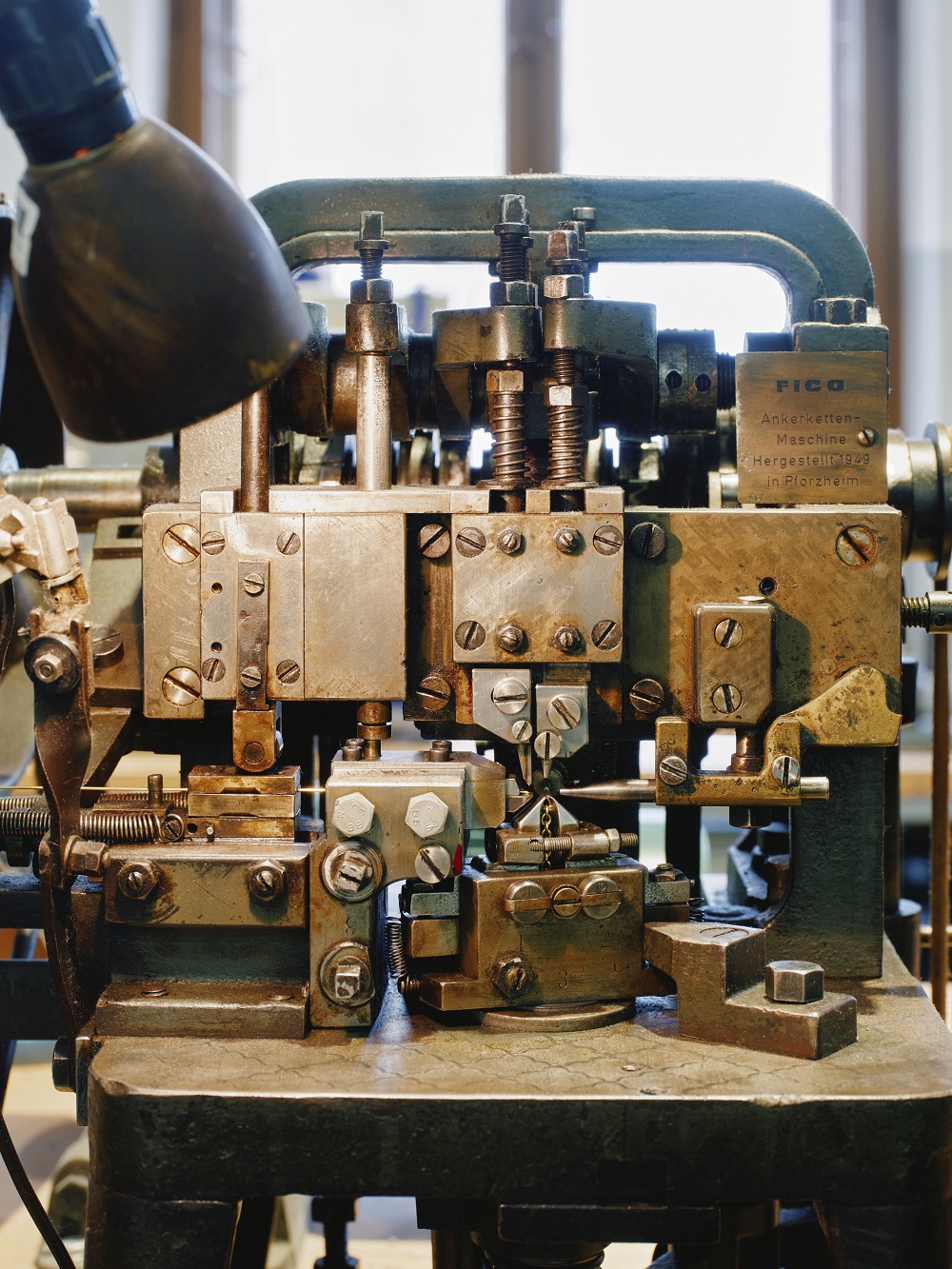
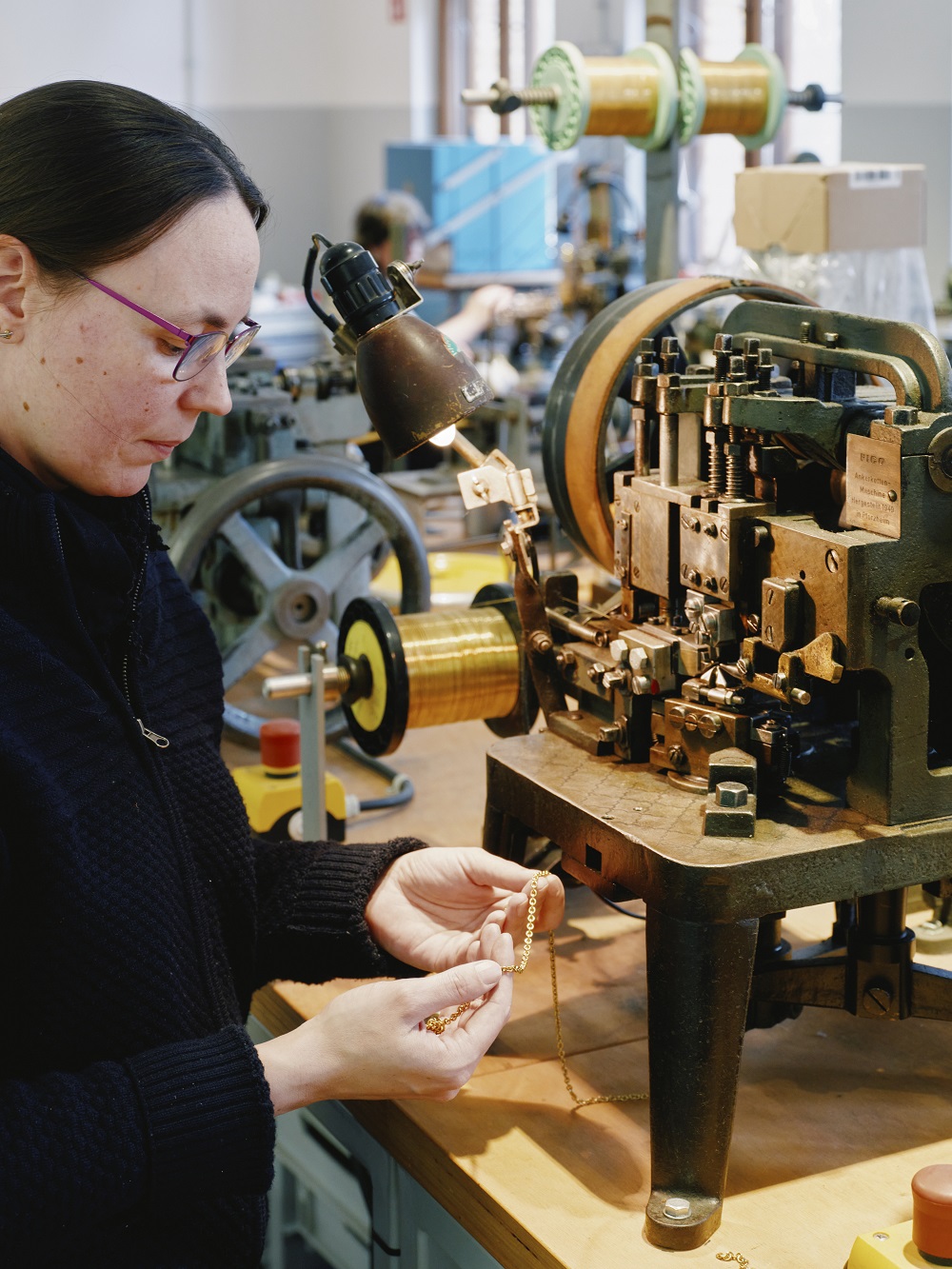
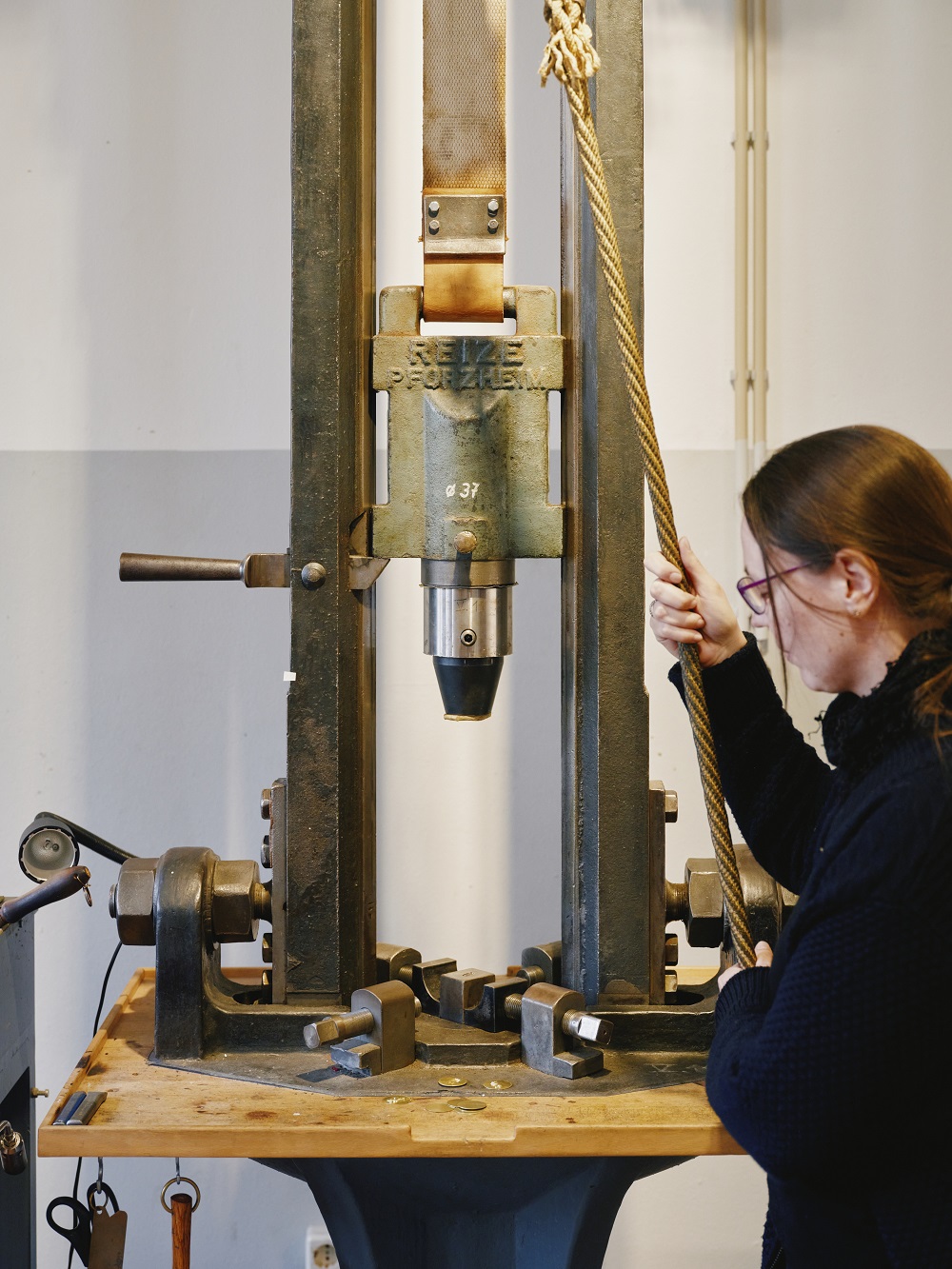
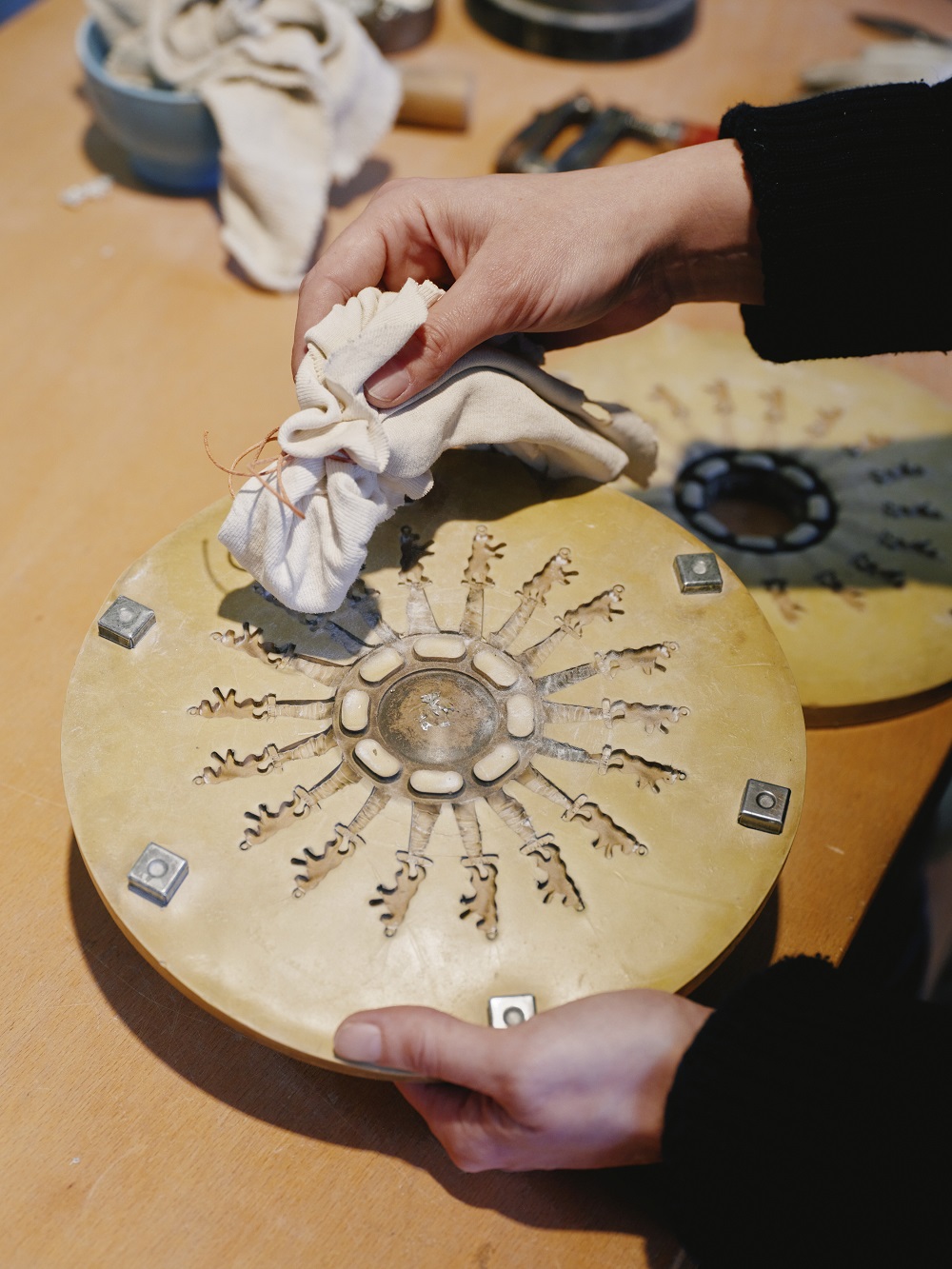
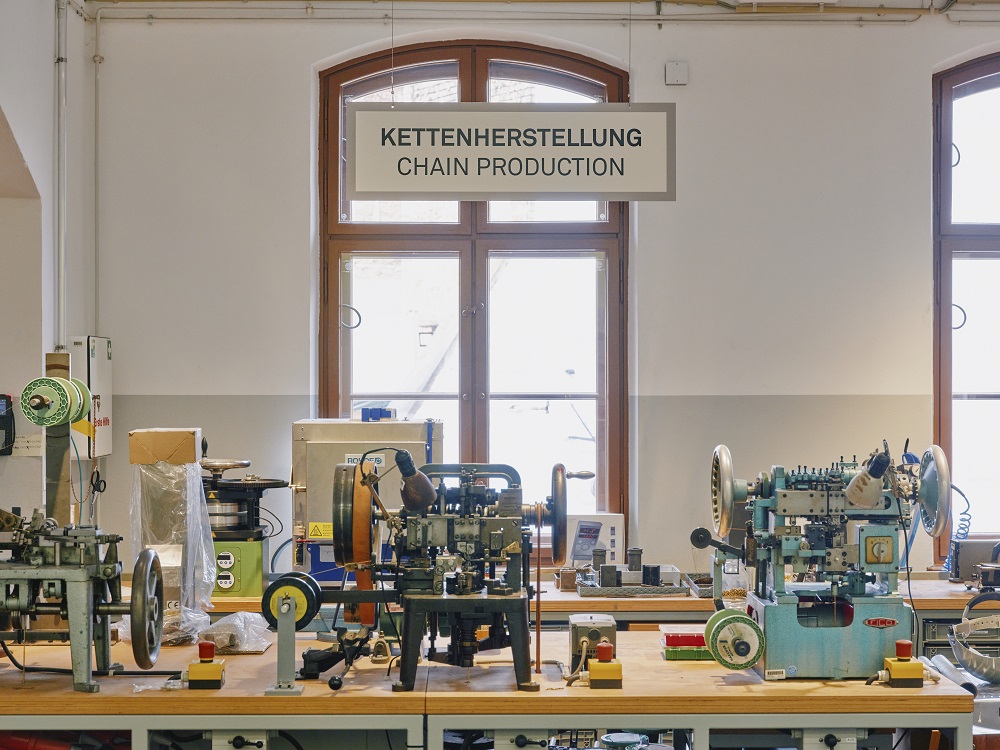
The exhibition focuses on six manufacturing techniques: embossing, pressing, and punching; drawing and rolling; casting; goldsmithing; guilloché and engraving; and chain making. Visitors can follow, step by step, how a piece of jewelry is created. The exhibition features hand-powered, foot-powered, and electrically powered historical machines, such as the friction spindle press for solid embossing or the centrifugal casting machine for casting various jewelry components. Particularly impressive is the drop hammer, with its seven-metric-ton swing used for deep drawing. In two hours of piecework, a press operator used this machine to lift the weight of a steam locomotive like the Prussian P8, which is on display in Locomotive Shed I.
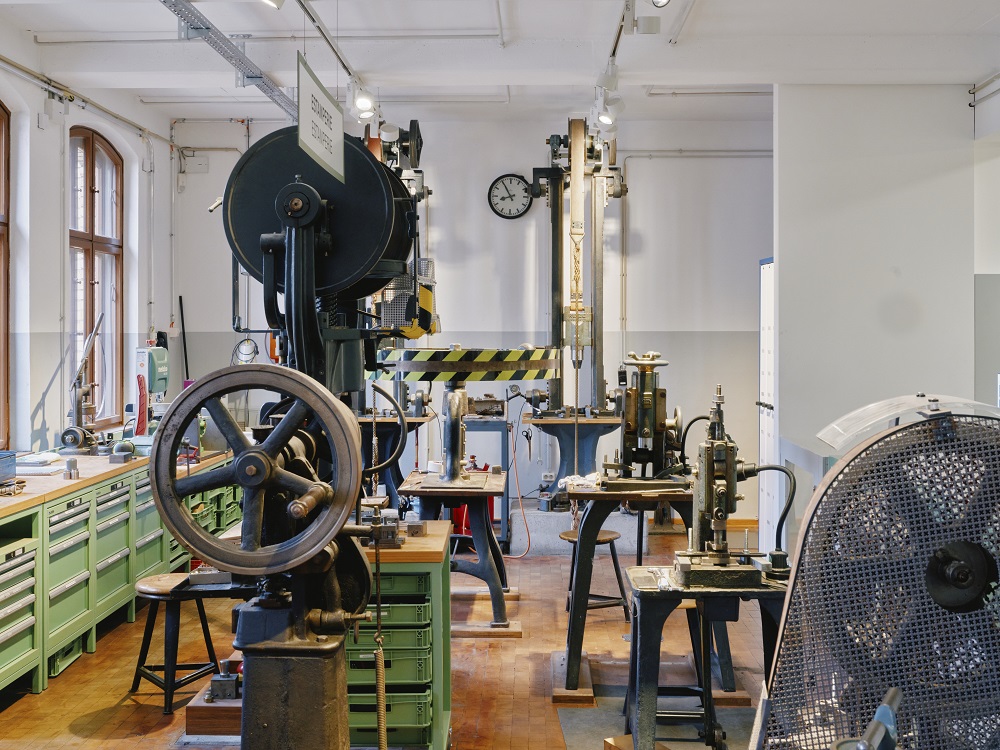
The Jewelry Craft of Pforzheim
The exhibition also features multimedia stations with film footage about Pforzheim’s long-standing jewelry industry, including, for example, the history of the famous Fabergé eggs, which were produced in Pforzheim from 1989 to 2009. The artisanal jewelry production exhibit at the Deutsches Technikmuseum thus offers visitors the chance to see and touch artifacts from the history of craftsmanship, industry, and business. Historical techniques and artisanal expertise are not merely preserved and documented. Experts pass on their knowledge in seminars with students and professionals from the fields of jewelry design and goldsmithing. This initiative by the Deutsches Technikmuseum is part of the collaborative project “Artisanal Jewelry Design,” which was added to the national list of Intangible Cultural Heritage by the German UNESCO Commission in 2015 as an example of best practice.
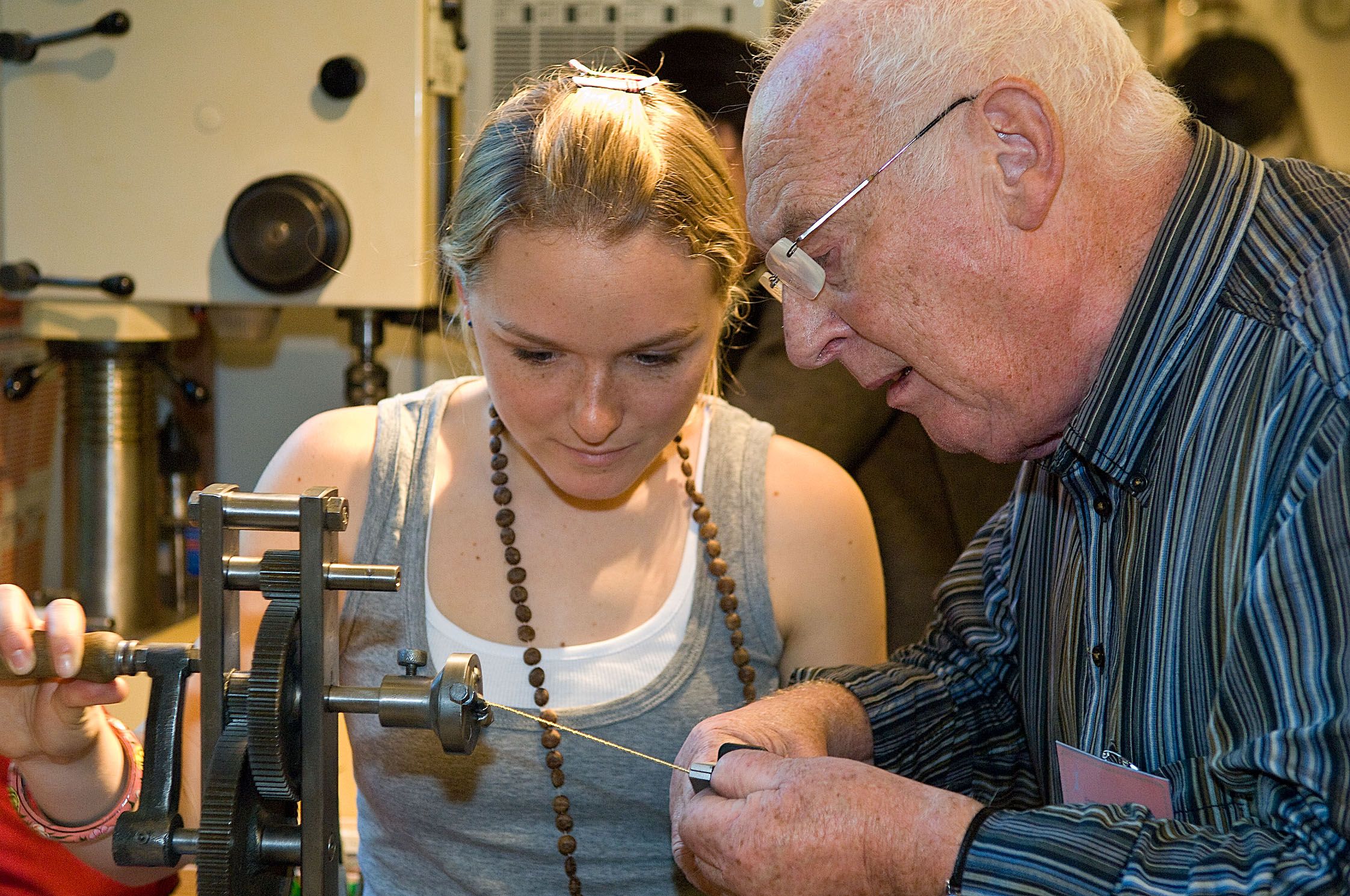
Pforzheim Revisited Scholarship – Berlin
In 2021, the Deutsches Technikmuseum celebrated the 10th anniversary of its jewelry fellowship. Since 2011, a total of 19 people have had the opportunity to develop modern designs using historical machines in the “Artisanal Jewelry Production” exhibition workshop. The Artist-in-Residence Fellowship is a collaboration between the Stiftung Deutsches Technikmuseum Berlin and the C. Hafner Gold and Silver Assay Office.