
Road Transport
What's it About?
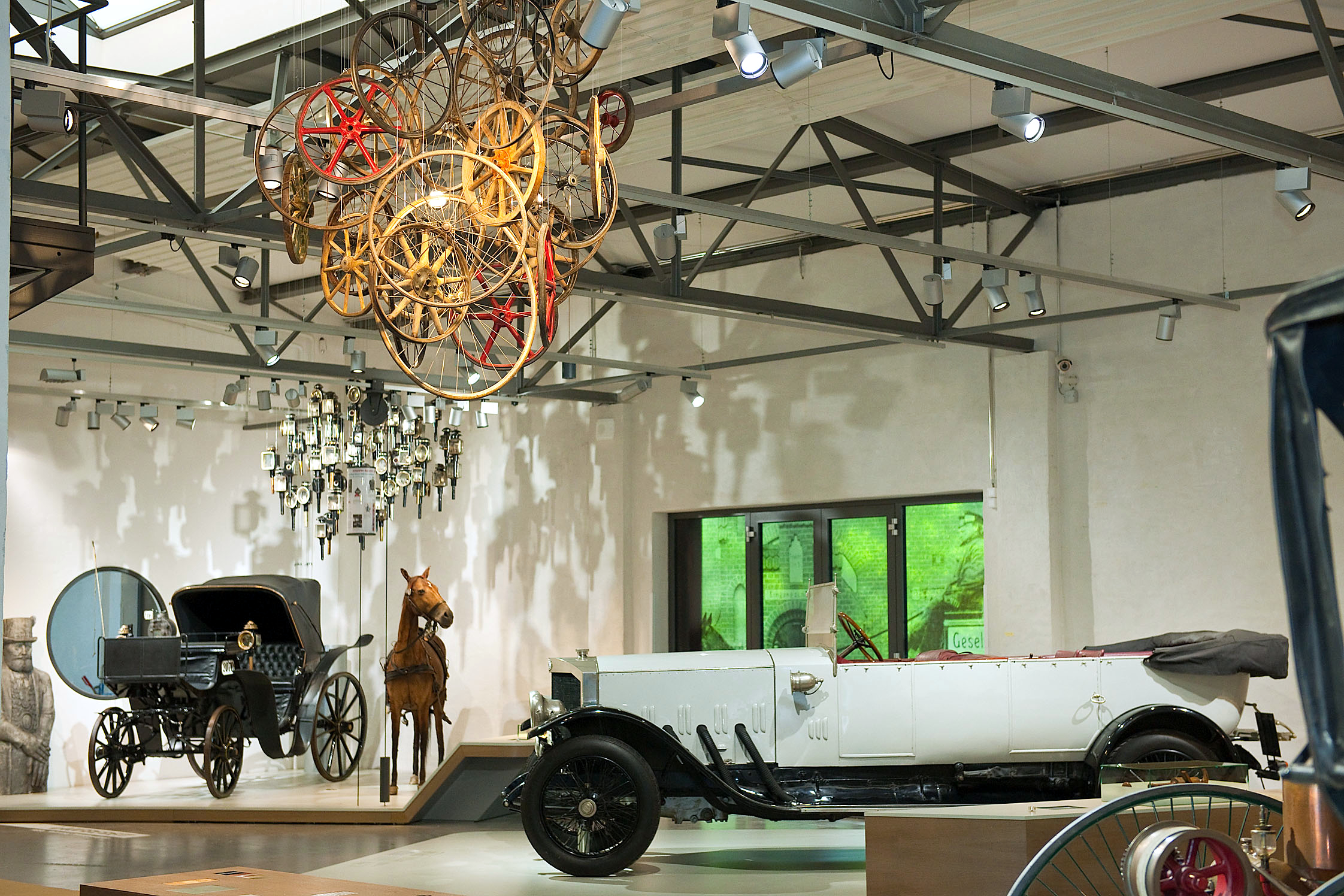
Whether walking, pedaling a bicycle, or riding in a limousine, human beings have always been constantly on the go. The exhibition “On the Move” is devoted to the history of road transport from pre-industrial oxcarts to the mass diffusion of automobiles in the 20th century.
On the Move: Means of Transport, Urban Life, Environmental Consequences
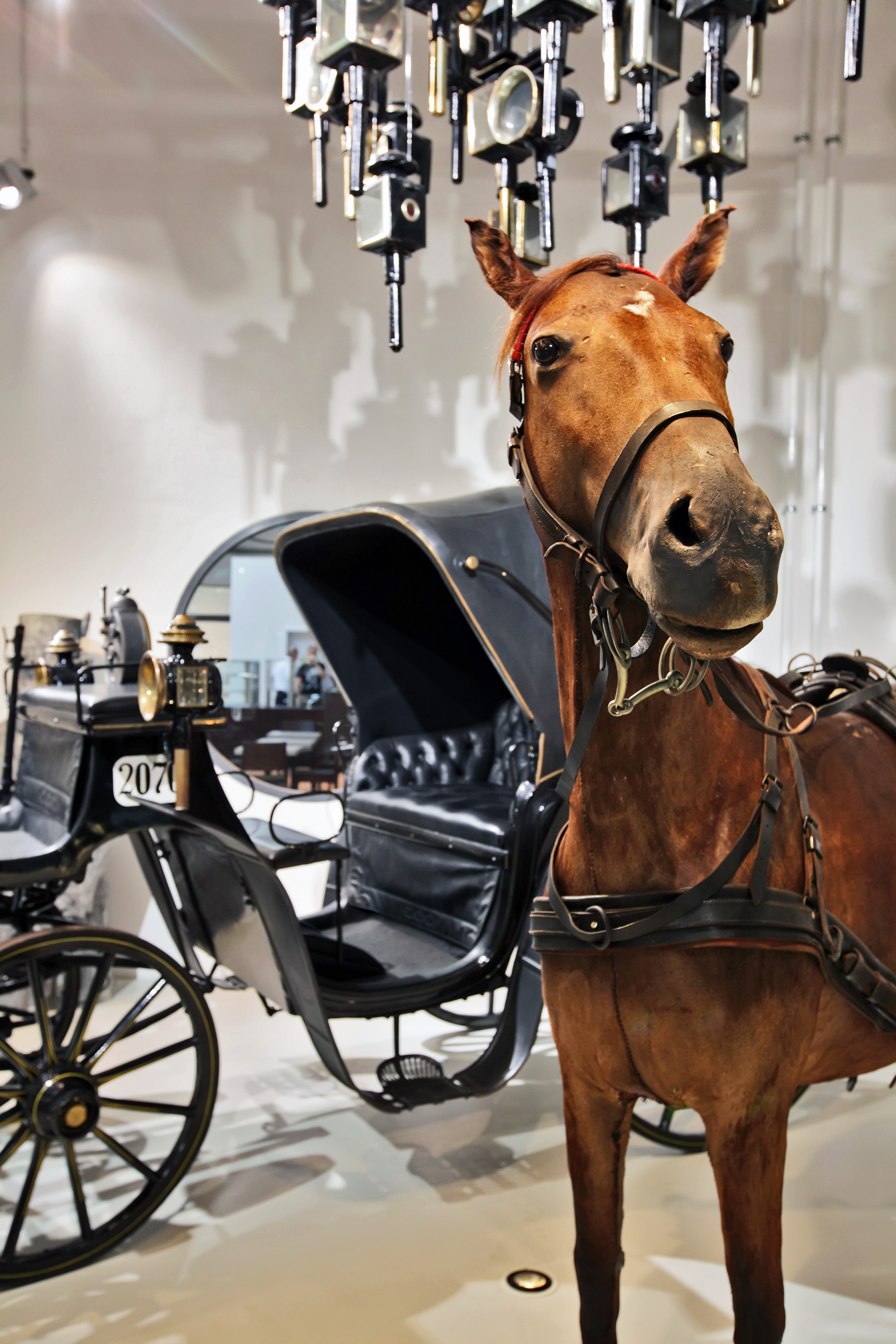
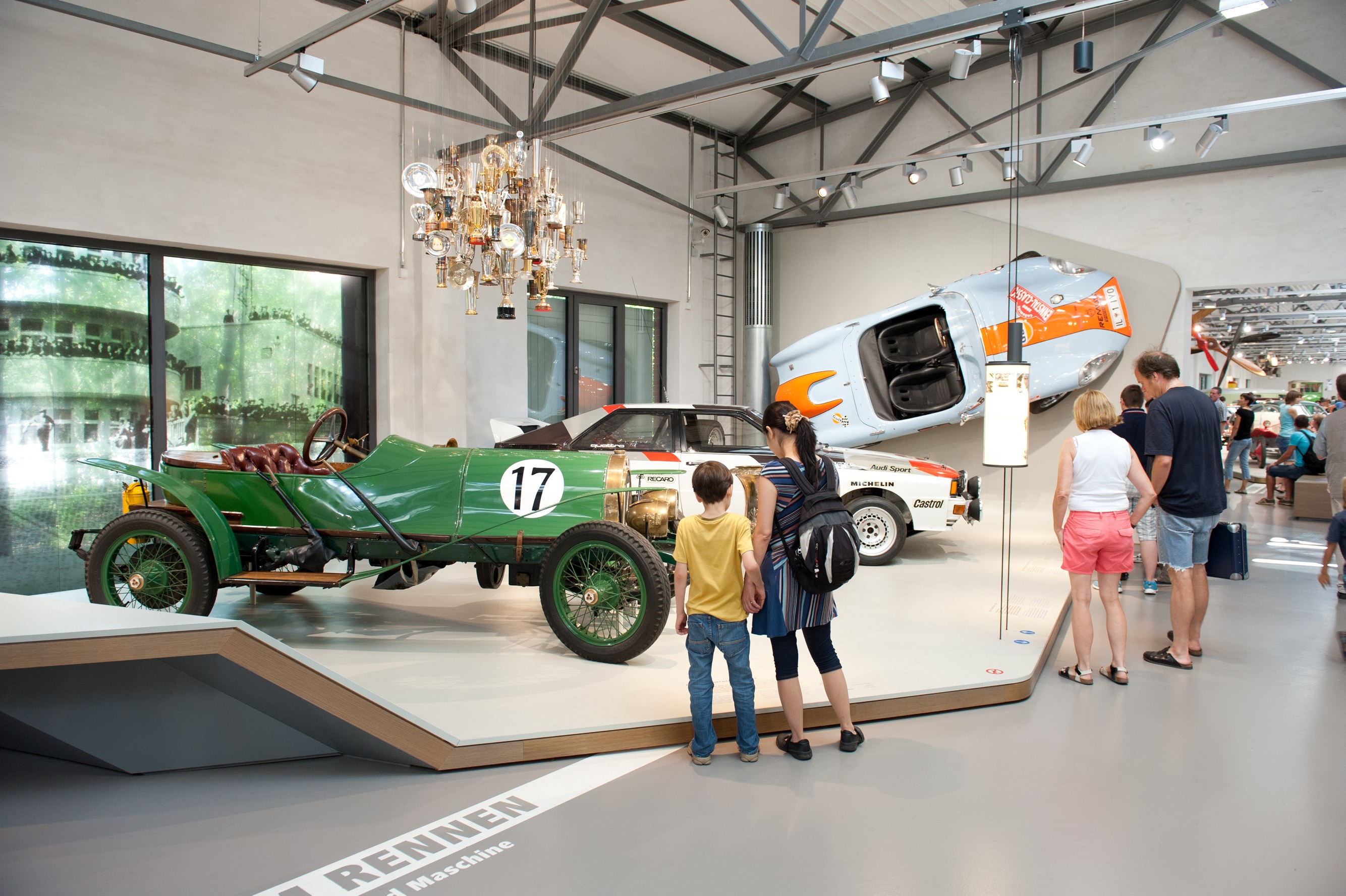
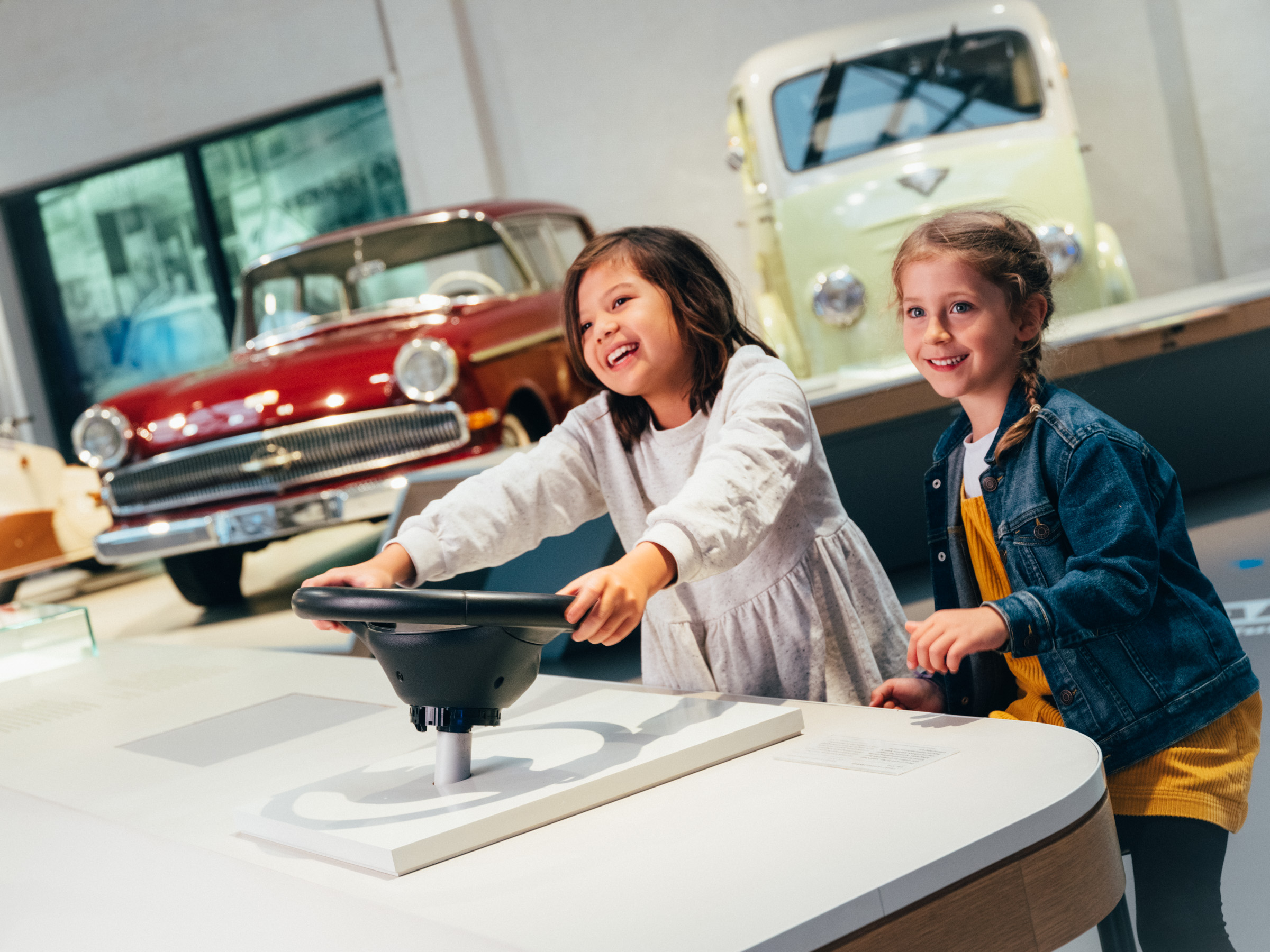
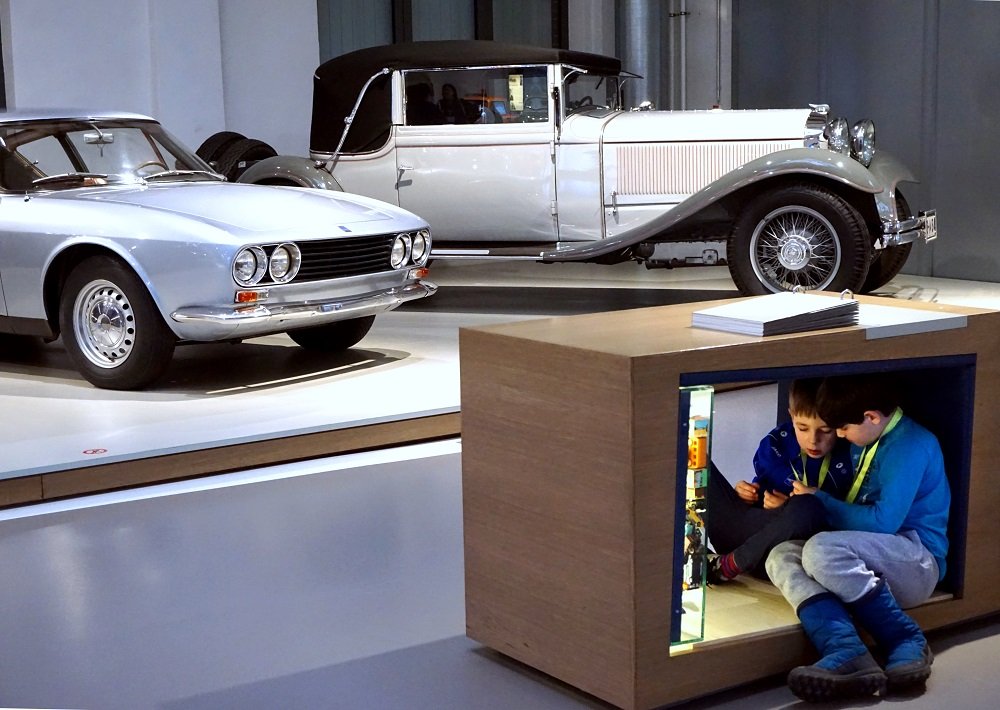
The exhibition “On the Move” is dived into eleven themes, including traveling and auto racing, brilliant and failed inventions, and the development of our automotive society. The exhibition also focuses on individuals who have had a special impact on the history of mobility. Open the red boxes on the walls to reveal their hidden surprises – curious exhibits like the tiny, gyrating Elvis doll known as the “Wackel-Elvis.” Hidden object pictures invite children to make discoveries of their own. Comic strips and audio stations lead visitors through the exhibition. Finally, artist Charlotte Sonntag’s large-format photographs provide an additional perspective to the topic of mobility. These atmospheric night scenes illustrate the tempo and vitality that road traffic infuses into the otherwise static nature of the built urban environment.

Mass vs. Class
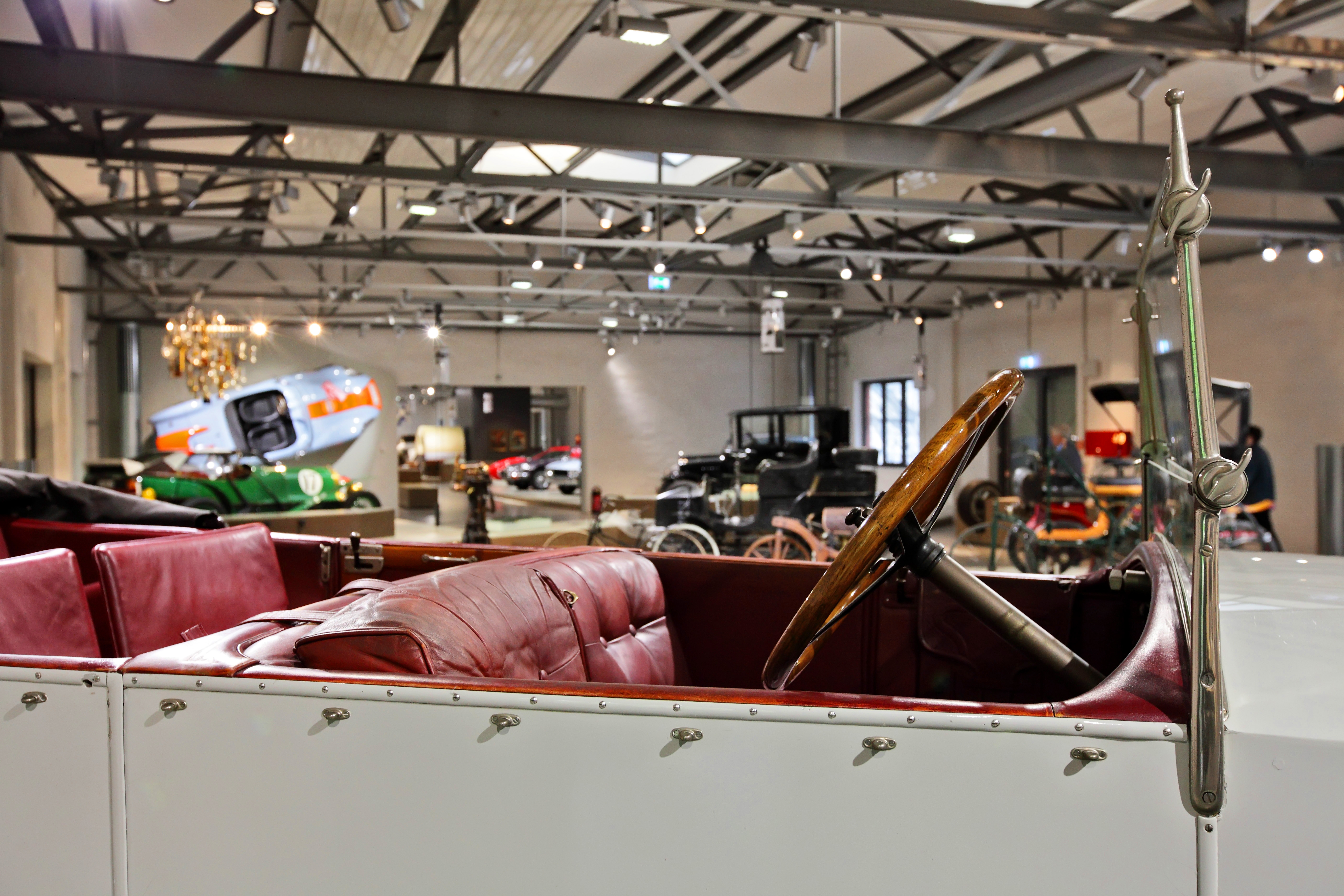
The invention of the automobile in the late 1880s changed the world forever. Its triumph was not at all clear from the outset, however. Gottlieb Daimler, who invented the first four-wheeled motor vehicle with an internal combustion engine, estimated at the end of the 19th century that “the global demand for motor vehicles will not exceed one million – if for no other reason than a lack of chauffeurs.” Indeed, for a long time only a well-to-do minority could afford an automobile, much less a chauffeur to go with it. The luxury that automobiles represented at the time is illustrated in the exhibition by models like the Benz 21/50 (1914) and the Mercedes Nürburg (1929).
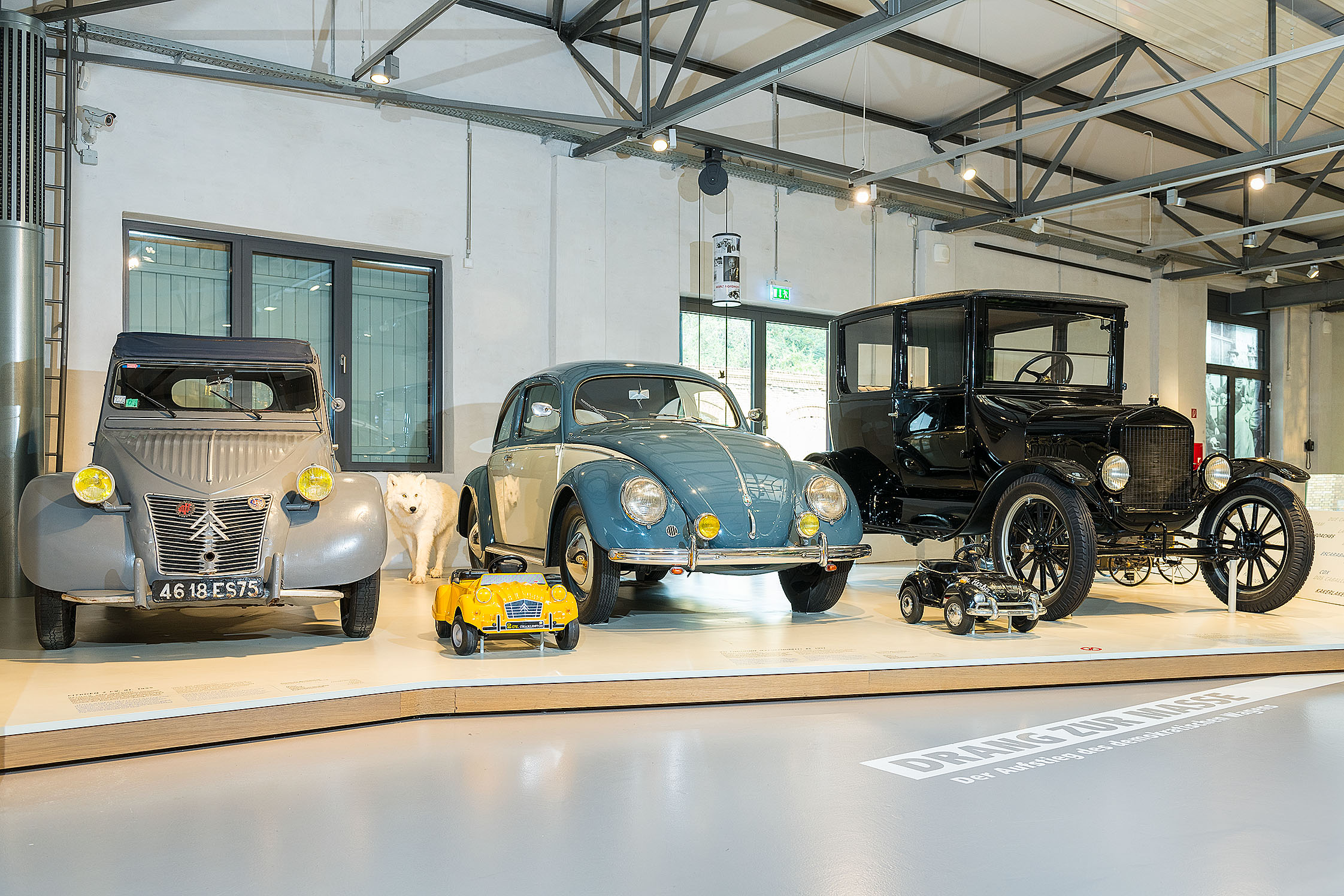
In the United States, cars stopped being luxury goods before the First World War. In 1908 Henry Ford introduced a small car to the American market: the Model T. Assembly line production began in 1913, thus reducing the price considerably and making cars (without chauffeurs) affordable to the middle class. The Model T, also called the “Tin Lizzie,” was the best-selling car in the world, with 15 million units sold, until the Volkswagen Beetle surpassed it in 1972. By the time it stopped being produced in 2003, a total of 21,529,464 VW Beetles had been built. The Beetle’s appeal and popularity are vividly demonstrated in several short films and a digital photo album showcasing VW car manufacture.
Electric Vehicles and Cars from Berlin
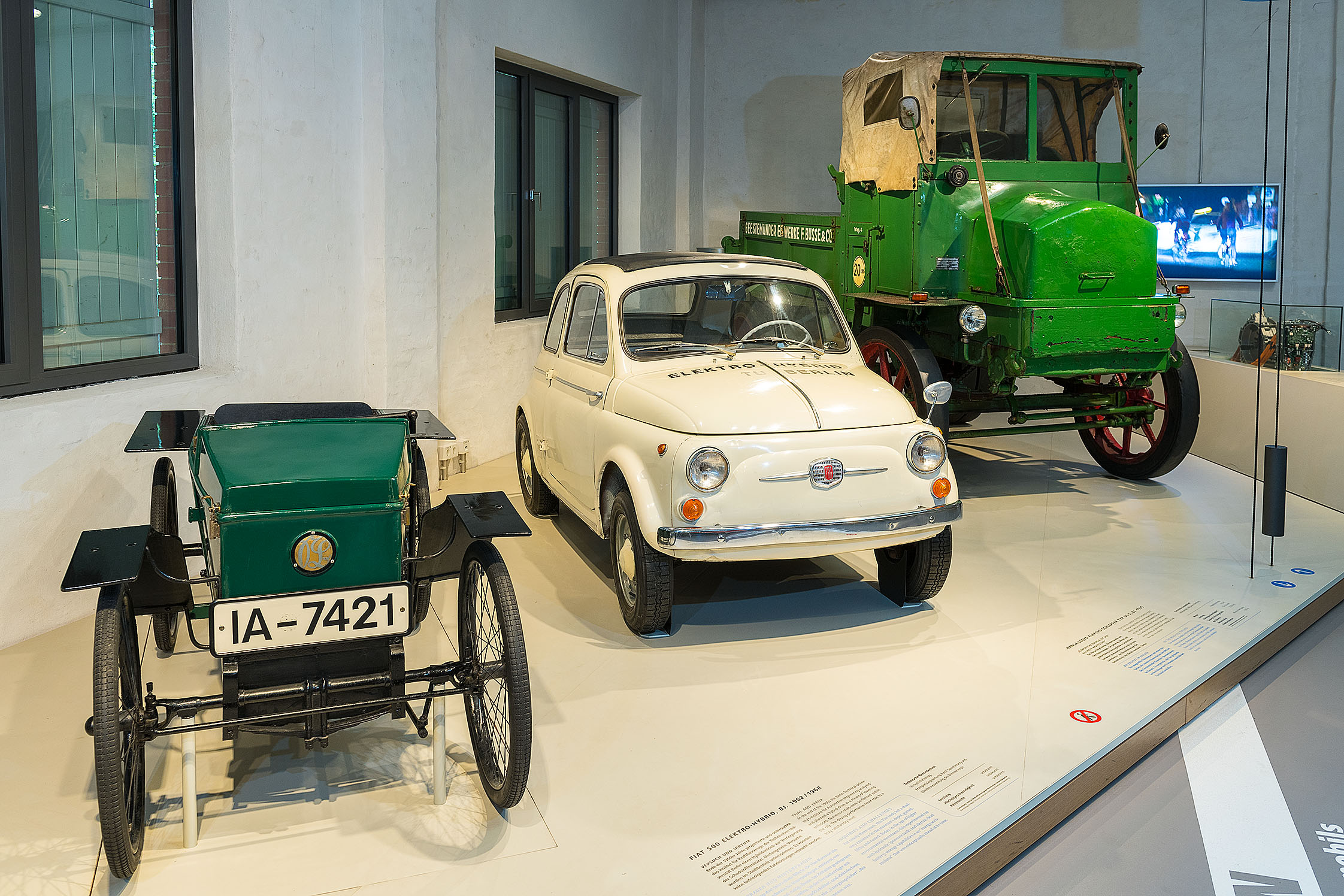
The mass production of automobiles has long had a dark side: increased traffic around the world and the air pollution it causes. Hence the current boom in electric vehicles. But electric cars are not a recent invention. As far back as the early 20th century, two electric equipment companies in Berlin, AEG and Siemens, supplied entire taxi fleets and municipal vehicle fleets with accumulators. They were still too heavy, though, and not sophisticated enough. The exhibition contains a few of the early electric vehicles, such as the Slaby-Beringer minicar (1921) and a Hansa-Lloyd truck (1935).
Berlin played a leading role in automotive production and development before the Second World War. Indeed, fifty makes of car were produced here. Some of them are on display in the exhibition, such as NAG, Bergmann, Weise, and Protos. One highlight is the Rumpler Tropfenwagen (“raindrop car”) from Berlin, which is on display in the Aviation exhibition.
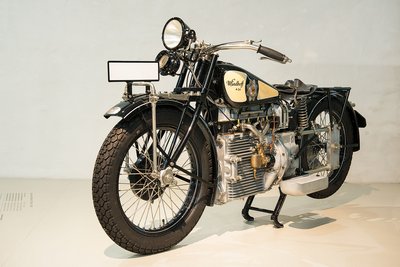
Windhoff Motorcycle
In the 1920s, this Windhoff four-cylinder motorcycle was a luxury item in Germany. Priced at around 2,000 Reichsmarks, it cost more than an inexpensive small car. Only about 1,500 units were built, in a factory in the Johannisthal neighborhood of Berlin. Smaller models were more popular and were many people’s gateway to the automotive age, especially in Germany. From 1926 to 1960 – in East Germany until 1990 – there were always more motorcycles than cars on German roads.
Gebrüder Windhoff GmbH, 1927
SDTB/ Photo: C. Kirchner
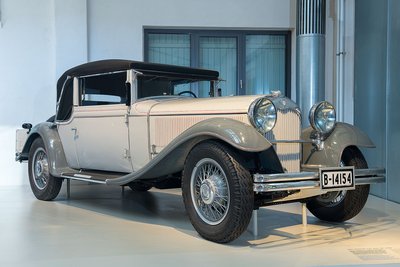
NAG-Protos Typ 208
NAG-Protos combined the names of two storied car manufacturers from Berlin. Until 1926, NAG (Nationale Automobil-Gesellschaft, or National Automobile Company) and Protos were separate car companies, each one a subsidiary of a large industrial concern in Berlin: NAG belonged to AEG, and Protos belonged to Siemens-Schuckert. After Protos was sold to AEG, cars were initially produced under the name NAG-Protos. Protos disappeared from the brand name in 1930/31, but NAG cars continued to be produced until 1935.
Nationale Automobil-Gesellschaft (NAG), 1929, gift of Helmut Schleicher
SDTB/ Photo: C. Kirchner
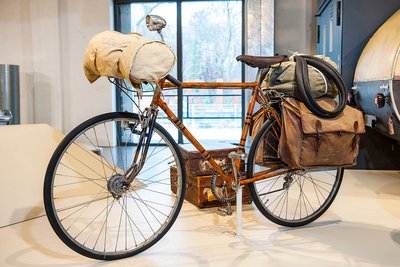
Dinos Racing Bicycle
What makes this bicycle special is not its technical design, rarity, or the importance of its brand. Rather, this Dinos bicycle owes its cultural and historical significance to its own personal story. Journeyman baker Hans-Jürgen Zschieschau used it in 1956 to travel from Germany to Syria, Iraq, Afghanistan, India, and Singapore, ultimately taking a ship to Australia. This Dinos bicycle thus exemplifies the human spirit of adventure and the tradition of long-distance journeys by bicycle, motorcycle, car, and van.
Dinos, 1956, gift of John Hanson
SDTB/ Photo: C. Kirchner
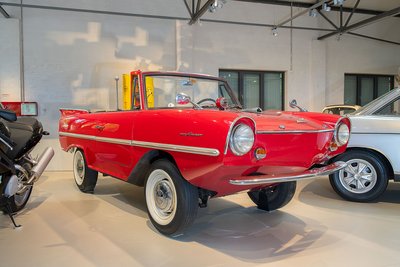
Amphicar
The amphicar was a mixture of car and boat, introduced by Berlin engineer Hanns Trippel in 1961. At least 25,000 units were planned. In the end, only 3,878 were built, in part due to the high price tag. The amphicar cost almost twice as much as a VW Beetle. Production in the German Carriage and Machine Factory, located in the Wittenau district of Berlin, was laborious. Each body had to be checked for leaks in a water tank. In addition, “driving” on the water required a motorboat operator’s license.
Borsig Werke, 1966
SDTB/ Photo: C. Kirchner